
Concerns about smart in seo and content marketing usually come down to a simple question: can software-assisted workflows help teams produce more without hurting quality, trust, or search performance? For most marketers, the answer is nuanced. Automation can speed up research, outlines, metadata drafts, and content updates, but it can also introduce real editorial risk when teams rely on it too heavily or skip review. Strong content quality guidelines matter because the final result still depends on human judgment, fact-checking, and alignment with brand standards.

If you are evaluating automation in SEO content, it helps to ignore the hype and look closely at process. The biggest concerns are accuracy, originality, consistency of tone, and whether a page genuinely satisfies user intent. Search visibility often suffers when drafts are repetitive, shallow, or disconnected from what readers actually need. The most effective approach is to use automation as support for research and production, not as a substitute for strategy, editing, and responsible publishing decisions.
Why marketers are questioning automation in search and content work
Marketing teams are under constant pressure to publish more, refresh older pages, and keep pace with changing search behavior. That makes automation attractive for first drafts, summaries, title options, and topic expansion. But many teams are now asking where efficiency starts to create risk. Content quality concerns with automated writing tools often appear when output scales faster than editorial safeguards. When speed becomes the main goal, pages can start to feel generic, repeat obvious ideas, and miss the detail needed for competitive or high-stakes topics.
Another reason marketers are cautious is accountability. If a draft includes a factual error, an awkward claim, or language that does not reflect the brand, someone still owns the published result. Editors and SEO leads also know that publishing more pages does not automatically improve performance. In many cases, weak planning, poor validation, and rushed revisions cause bigger problems than the software itself. That is why automation is usually safest when it supports a clear content strategy instead of trying to replace one.
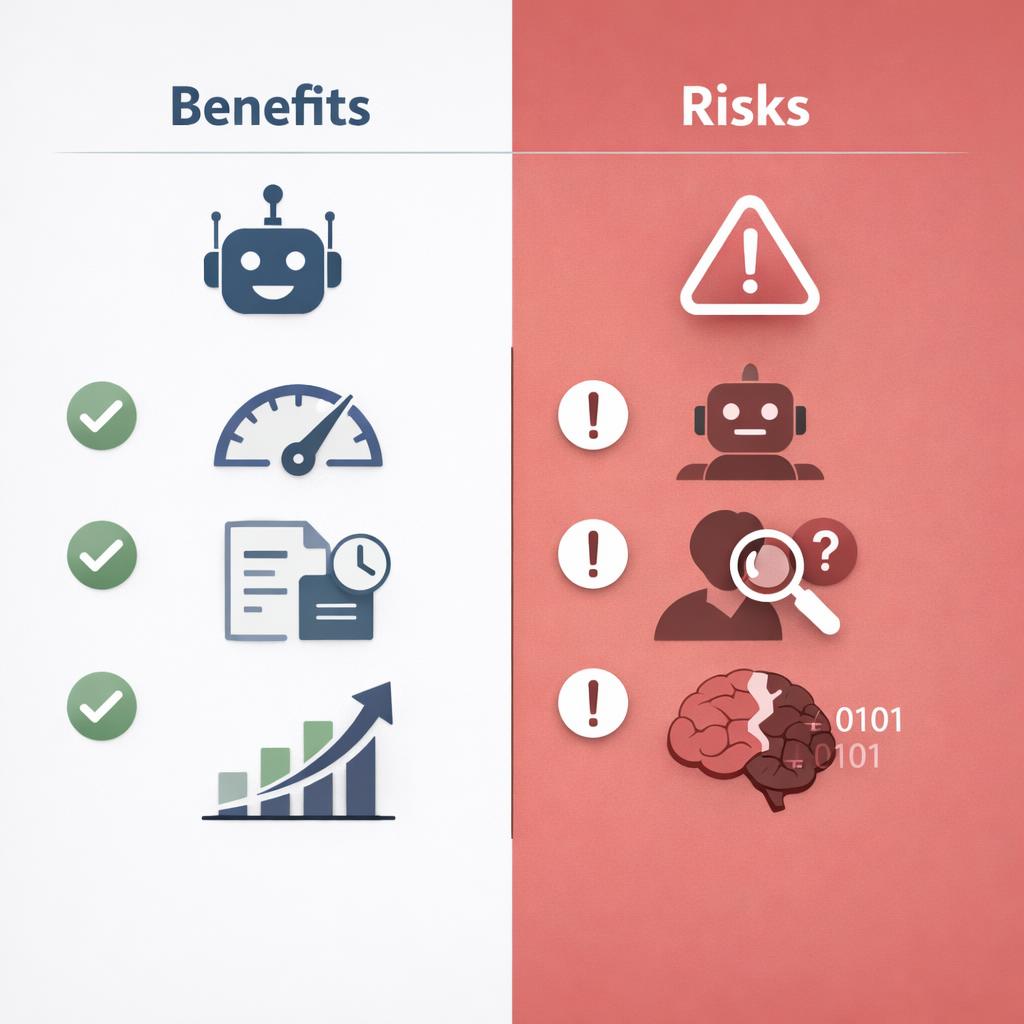
The biggest risks: accuracy, brand voice, and search visibility
Accuracy is usually the first concern. Automated drafts can sound polished and confident even when details are incomplete, outdated, or wrong. In industries where precision matters, even small mistakes can reduce trust or create compliance issues. Brand voice is another common problem. A company may have clear positioning, preferred wording, and a distinct audience style, yet scaled drafts can flatten that identity into copy that sounds interchangeable with competitors. Over time, that makes content less memorable and less persuasive.
Search performance risks are also real, but they usually relate to relevance and usefulness rather than the drafting method alone. Pages struggle when they fail to match intent, recycle existing material without adding anything new, or spread thin information across too many similar keywords. That is why search intent research should happen before drafting starts. Strong rankings still depend on smart topic selection, original value, and pages that answer real questions better than the alternatives. Marketers who ignore those fundamentals often discover that faster publishing only creates a larger library of underperforming content.
How weak editing leads to thin, repetitive, or misleading pages
Weak editing is where many risks become visible. A draft may look clean at first glance but still contain vague statements, repeated phrasing, unsupported examples, or filler transitions. Left untouched, those issues make a page feel long without making it useful. That is thin content in practical terms: it takes up space but delivers limited value. Readers notice that quickly, and so do teams trying to maintain standards across a growing site.
Misleading pages can be even more damaging. A software-assisted draft may combine ideas from different contexts and present them as one clear recommendation. Without review, that can produce advice that is too broad, technically off, or mismatched to the reader’s problem. Careful editing should challenge every claim, remove filler, verify examples, and make sure the page reflects the needs of the brand’s audience. A good editor also pushes the draft beyond generic wording into something specific, credible, and genuinely helpful.

How to use automation responsibly without lowering content standards
Responsible use starts with clear boundaries. Teams should decide which tasks are low risk and suitable for automation, such as ideation, content briefs, headline options, summaries, schema drafts, or refresh suggestions. Higher-risk areas like expert guidance, original research, customer promises, and regulated topics need tighter controls or full manual writing. A defined review process for SEO content helps catch problems before publication. At minimum, that process should include fact-checking, source validation, intent alignment, originality review, and a final tone pass from someone who knows the brand well.
It also helps to measure more than output volume. Track engagement, conversion quality, revision time, and whether updated pages actually satisfy audience needs. If a workflow saves drafting time but creates heavy editing work, it may not be efficient at all. Teams should also connect new pages to related resources through natural internal links so readers can move easily from one useful topic to another. The safest long-term approach is to treat automation as a drafting assistant inside a human-led editorial system. When standards stay high, marketers can gain speed without giving up trust, usefulness, or search value.
- Use automation for support tasks, not unchecked publishing.
- Require factual review, originality checks, and tone editing.
- Match every page to clear user intent and search goals.
- Review performance to confirm efficiency is real.

Conclusion
Concerns about smart in seo and content marketing are really concerns about quality control, accountability, and long-term brand trust. Automation can help teams move faster, but it does not remove the need for strategy, editorial judgment, or factual verification. The main risks include thin copy, inaccurate claims, weak brand voice, and pages that miss search intent. Each of those problems can hurt both user confidence and organic visibility.
A practical response is not to avoid automation entirely, but to use it with limits that fit the topic, audience, and business goals. When teams treat software-assisted drafts as starting points instead of finished assets, they reduce risk while keeping the efficiency benefits. In the end, the strongest safeguard is still a disciplined human review process backed by clear standards.
FAQ
Can automated content hurt search rankings?
Yes. Rankings can drop when the final page is low value, inaccurate, repetitive, or poorly aligned with user intent. Problems usually appear when content offers little original insight, overlaps too heavily with other pages, or fails to answer the searcher’s question clearly. The issue is not automation by itself; it is whether the published page is useful, trustworthy, and distinct.
How can marketers use automation without sacrificing quality?
Start with limited, lower-risk tasks and keep people responsible for final decisions. Review every draft for facts, tone, originality, structure, and intent alignment before publishing. Teams that define editorial rules, assign ownership, and measure outcomes beyond speed are much more likely to benefit from automation without lowering standards.