
An enterprise smart multilingual content generation marketing platform is usually evaluated for one practical reason: helping global teams create, adapt, review, and publish campaign content across markets without losing brand consistency or delaying launches. For enterprise buyers, the real issue is not whether a platform can produce drafts in several languages. It is whether that platform can support governance, approvals, reuse, and regional collaboration at scale. When comparing options, teams should look closely at how the system fits current operations, how clearly it supports accountability, and how effectively it reduces duplicated work across channels and regions. As you define requirements, connect them to content governance best practices so brand, legal, and regional reviewers can work within one organized process.

That is why many buyers look beyond a basic drafting tool and focus on the wider category of an enterprise multilingual content generation platform. The strongest options help with commercial evaluation by bringing workflow management, localization oversight, permissions, and reporting into one environment. This article explains what the category should solve, which features matter most for scale and consistency, and how to assess long-term fit for a multilingual marketing platform for global teams.
What an enterprise multilingual content generation marketing platform should solve
At the enterprise level, content problems rarely come down to writing speed alone. Global marketing teams often deal with scattered briefs, repeated campaign work, inconsistent messaging between regions, slow review cycles, and poor visibility into what is ready to launch. A capable platform should help central and regional teams coordinate campaign creation across languages while keeping local relevance intact. It should also make approved messaging easier to reuse, simplify adaptation for different channels, and maintain clear ownership from the first draft through publication.
For procurement and operations leaders, value comes as much from process reliability as from content output. The right system should reduce manual handoffs, support structured review across markets, and create a repeatable enterprise content generation workflow for localization. That includes tracking status, documenting revisions, and giving regional marketers room to refine messaging without straying from core brand guidance. Buyers should expect the platform to solve collaboration and governance issues, not just increase content volume.
Core use cases for global campaign teams, regional marketers, and content operations
Typical use cases include launching a global campaign from shared source messaging, adapting product content for regional audiences, localizing paid and email assets, and repurposing approved copy for web, social, partner, and sales enablement channels. Content operations teams also use these platforms to standardize briefs, manage review queues, and maintain libraries of reusable messaging blocks and terminology.
Regional marketers need enough flexibility to adjust tone, offers, and compliance language for local markets, while headquarters needs visibility into what changed and why. That balance matters even more in regulated industries and complex product portfolios. A useful platform supports centralized oversight and regional execution at the same time, so teams can move faster without creating disconnected processes in every market.
Key features that improve scale, consistency, and governance
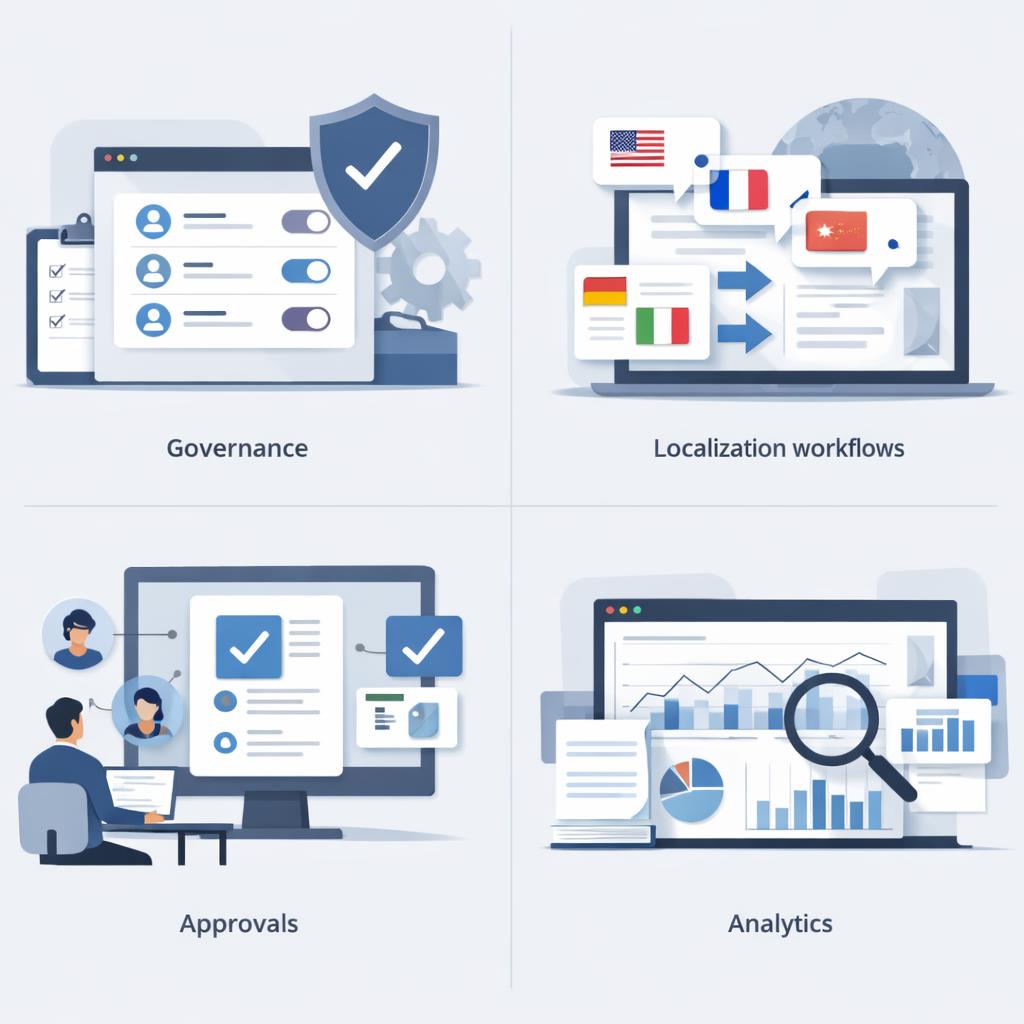
When comparing platforms, start with the controls that protect brand quality. Useful features often include templates tied to campaign types, structured prompt or brief fields, terminology libraries, style guidance by market, approval routing, version history, and role-based permissions. These capabilities help large organizations build repeatable processes instead of relying on individual team habits. Enterprises should also look for multilingual review support, comments by locale, and clear traceability for edits made by both central and regional contributors.
It is just as important to connect content creation with localization and channel execution. A multilingual marketing platform for global teams should help teams move from source content to regional adaptation without rebuilding each asset from scratch. It should support reuse across web pages, email, paid media, and campaign landing pages. Analytics, audit trails, and reporting dashboards strengthen governance by showing where content sits in the workflow, who approved it, and which assets are ready for launch.
Workflow essentials: brand guardrails, approvals, localization, and channel reuse
Strong workflows depend on practical guardrails. Brand standards should be visible during content creation, approvals should match real stakeholder paths, and localization should include regional review rather than simple language conversion. Teams should be able to assign tasks by market, compare versions, and flag assets that need legal or compliance review before publication. If a vendor cannot clearly explain how approvals, revisions, and exceptions are handled, rollout complexity can rise fast.
Enterprises should also confirm whether the platform supports reusable content components and structured localization steps. That makes scaling campaigns easier while reducing repetitive manual edits. During evaluation, ask how source copy, translated variants, and channel adaptations stay linked over time. A practical localization workflow checklist can help teams compare how each platform handles translation review, country-specific edits, and downstream reuse across channels.
How to evaluate platforms for fit, rollout speed, and long-term value
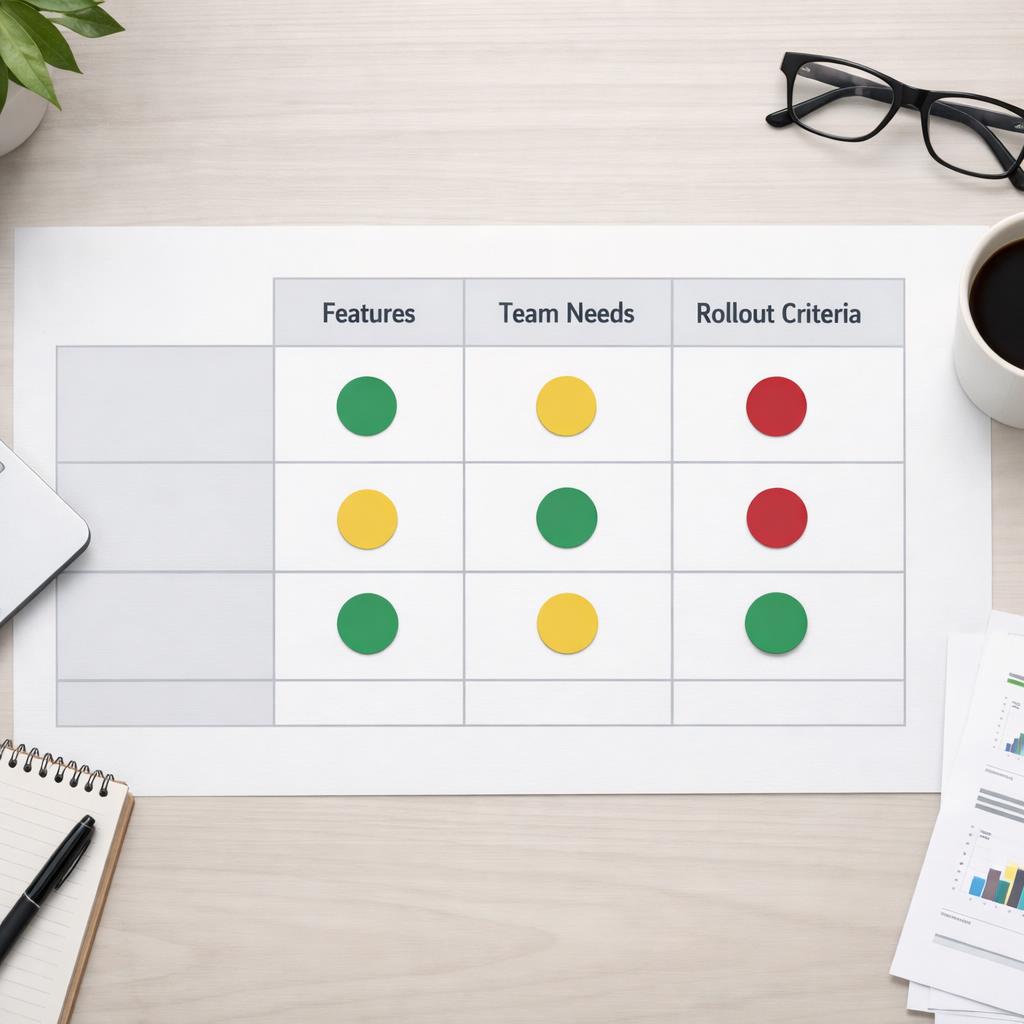
The best evaluation process starts with a few high-value scenarios, such as a multilingual product launch, a regional campaign adaptation, or a recurring content program with legal review. Use these scenarios to test whether the platform fits real workflows instead of polished demo flows. Buyers should look at onboarding effort, administrative setup, permission design, and how easily business users can follow the process. This is also where teams answer how to choose a multilingual marketing content platform based on operational fit rather than feature lists alone.
Long-term value depends on adoption, governance, and integration readiness. A platform may look strong on paper but still create friction if it does not fit the CMS, DAM, analytics, translation, or project management systems already in place. Ask for clear answers on reporting depth, user support, implementation guidance, and how workflow changes are managed after rollout. For many enterprises, the best choice is the one that balances multilingual scale, approval rigor, and rollout practicality without forcing teams into disconnected workarounds.
Questions to ask about integrations, permissions, reporting, and support
Ask whether the platform can connect with the systems your teams already use and what those connections actually enable. For example, can users move approved content into publishing tools, track localization status, or manage assets alongside campaign briefs? Clarify whether integrations are standard, configurable, or dependent on extra services. Review permission models carefully as well so central teams, agencies, and regional reviewers each get the right access without opening governance gaps.
Reporting questions matter just as much. Buyers should ask how the platform measures workflow progress, approval delays, content reuse, and multilingual throughput. Support questions should cover implementation ownership, training options, service levels, and post-launch optimization. Enterprise stakeholders often need confidence that the vendor can support a phased rollout across regions, not just an initial pilot for one team. You may also want to compare findings with your broader enterprise content operations strategy to make sure platform decisions support long-term process maturity.

Conclusion
Choosing an enterprise smart multilingual content generation marketing platform requires more than comparing drafting features. Enterprise teams need a platform that supports governance, localization review, approvals, permissions, and channel reuse within one operating model. The best options help global and regional teams collaborate without weakening brand standards or creating unnecessary manual work.
If you are evaluating an enterprise multilingual content generation platform, prioritize real workflow fit, integration practicality, and long-term manageability. A strong choice should help marketing leaders deliver multilingual campaigns with more structure, clearer accountability, and better reuse across markets. For enterprise buyers, that combination is what turns platform selection into durable operational value.
FAQ
What features matter most in an enterprise multilingual content generation marketing platform?
The most important features usually include brand guardrails, role-based permissions, approval workflows, multilingual review support, reusable templates, version history, reporting, and compatibility with existing marketing and localization systems. Enterprises should also look for clear audit trails and practical controls that support regional adaptation without weakening governance.
How can enterprise teams maintain brand consistency across languages?
Consistency improves when teams work from approved source messaging, shared terminology, market-specific style guidance, and structured approval paths. A platform should support regional review while preserving visibility into edits, ownership, and final approval so local adaptation does not dilute core brand standards.