
If you are comparing an smart multilingual content generation marketing platform, the goal is usually simple: produce campaign content faster, adapt it for multiple markets, and protect brand standards without creating a messy review process. The strongest option should support planning, drafting, localization, approvals, publishing, and reporting in one connected workflow instead of forcing your team to patch together separate tools. For most teams, the best choice is not the platform with the longest language list. It is the one that fits your current workflow, governance model, and publishing stack.

That means looking beyond surface features. You need to see how the platform supports collaboration among marketers, translators, regional reviewers, compliance teams, and channel owners. It should make room for structured briefs, reusable terminology, approval stages, and market-level edits without slowing everything down. If your requirements are still taking shape, start with a content localization checklist so every vendor is measured against the same practical criteria.
What a multilingual content generation marketing platform should help you do
A strong multilingual marketing content platform should help global teams turn one campaign idea into usable assets for many regions without rebuilding the process each time. In day-to-day work, that usually means creating first drafts for emails, ads, landing pages, product descriptions, and social posts, then adapting them for local tone, legal requirements, naming conventions, and character limits. The platform should help central teams keep messaging aligned while giving local teams enough flexibility to make content feel relevant in their own market.
It should also remove common bottlenecks. Instead of long email threads, duplicate files, and version confusion, the system should centralize briefs, comments, revisions, and approvals. A content generation platform for localization becomes far more useful when planning and execution live in the same place, because teams can quickly see what is being drafted, what needs review, and what is approved for launch.
Key workflows for campaign creation, localization, and approvals
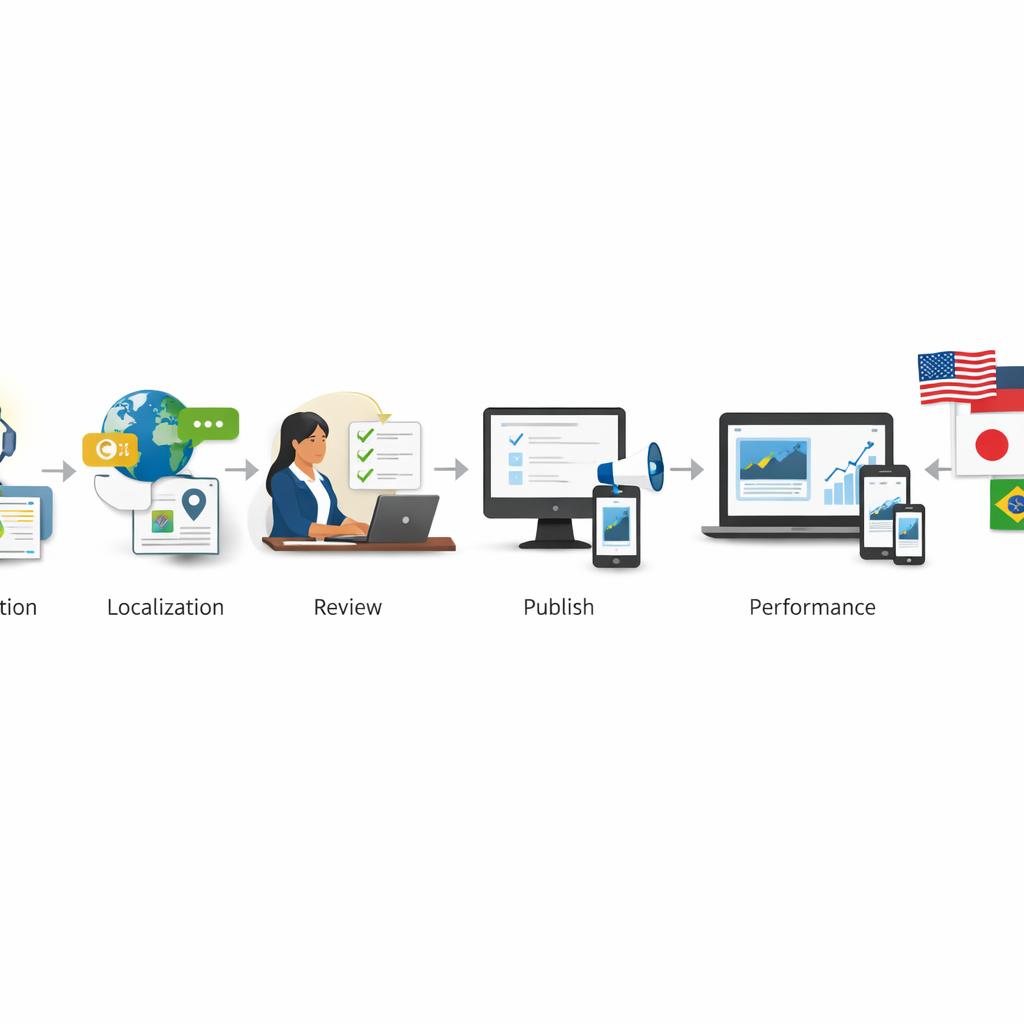
Look for workflows that begin with a campaign brief and move cleanly into asset creation, language adaptation, stakeholder review, publishing, and performance feedback. Useful platforms support role-based handoffs between content teams, regional marketers, compliance reviewers, and outside partners. They should also preserve version history, terminology choices, and approval records so teams can move faster without losing accountability.
- Shared campaign briefs and reusable content templates
- Market-specific routing for review and signoff
- Version tracking for edits across languages
- Publishing support for web, email, ads, and social
- Feedback loops connected to market-level performance
Features that matter most for quality, speed, and governance
When teams ask how to choose a multilingual content generation platform, the answer usually comes down to balance. You need output speed, but not at the cost of editorial control. Quality-focused features include brand voice guidance, glossary management, reusable messaging blocks, and the ability to define tone by market or channel. Speed-focused features include campaign templates, batch creation, and fast review cycles. Governance features should include permissions, audit trails, approval rules, and clear separation between who can draft, edit, approve, and publish.
Reporting matters too. A platform should make it easy to understand which content variants are live, where delays are happening, and how assets perform across markets. This kind of visibility helps teams improve future campaigns and spot workflow issues early. Still, reporting should be viewed as decision support, not magic. Results will continue to depend on your offer, local market fit, and channel strategy.
How to evaluate tone consistency, collaboration, and CMS integration
Ask vendors to show exactly how the platform keeps messaging consistent across languages while still allowing local adaptation. Review sample outputs across multiple content types and check how comments, approvals, and revision requests are handled. Integration is equally important. Compatibility depends on your CMS, DAM, translation tools, and workflow stack, so confirm whether connections are native, partner-supported, or custom. If publishing is a major requirement, review CMS integration best practices before making a final decision.
- Brand guidelines and terminology controls
- Regional editing without losing source intent
- Practical integration with core systems
- Approval logic for legal, compliance, and local review
- Dashboards for status, throughput, and content coverage
How to compare platforms before you commit
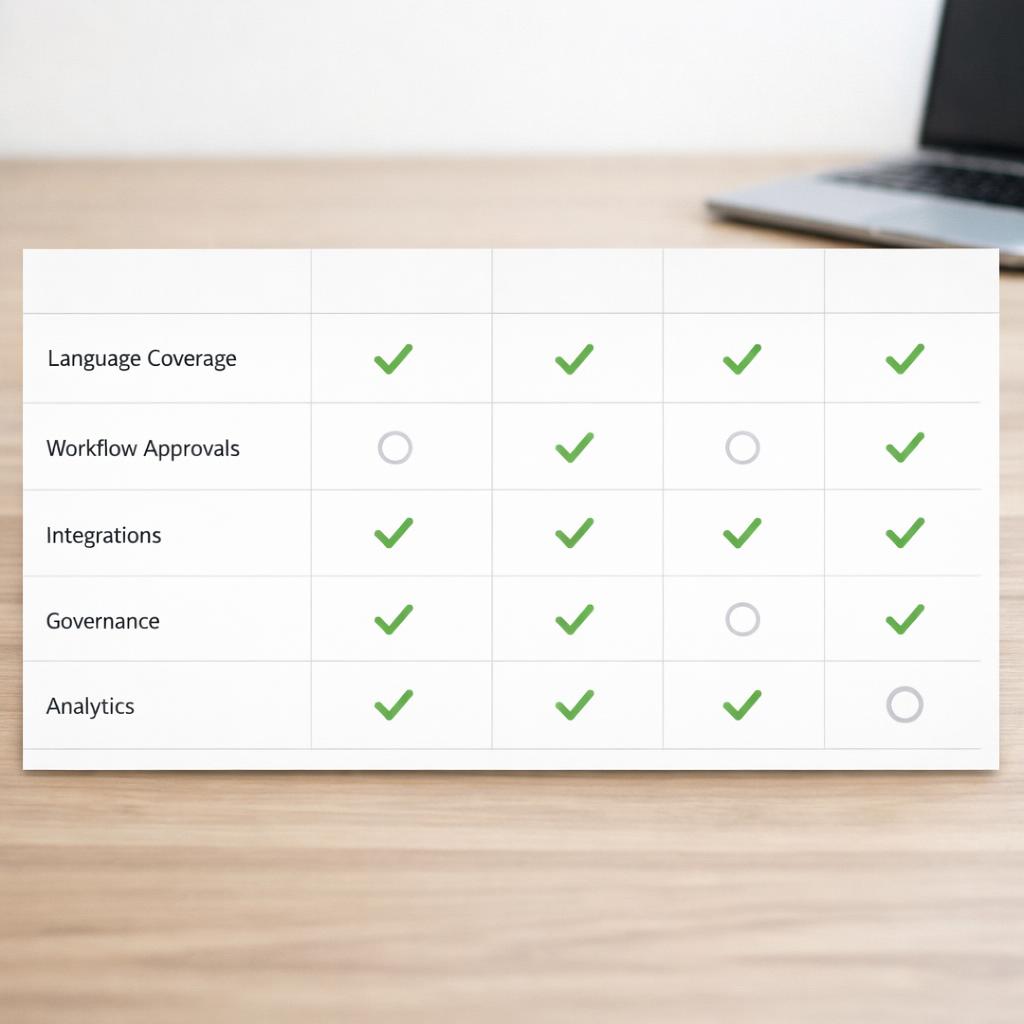
The most reliable way to compare options is with a structured pilot. Build a scorecard around real use cases instead of relying on feature lists or polished demos. Include language coverage, workflow flexibility, collaboration quality, governance controls, integrations, reporting, and total operational effort. A platform that looks impressive in a demo can still create extra manual work once real campaigns, real stakeholders, and real deadlines are involved.
Use a comparison table so every vendor is measured in the same way, especially when several teams are part of the evaluation. Test a mix of content types such as landing pages, email sequences, paid media copy, and product descriptions. Review onboarding, support, and the effort required to train users. In many cases, global teams move faster when they choose a platform that can launch with one region or campaign type, then expand gradually as internal processes mature.
Questions to ask during demos and pilot programs
- How does the platform balance central brand rules with local market edits?
- What approval paths can be configured for regional, legal, and channel teams?
- Which CMS, DAM, and marketing tools are supported out of the box?
- How are version history, comments, and stakeholder signoff tracked?
- Can teams compare source and localized content side by side?
- What reporting is available for workflow efficiency and market coverage?

Conclusion
Choosing an smart multilingual content generation marketing platform is less about picking the broadest promise and more about finding a system that matches how your team actually works across markets. The best options help teams create faster, localize with control, manage approvals clearly, and publish through the tools they already use. Just as important, they support governance without turning every market request into a slow manual process.
If you are narrowing a shortlist, prioritize proof over claims. Run a pilot, use a clear scorecard, and test collaboration, integrations, and brand consistency under realistic conditions. That approach makes it much easier to choose a multilingual marketing content platform that fits your operating model now and can support international growth over time.
FAQ
What features should a multilingual marketing content platform include?
Core features should include structured briefs, multilingual drafting and adaptation support, glossary and brand controls, role-based approvals, version history, collaboration tools, and reporting. Integration with your CMS, DAM, and workflow tools is also important. The right mix depends on your content volume, number of markets, and compliance needs.
How can teams test a multilingual content platform before rollout?
Start with a limited pilot using real campaign assets and a small set of target markets. Measure ease of use, output quality, approval speed, integration effort, and visibility across stakeholders. Include both central and local reviewers in the test, and compare vendors with the same scorecard so your final decision is based on workflow fit rather than presentation quality.