
WriteHuman is worth comparing for routine draft editing if it produces clearer wording without changing your meaning or creating extra correction work. That benefit has not been established here: no source passages, rewritten outputs, or documented detection results were provided. This review offers a testing framework, not a hands-on verdict.
If you searched for “write human smart,” the useful question is whether a rewrite makes your draft easier to finish. More conversational language is not automatically more accurate, and a lower detection score does not prove better writing or establish authorship.
For writers, editors, and content teams, the comparison should include manual editing. A rewriting service needs to save meaningful effort while preserving facts, qualifications, and voice—not simply replace familiar words. Current WriteHuman features, pricing, access terms, and data-handling practices have not been verified for this article. Check official documentation before paying or uploading confidential material.
Test WriteHuman Fairly With Equal-Length Samples
Choose several 150-word passages before testing: an explanation, a customer message, and a factual summary. Include details that must survive revision, such as a deadline, a quantity, and a conditional statement. Use the same word-counting method throughout, including consistent treatment of contractions and hyphenated words.
- Fix the procedure: Use identical editing instructions wherever supported, and leave available settings unchanged. Record the date, access tier, and visible settings rather than assuming particular controls exist.
- Keep the evidence: Save every source and complete output, along with word counts, attempt numbers, and manual changes. Include unsuccessful attempts so the comparison reflects ordinary use, not just the strongest result.
- Match length openly: Request 150 words if supported, allowing no more than two retries with the same instructions. If the output still differs in length, report that difference instead of silently trimming it.
- Add manual editing: Have an editor revise each source to 150 words under the same meaning-preservation requirements. Track editing time and the corrections needed afterward for both workflows.
Keep unmatched outputs in the record, but separate them from equal-length comparisons. If you adjust an output manually, label it as a combined workflow. Matching length removes one possible source of variation; it does not eliminate differences caused by topic, wording, or reviewer preference.
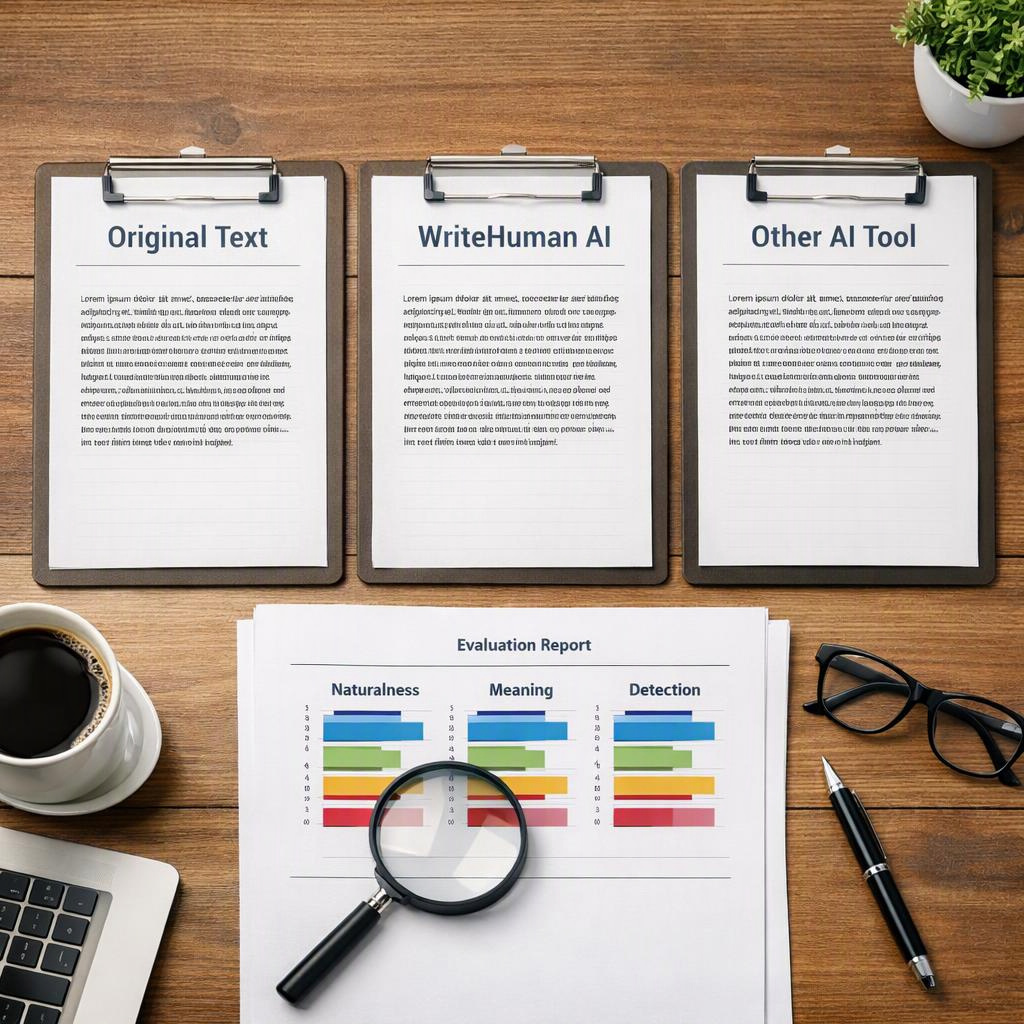
Compare Naturalness, Meaning, and Detection Scores Separately
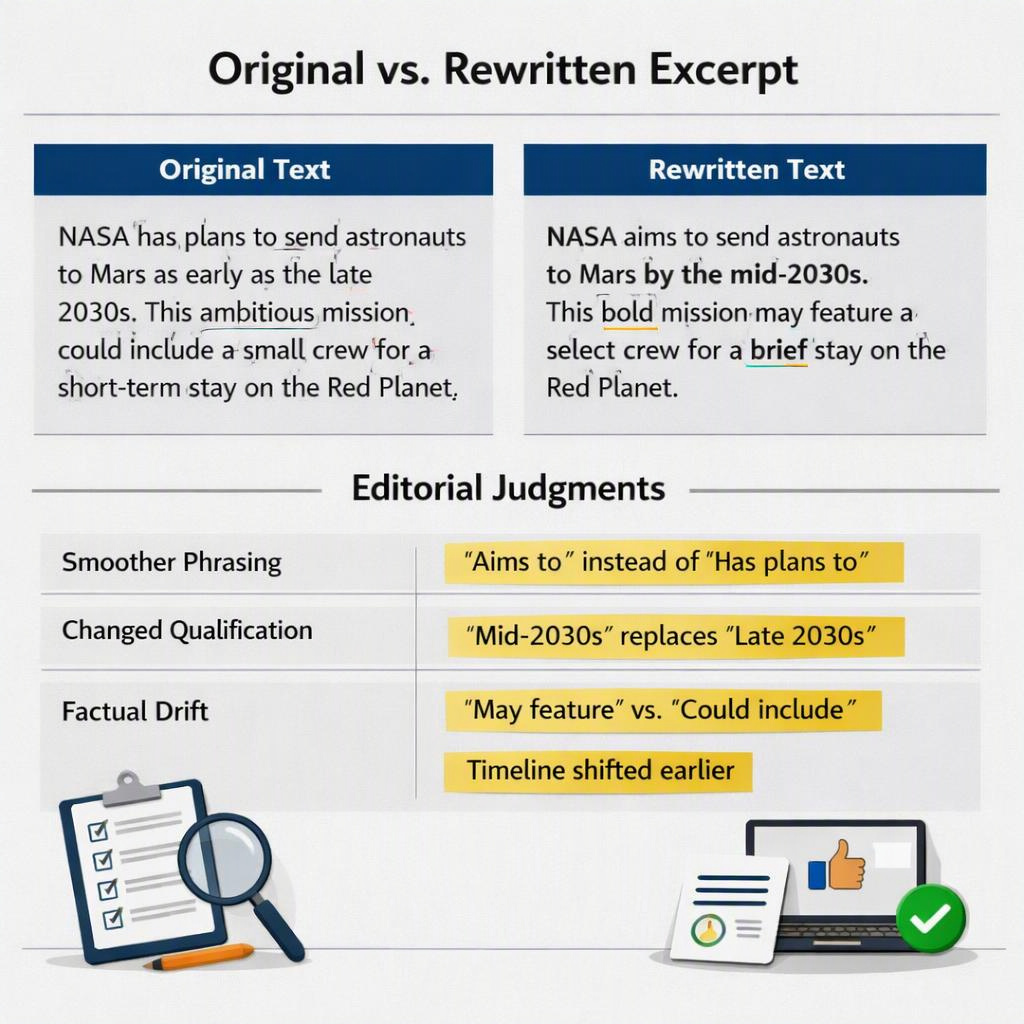
Review unlabeled versions in randomized order before looking at detection results. Record who reviewed them and which criteria they used. Naturalness involves editorial judgment; accuracy requires checking the original claims. Neither can be established by a detector’s label.
- Naturalness: Check fluency, familiar phrasing, and consistent voice. Highlight repetitive sentence openings, stiff transitions, or unnecessary formality. Explain what sounds awkward with an excerpt rather than assigning a precise-looking score without a defined scale.
- Meaning: Compare names, numbers, conditions, omissions, certainty, and emphasis. Changing “may reduce delays” to “will prevent delays” strengthens the promise and changes the claim, even if the sentence sounds smoother.
- Detection: Record the service, test date, submitted version, and exact returned label or score. Keep different scoring systems separate. Do not average incompatible results or present any score as proof of authorship.
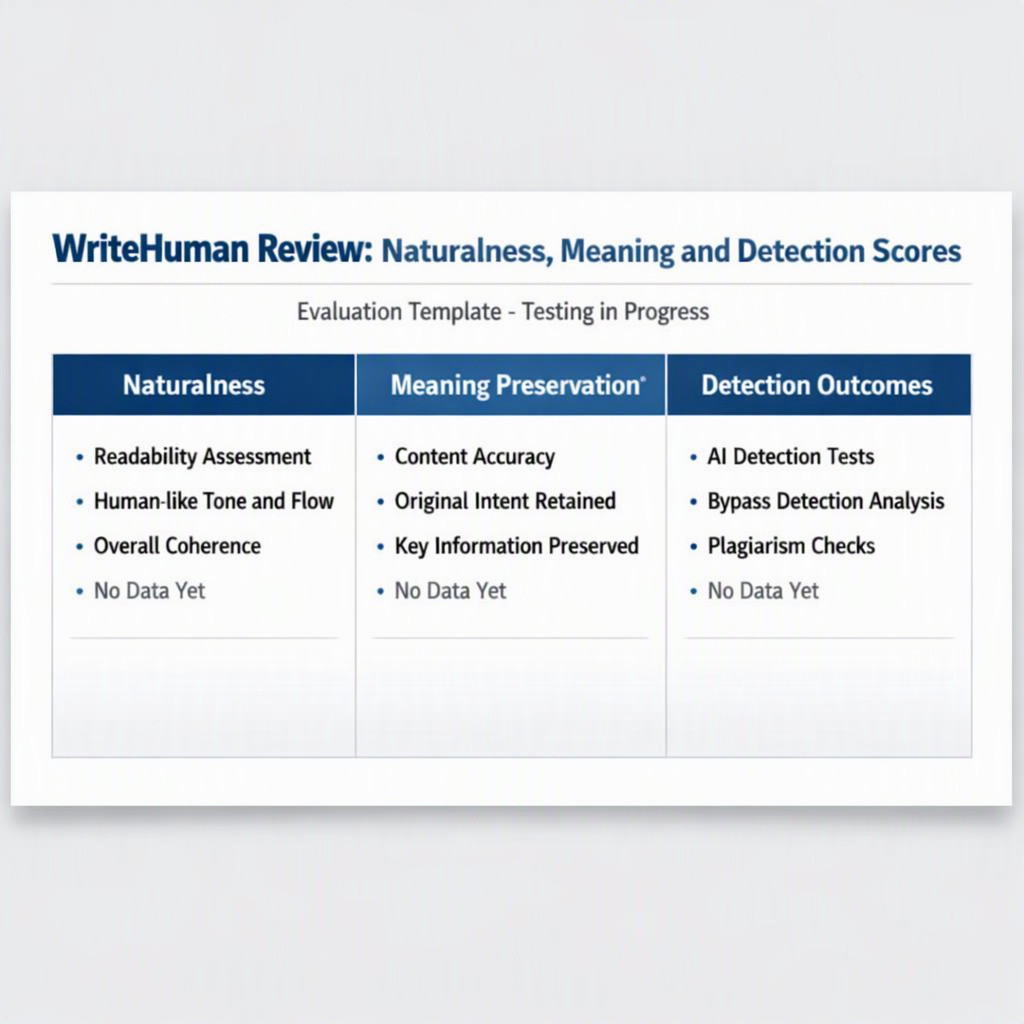
The scorecard below is a template, not a set of findings. No observations are available. Before publishing detection results, consult and cite each service’s current official documentation on score interpretation and limitations.
- Naturalness: Not tested. Add equal-length excerpts with specific editorial comments about readability and voice.
- Meaning preservation: Not tested. Document retained claims, missing qualifications, omissions, and factual changes.
- Detection outcomes: Not tested. Report service-specific results separately from writing quality, permission, and submission requirements.
Decide When WriteHuman Fits—and When Manual Editing Matters More
WriteHuman is worth comparing when routine wording changes consume editing time: the potential value is a usable first revision that leaves less cleanup. Whether it delivers that value depends on your samples. You can also review the /reducer page, but its purpose is unverified here; confirm relevance before treating it as an alternative.
- Routine draft polishing: Start with nonconfidential material that is straightforward to fact-check. Keep the workflow only if it reduces total editing effort compared with manual revision.
- Voice-sensitive writing: Use close editorial supervision. Personal essays, executive messages, and distinctive brand copy may depend on phrasing that a rewrite could flatten or remove.
- Factual or technical content: Put meaning checks first. Verify definitions, measurements, exceptions, and causal claims against authoritative sources, even when the output reads cleanly.
- Policy-restricted submissions: Check the receiving organization’s rules before using a rewriting service. A detection result cannot establish permission or guarantee that a submission will be accepted.
Compare verified cost, correction time, privacy requirements, and meaning retention for each scenario. Read current product terms before uploading restricted material; no particular third-party policy is established here. If revisions repeatedly require rebuilding facts, restoring qualifications, or recovering the intended voice, manual editing remains the stronger baseline. A polished first impression is not enough to justify additional review work.
Conclusion
WriteHuman may fit routine revision, but only if representative tests show clearer language, preserved meaning, and acceptable correction effort. The material provided does not establish those outcomes. Detection scores should remain a separate observation, not the deciding measure of writing quality.
For a practical first check, choose one nonconfidential passage and compare its rewrite with a manual revision at the same word count. Verify facts, qualifications, and emphasis, then time how long each version takes to become publication-ready. This reveals more about everyday usefulness than a fluent opening sentence or an isolated score.
One successful example does not establish consistent performance. Repeat the comparison across the writing you actually handle, keep failed attempts visible, and verify current terms. Expand use only when the results meet your requirements for accuracy, voice, privacy, and review time.
FAQ
When is WriteHuman a logical choice, and when should I check the output more carefully?
It is a candidate for routine, nonconfidential drafts with straightforward fact checks. Technical, voice-sensitive, or restricted material needs closer review and may favor manual editing. Verify current features and applicable submission rules before testing.
Can WriteHuman change facts or the intended meaning of a draft?
Rewriting can omit details or change certainty, but no WriteHuman-specific error rate is established here. Compare names, numbers, conditions, and emphasis sentence by sentence. Smooth wording does not show that every original claim survived.
Would a lower detection score prove that the rewrite is better?
No. Readability, voice, and accuracy need separate assessment. Interpret results using each service’s official guidance, and retain its original labels. A changed score does not prove authorship, establish permission, or guarantee acceptance.
How can I decide whether WriteHuman is worth using for editing?
For your routine drafts, test several equal-length passages against manual revision. Compare verified access cost, total review time, factual corrections, voice retention, and privacy terms. Use those results to decide whether the workflow saves effort without weakening accuracy.