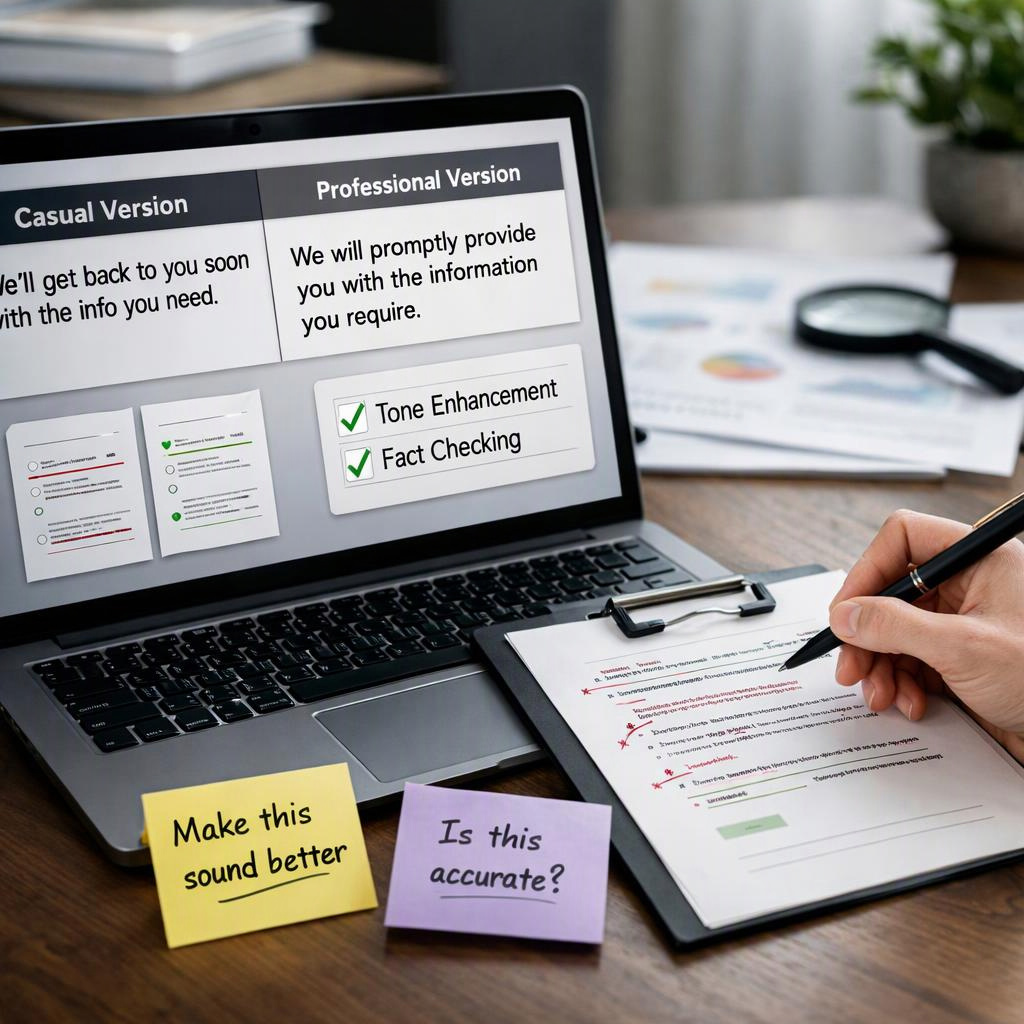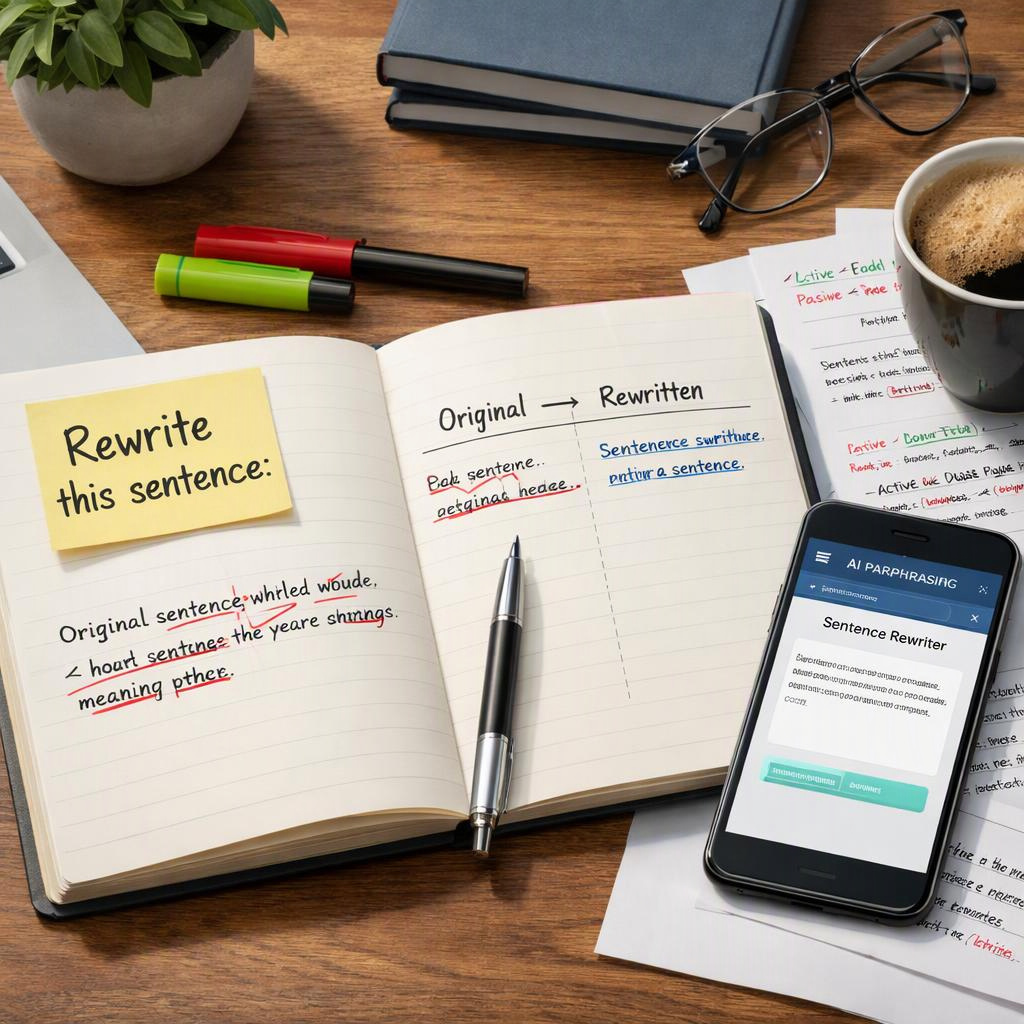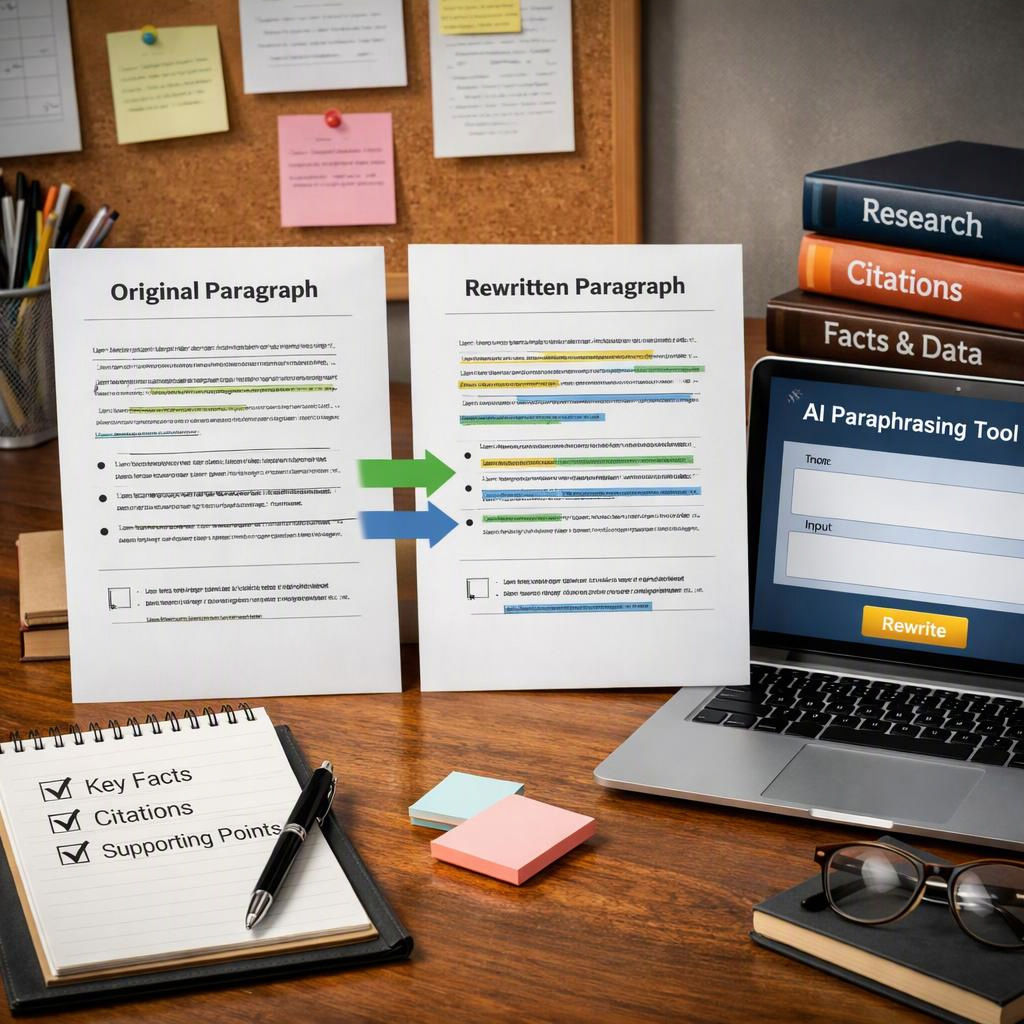

Paraphrase when you need different wording or sentence structure without changing the meaning. Humanize when the problem is tone, rhythm, or how well the writing suits its readers. Some drafts need both; others need only a small edit. For wording-focused work, the paraphrasing tool is worth comparing because alternative phrasing is relevant to that task. Check its documented functions and requirements before deciding whether it fits your draft.

Here, “humanizing” means editing text to sound natural and appropriate for its audience. It is not a standardized process or a promise of better writing. A report may need restrained, precise language, while a customer email may need warmth and a clear next step. Neither benefits from making every sentence casual. Start by identifying the actual problem: confusing wording, unsuitable tone, inaccurate information, or a combination. That diagnosis keeps you from rewriting sentences that already work.
Paraphrasing Changes Expression; Humanizing Focuses on Tone
A paraphrase restates an idea using different wording and structure while preserving its substance. Humanizing focuses on how the message comes across: does it feel stiff, distant, repetitive, or out of place? Both can simplify sentences, but they answer different questions. Paraphrasing asks, “Does this express the same idea differently?” Tone-focused editing asks, “Does this sound right for this reader and situation?”
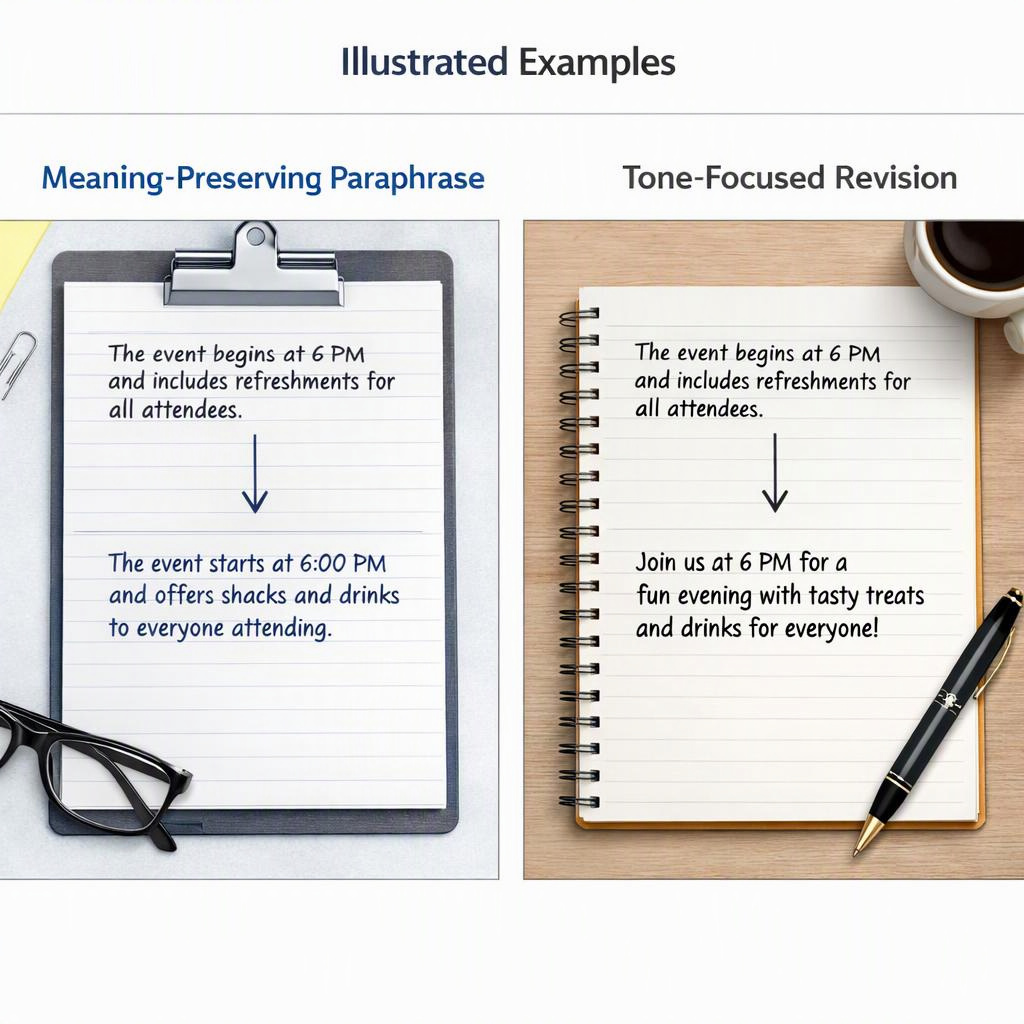
- Original: “Please submit the completed form by Friday so the team can review your request next week.”
- Meaning-preserving paraphrase: “To allow the team to review your request next week, please return the filled-out form by Friday.” The order changes, but the required action, deadline, and purpose stay intact.
- Tone-focused revision: “Please send us your completed form by Friday so we can review your request next week.” Direct pronouns make the request more conversational without changing its timing.
These are editorial examples, not product outputs or performance tests. They show why the tasks overlap: changing expression can improve tone, too. But neither revision tells you whether Friday is the correct deadline. Neither task guarantees accuracy, originality, acceptance, or a detector result. If the source information is wrong, verify and correct it before polishing the wording.
Choose Your Editing Task by What the Draft Needs
Define what a successful revision should accomplish before choosing an editor. A student restating a sourced explanation has a different task from a marketer softening a stiff announcement. Someone revising precise instructions may need only one careful manual change. Match the editing method to the problem, not the label.
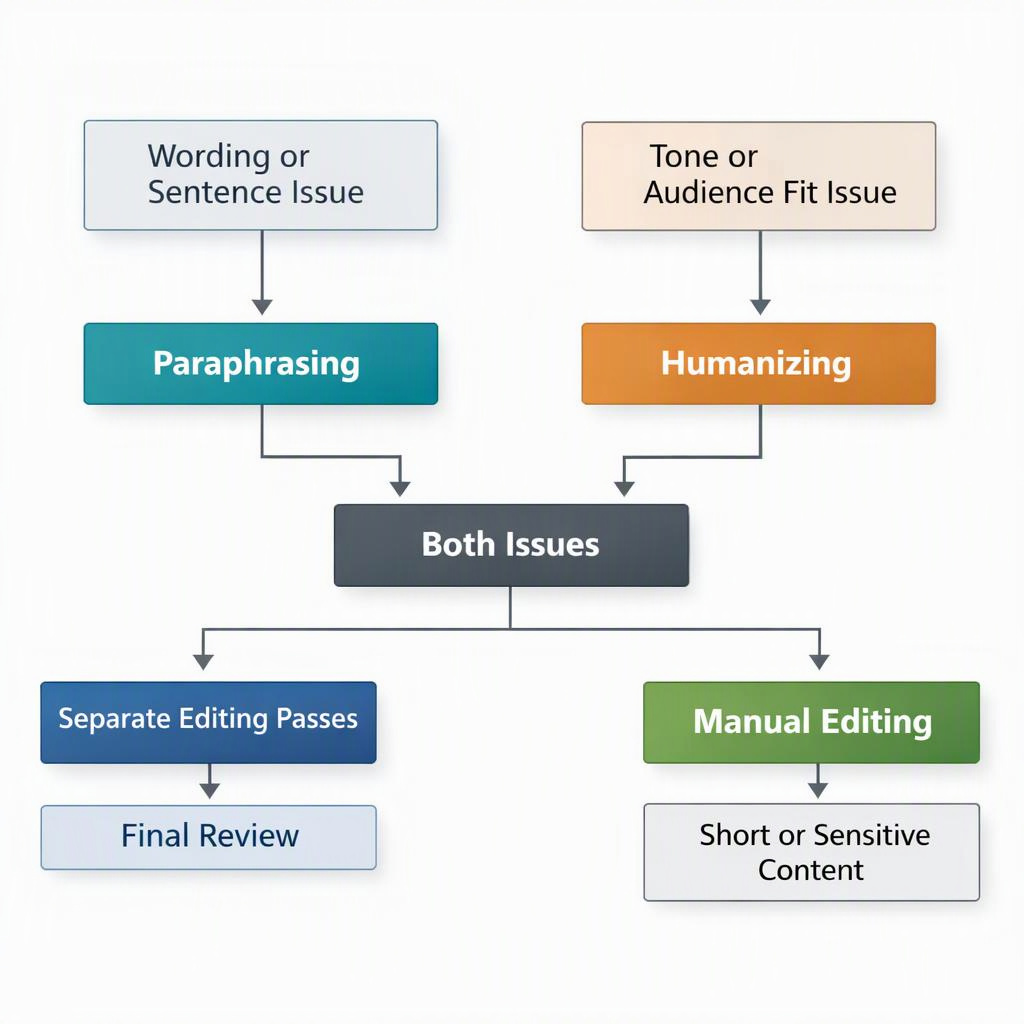
- Awkward wording or tangled structure: Paraphrase the passage. Check that the revision preserves relationships between ideas, important details, and the original emphasis.
- Stiff tone or poor audience fit: Revise the voice manually or evaluate a humanizing editor. Keep any formality and technical language the reader needs.
- Both wording and tone problems: Use separate passes. Clarify the expression first, then adjust the voice while keeping facts and qualifications intact.
- Factual errors or unsupported claims: Research and correct them first. Clearer wording cannot make an inaccurate statement reliable.
- Short or sensitive text: Consider manual editing. Before uploading confidential material, confirm permission and review the service’s official data-handling information.
Decision path: Wording problem → paraphrase; audience-fit problem → revise tone; both → make separate passes and review each. For a short passage, manual editing may take less effort than evaluating generated alternatives. For sensitive material, authorization and data handling come first. If the sentence is already clear and appropriate, leave it alone.
Review Meaning, Voice, and Attribution Before Publishing
To paraphrase without changing meaning, compare what each version actually says—not just whether the replacement words seem similar. Conditions, exceptions, quantities, and degrees of certainty are easy to lose. “May reduce delays” does not mean “will prevent delays.” Likewise, “some customers” should not become “customers” if that change broadens the claim.
- Meaning: Preserve who does what, why it happens, and under which conditions. Check negatives, comparisons, causes, exceptions, and words such as “must” or “may.”
- Facts: Verify names, dates, measurements, and claims against reliable source material. Smooth wording is not evidence that a statement is correct.
- Voice: Read the passage aloud. Remove unnecessary stiffness, but avoid adding slang, false familiarity, or confidence the evidence does not support.
- Attribution: Keep appropriate citations for borrowed ideas. Rewording does not make another person’s work your own. Use quotation marks and attribution when retaining exact language.
- Submission rules: Check school, employer, client, or publisher requirements. Confirm what editing assistance is permitted and whether you need to disclose it.
Review the original and revision side by side, then read the revised passage in context. A sentence can retain its isolated meaning while weakening the surrounding argument or repeating the previous point. If an edit broadens a claim, removes a qualification, or changes an instruction, revise it again. Better flow is useful only when the message remains faithful.

Conclusion
Paraphrasing primarily changes expression; humanizing primarily improves tone and audience fit. Choose based on the draft’s weakness. When wording is the problem, paraphrase while preserving the underlying claims. When tone is the problem, adjust the voice without adding unsupported ideas. If both need work, separate the passes so you can track what changes.
For a wording-focused draft, review the paraphrasing tool and compare its documented functions, input requirements, and data-handling information with your task and permissions. This helps you decide whether the service or a targeted manual edit is the better fit. For tone-focused work, identify the intended reader and required level of formality first. Before using any revision, compare its meaning, factual details, and citations with the original, and verify that the assistance complies with your submission rules. Stop when the passage is clear, appropriate, and accurate—not when every sentence looks different.
FAQ
Can paraphrasing also make writing sound more natural?
Yes, especially when the original has tangled sentences or awkward phrasing. Reorganizing those sentences can improve flow. But a paraphrase can also become wordier or less precise. Judge whether the revision is easier for the intended reader to understand while preserving the original meaning, not how many words have changed.
Should I paraphrase or humanize a draft first?
Usually, clarify wording and structure first, then refine the tone. This avoids polishing sentences you may later replace. If the wording is already clear and only the voice is unsuitable, skip the paraphrasing pass. Correct factual errors before either task, and review meaning after each pass.
When is the linked paraphrasing tool a logical option?
It is worth comparing when you need alternative wording or sentence structure and can review the result carefully. It does not replace research, attribution, or permission to use an editor. Check its documented functions, input requirements, and data handling; choose manual editing if those conditions do not fit.
How should I evaluate an automated paraphraser?
Start with documented functions relevant to your draft, rather than promises of dramatic rewriting. If testing is permitted, use a nonsensitive passage and compare the result with the original for meaning, clarity, tone, and the amount of correction needed. Before submitting sensitive text, verify authorization and the service’s official data-handling terms.