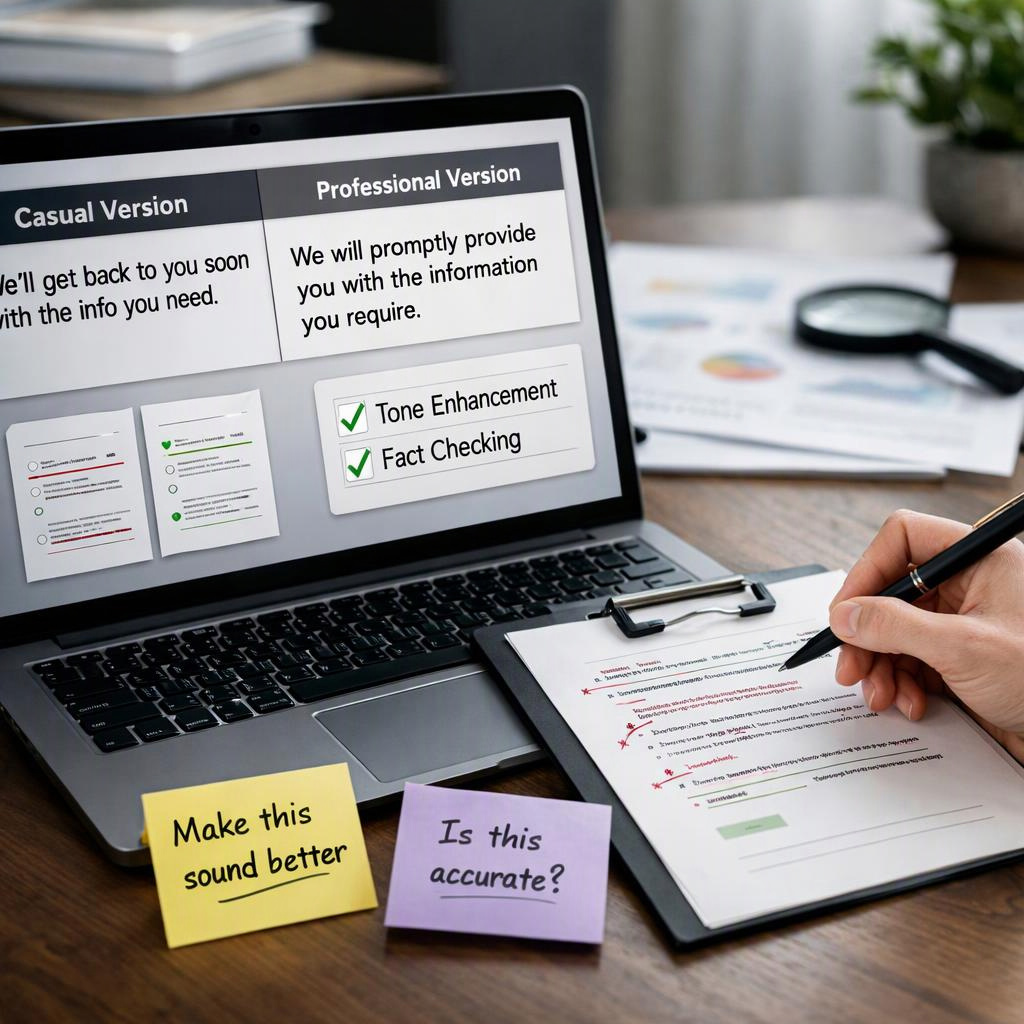

To rewrite a paragraph without changing its meaning, identify the facts and relationships that must stay, revise the wording, then check both versions side by side. The sentences can look different, but the claim must still rest on the same evidence. Qualifications, exceptions, and citations need to keep doing the same work.
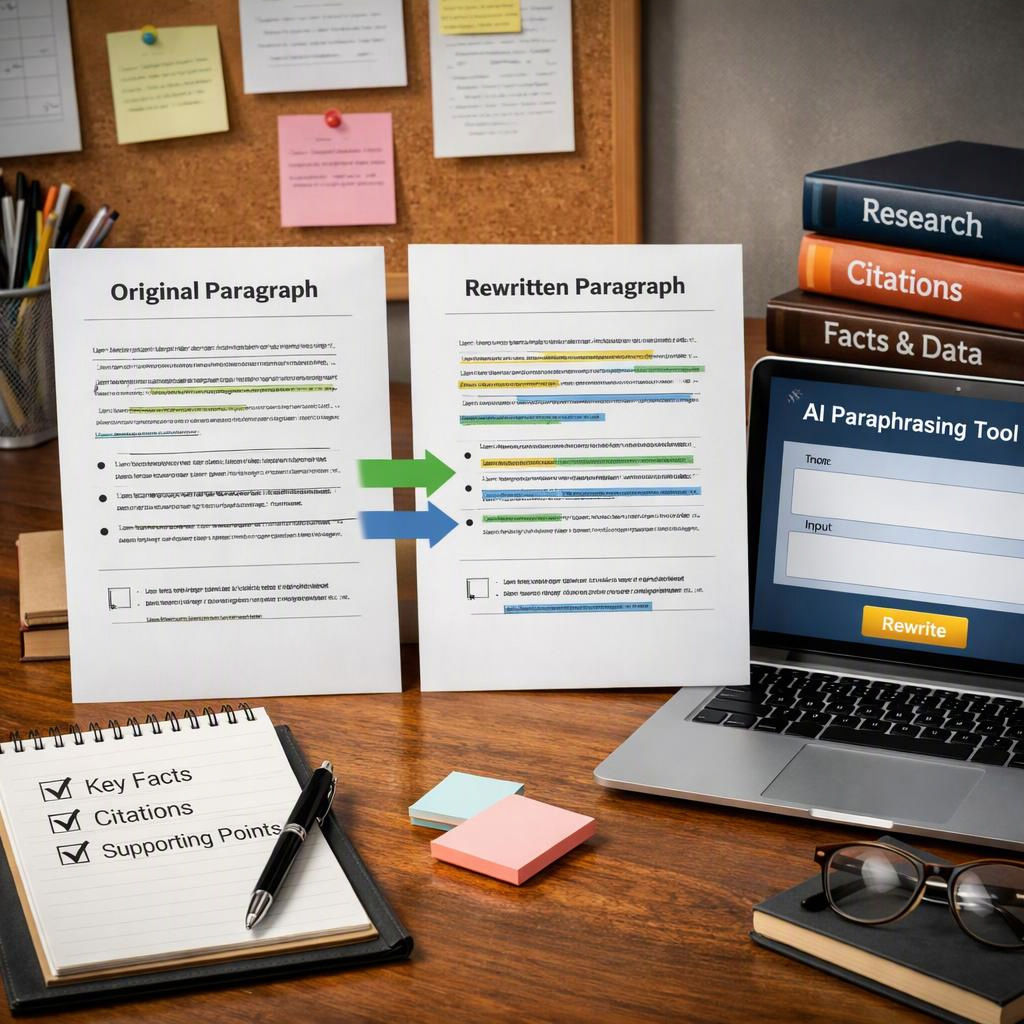
A paraphrasing tool is worth comparing with manual editing when you need alternative phrasing rather than new information. Check its available functions before choosing it for your task, and review every draft for accuracy. Whether you edit yourself or use a paragraph rewriter, clearer language is the goal—not stronger conclusions or fewer inconvenient details. The workflow below helps students, editors, and professionals separate wording they can change from meaning they must preserve. If the original appears to contain an error, flag it for verification instead of silently correcting it.
Map the Paragraph’s Claim, Evidence, and Facts Before Editing
Before changing words, identify what each sentence does. It might introduce a claim, provide evidence, explain a limitation, or draw a conclusion. One sentence can serve several roles. Focus on how these parts connect rather than forcing the paragraph into a fixed pattern.
- Claim: What main point does the paragraph ask readers to accept?
- Evidence: Which observations, examples, or source statements support that point?
- Qualification: What limits apply to the population, circumstances, certainty, or interpretation?
- Conclusion: What takeaway follows, and does the evidence justify it?
Next, make a fact inventory beside the original. Record specific details, not just a summary. Include negative findings and exceptions; dropping “not” or “except” can reverse the meaning. Also distinguish what a source reported from what the writer inferred.
- Identity and timing: Names, organizations, roles, dates, and time periods.
- Measurements: Quantities, units, ranges, denominators, and comparison baselines.
- Boundaries: Conditions, exclusions, scope, and words that express uncertainty.
- Attribution: Who reported each point and which claim each citation supports.
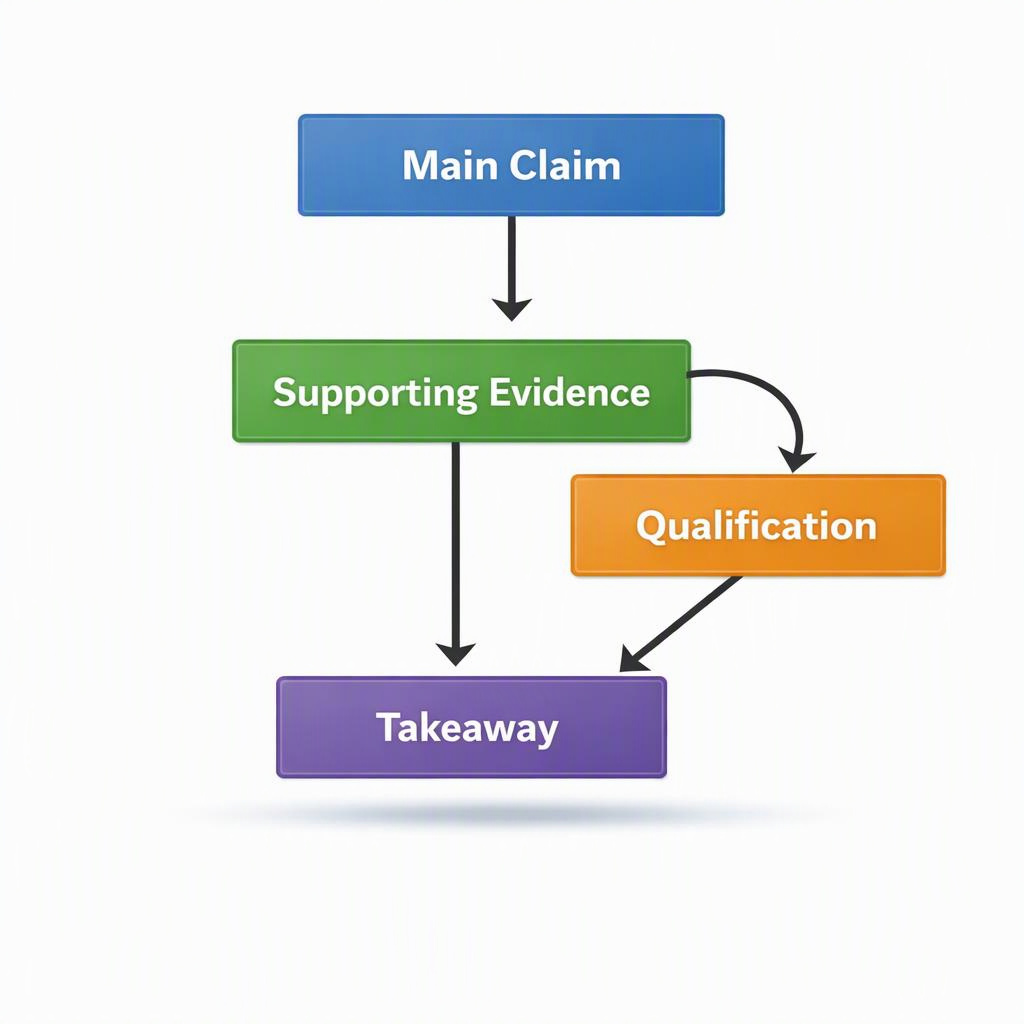
Structure map: Evidence → claim → takeaway. Qualifications limit the claim and takeaway. Preserve these connections even when you change sentence order.
Rewrite the Wording Without Breaking the Argument
Choose one main editing goal: clearer sentences, a more appropriate tone, or tighter wording. Changing length, style, and organization all at once makes mistakes harder to spot. Keep the argument intact first, then improve how it reads.
- Define the goal: Name the audience, intended tone, and approximate length.
- Lock factual details: Preserve names, numbers, units, technical terms, and necessary qualifiers unless a replacement is demonstrably equivalent.
- Change construction: Split crowded sentences, replace vague pronouns, or name the actor when the original identifies one.
- Retain relationships: Keep contrasts, conditions, and sequence clear. “However,” “if,” and “therefore” are not interchangeable.
- Compare immediately: Check each revised statement against the original before starting another editing pass.
Request template: For a “rewrite paragraph” request, give clear boundaries: “Rewrite my paragraph in a clear, professional tone at approximately the same length. Preserve its argument, technical terms, facts, evidence, and attribution. Do not add information, remove qualifiers, alter quotations, or separate citations from their claims. Flag ambiguities instead of guessing.”
- Original structural template: [Claim], supported by [evidence and citation], subject to [limitation].
- Revised structural template: [Evidence and citation] supports [claim]. This conclusion applies only within [limitation].
- Acceptance rule: Reorder these parts only when emphasis, scope, and the evidence-to-claim connection remain intact.
Check Every Fact and Citation Before Accepting the Rewrite
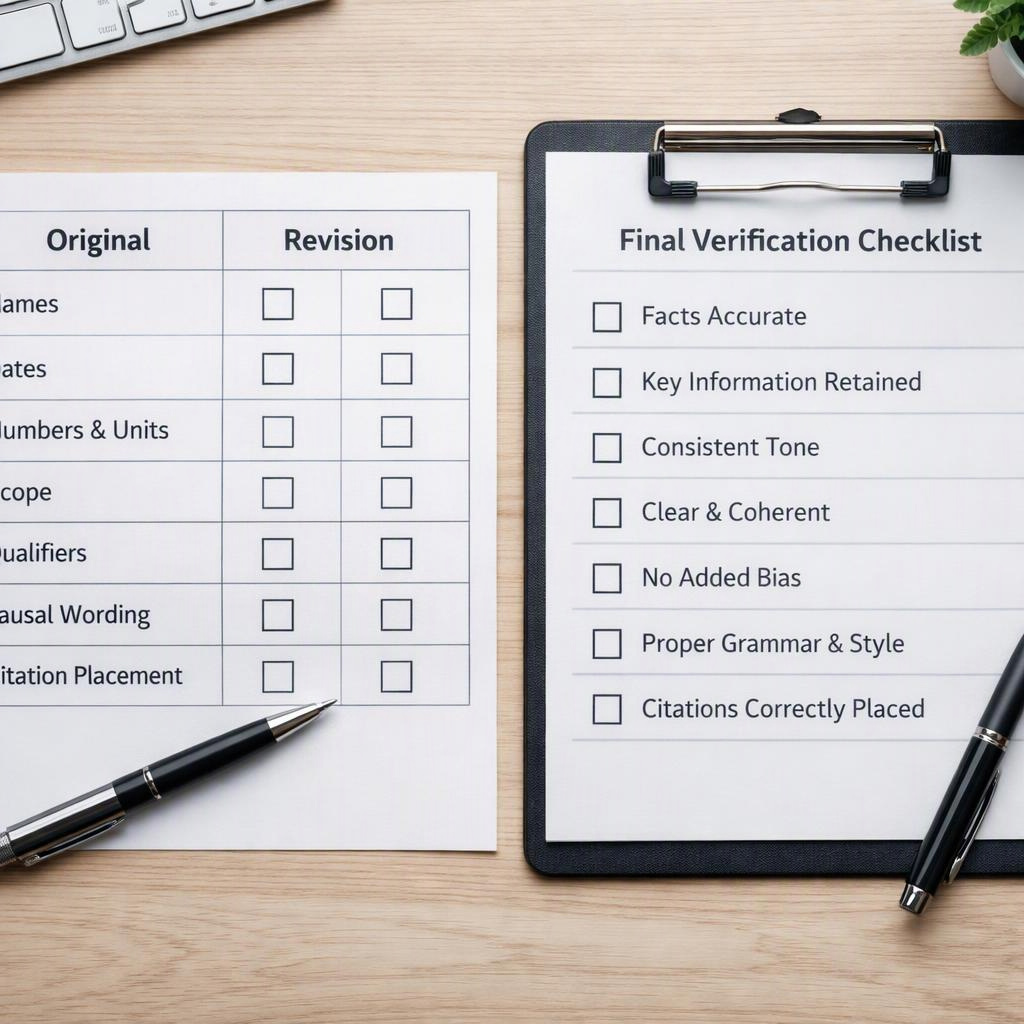
Read both versions side by side. Find a revised equivalent for every factual statement in the original, then check in reverse for additions. Anything without a counterpart needs attention. A smoother sentence is not necessarily a more accurate one.
- ☐ Names and dates: Match identities, spellings, roles, and time periods.
- ☐ Numbers and units: Match quantities, ranges, denominators, and comparison baselines.
- ☐ Scope and qualifiers: Keep narrow findings narrow and uncertainty visible.
- ☐ Causal wording: Do not change association into causation or sequence into proof.
- ☐ Evidence and attribution: Keep quotations exact and citations attached to supported claims.
- ☐ Logical structure: Preserve conditions, contrasts, exceptions, and the conclusion’s dependence on evidence.
Rewriting does not remove the need for attribution. When a detail or citation is unclear, consult the source rather than assuming the original is correct. Choose your review method according to the consequences of an error, not just the paragraph’s length.
- Minor wording changes: Manual editing keeps individual revisions easy to inspect.
- Broader phrasing alternatives: Tool-assisted drafting is an option, followed by the same fact-and-structure check.
- Technical, legal, medical, or other high-stakes material: Verify against sources or seek qualified review. Before submitting confidential text to a service, check its data-handling terms and your applicable requirements.

Conclusion
A reliable paragraph rewrite changes the expression without changing the evidence or argument. Sentence length, rhythm, and phrasing can vary; facts, attribution, and limitations must survive. If a polished revision broadens a claim or weakens an exception, it is not equivalent to the original. Keep both versions available until the comparison is complete, and pause when an ambiguity needs a source check.
For a paragraph that needs clearer wording, start with your fact-and-structure checklist. Then compare manual editing with the paraphrasing tool as routes to alternative phrasing. Check whether its available tone and length controls match your task and whether its data-handling terms permit your material. Before accepting a draft, verify names, numbers, qualifiers, claim order, and citation placement against the original. These checks help you choose a useful editing method and judge the result by accuracy, not fluency alone.
FAQ
How much can I change a paragraph’s sentence order without changing its meaning?
You can move sentences if their connections remain clear. Keep definitions before statements that depend on them, and place qualifications where readers can tell what they limit. Recheck pronouns and transitions afterward. The same facts in a different order can suggest a different argument.
Do I still need a citation after rewriting a paragraph in my own words?
Yes, when you use another source’s ideas, findings, or distinctive information. Changing the wording does not make that material your own evidence. Keep attribution attached to the relevant claim, and retain quotation marks around any wording that remains a direct quotation.
How can I shorten a paragraph without removing important evidence?
Cut repetition, empty introductory phrases, and explanations that repeat an established point. Keep the evidence needed for the conclusion, including limitations and comparison details. If meeting a length limit requires removing substantive information, describe the result as an abridgment rather than an equivalent rewrite.
When is the linked paraphrasing tool a logical option?
It is an option when you want wording alternatives you can independently check, not a sole reviewer for high-stakes material. Before using it, compare its available editing functions and confidentiality terms with your task; use source checks or qualified review when accuracy requires subject expertise.