

Originality pricing is worth comparing when you need a repeatable content-checking step before publication, but the right purchase option depends on your workload and the reports you need. Current prices, plan names, features, and billing terms could not be verified from the supplied information. This guide therefore explains what to compare without presenting older prices as current offers.
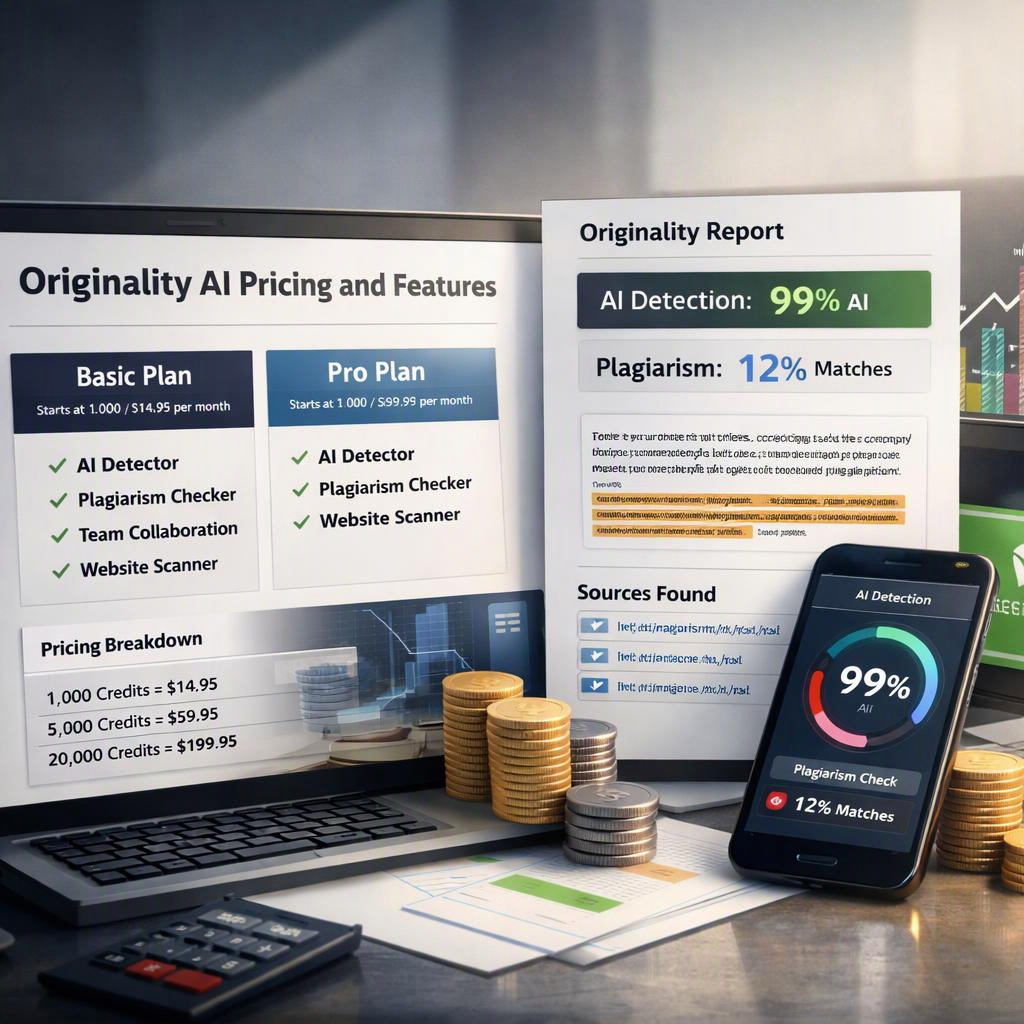
For website owners, the key question is not just “What does it cost per month?” It is “What will I pay upfront, how much content can I check, and will the results help my editors?” An advertised monthly equivalent may require annual payment, while credits mean little without a documented conversion into usable capacity.
Check Originality’s official website for current offers. For an alternative checking workflow, review the detector page and compare documented access requirements, limits, and outputs. Neither option should be assumed cheaper or better suited without that comparison.
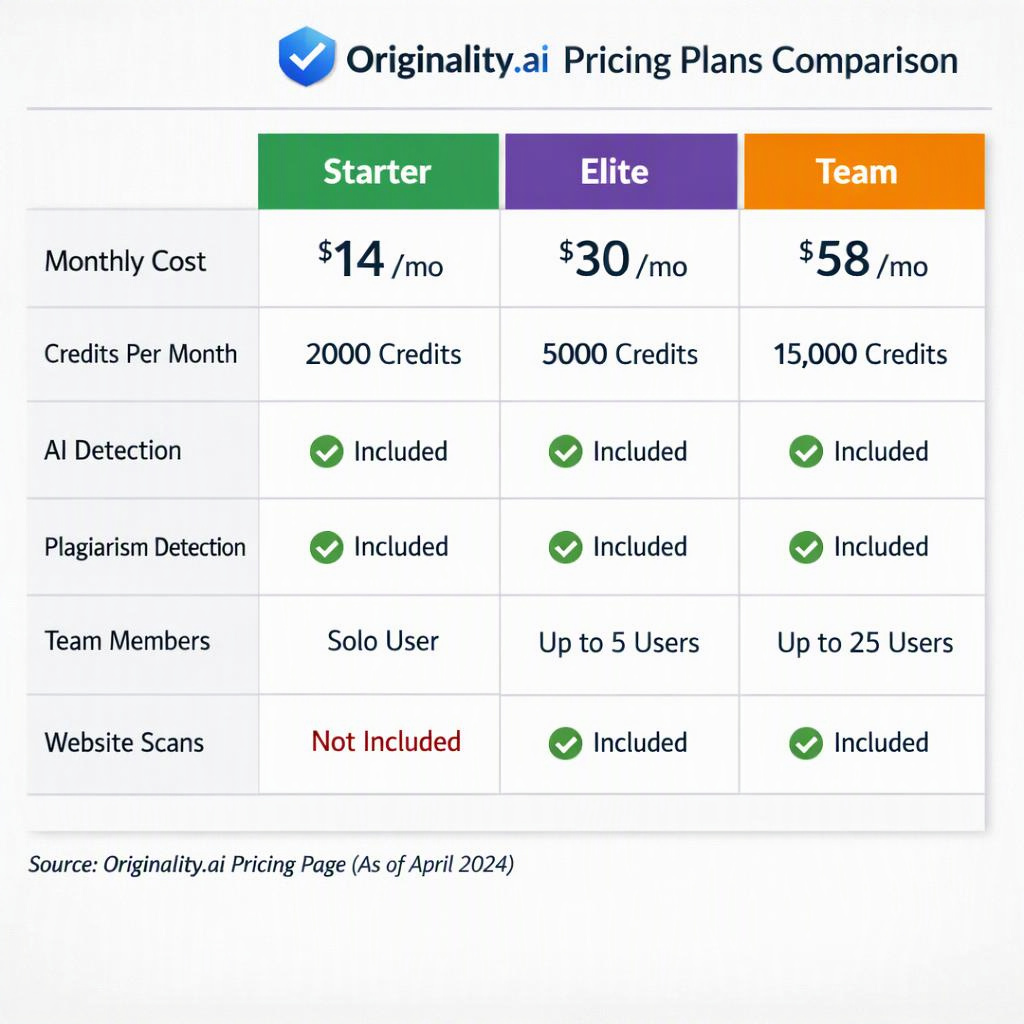
Compare Originality Plans, Credits, and Billing Limits
A useful originality pricing comparison needs more than a headline price. Record the current offer alongside its billing rules so you can distinguish a manageable commitment from an allowance that does not fit your publishing schedule. The items below are verification questions, not confirmed product features or restrictions.
- Price and commitment: Note each plan name, currency, billing schedule, amount due today, renewal price, and applicable taxes. Separate annual prepayment from a genuine monthly payment option.
- Credit allowance: Confirm included credits, words per credit, and rounding rules. Ask whether running different checks on the same text consumes credits separately.
- Included checks: Identify which checks and report outputs come with each purchase option. Do not assume every capability advertised on the website belongs to every plan.
- Credit lifecycle: Verify expiration, rollover, repeat-check charges, and additional-credit purchases. Find out whether reaching the allowance stops checking or creates another charge.
- Account restrictions: Check document-size limits, permitted users, access permissions, and any separately priced workflow access. Capacity and team access are different purchasing questions.
- Exit terms: Confirm cancellation deadlines, refund rules, renewal handling, and access to unused balances after cancellation. These details matter especially when your publishing volume changes.
Save the official source and the date you checked it beside your comparison. If a material detail is missing, mark it as unconfirmed and request clarification before paying. A blank in your notes is not evidence that a feature is unavailable or that a restriction applies.
Read an Originality Report Without Overstating Its Findings
Here, “originality report” means a report produced by Originality. Its current fields, score definitions, highlighting, sharing options, and export formats were not verified. Before buying, review a documented sample and ask whether it gives your editors enough information to investigate a concern—not merely a number to record.
- Read the score definition: Establish what a percentage actually measures. Do not automatically treat it as the percentage of words written by a particular source or as proof of authorship.
- Separate scoring from matching: If a documented plagiarism or source-matching check is included, review that evidence independently. A classification score and a matching passage answer different editorial questions.
- Inspect context: Where source matches are available, read the quotations, citations, and surrounding text. A match may need explanation rather than immediate removal or rejection.
- Preserve review context: Keep the submitted version, check date, selected settings, and editor’s decision together. This prevents later revisions from being confused with the text originally checked.
Treat automated scores as signals for further review, not conclusive evidence of misconduct. When concerns arise, ask the writer for relevant drafts, sources, or an explanation. The report should support a documented editorial judgment rather than replace it.
Match Plan Capacity to Your Website’s Review Workload
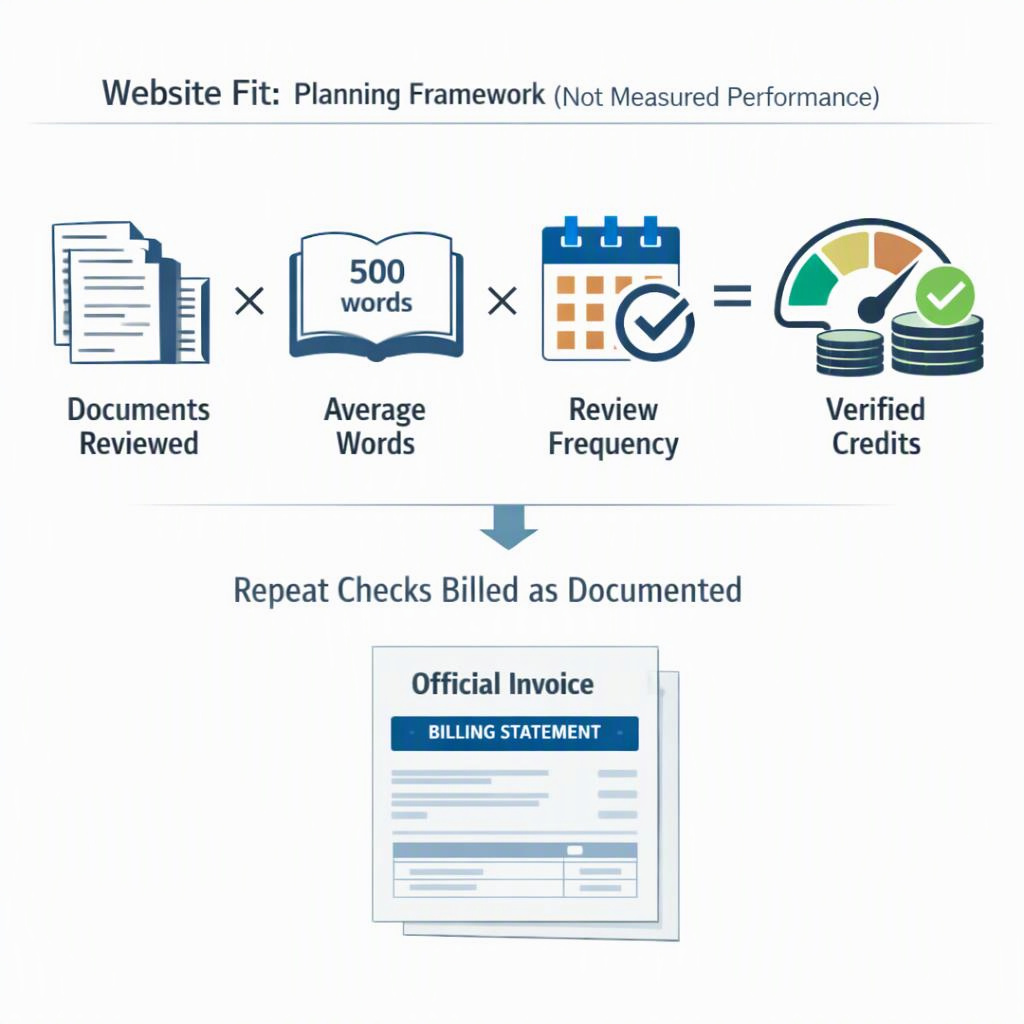
To assess originality pricing for website reviews, estimate submitted words rather than article count alone: documents reviewed × average words × review rounds. Convert that workload into credits only after confirming the selected checks and the official rules for repeat submissions.
- Occasional reviews: Compare upfront commitment and expiration against realistic usage. A larger allowance offers little practical value if you cannot use it before it expires.
- Recurring publishing: Estimate monthly words, revision rounds, and seasonal peaks. Compare those needs with recurring allowances, renewal timing, and documented options for exceeding the balance.
- Multiple editors or websites: Evaluate account permissions, document limits, and report access alongside capacity. More credits do not necessarily mean more users or broader access.
For example, 12 articles averaging 1,500 words produce 18,000 submitted words in one review round. Checking every article again adds another 18,000 words. This is a workload example, not a product test; the actual credit cost depends on verified billing rules.
Manual editorial review or another checking workflow may fit better when submissions are rare, required outputs are unavailable, or account restrictions obstruct collaboration. Compare alternatives against the same workload and reporting requirements, not just their advertised prices.
Conclusion
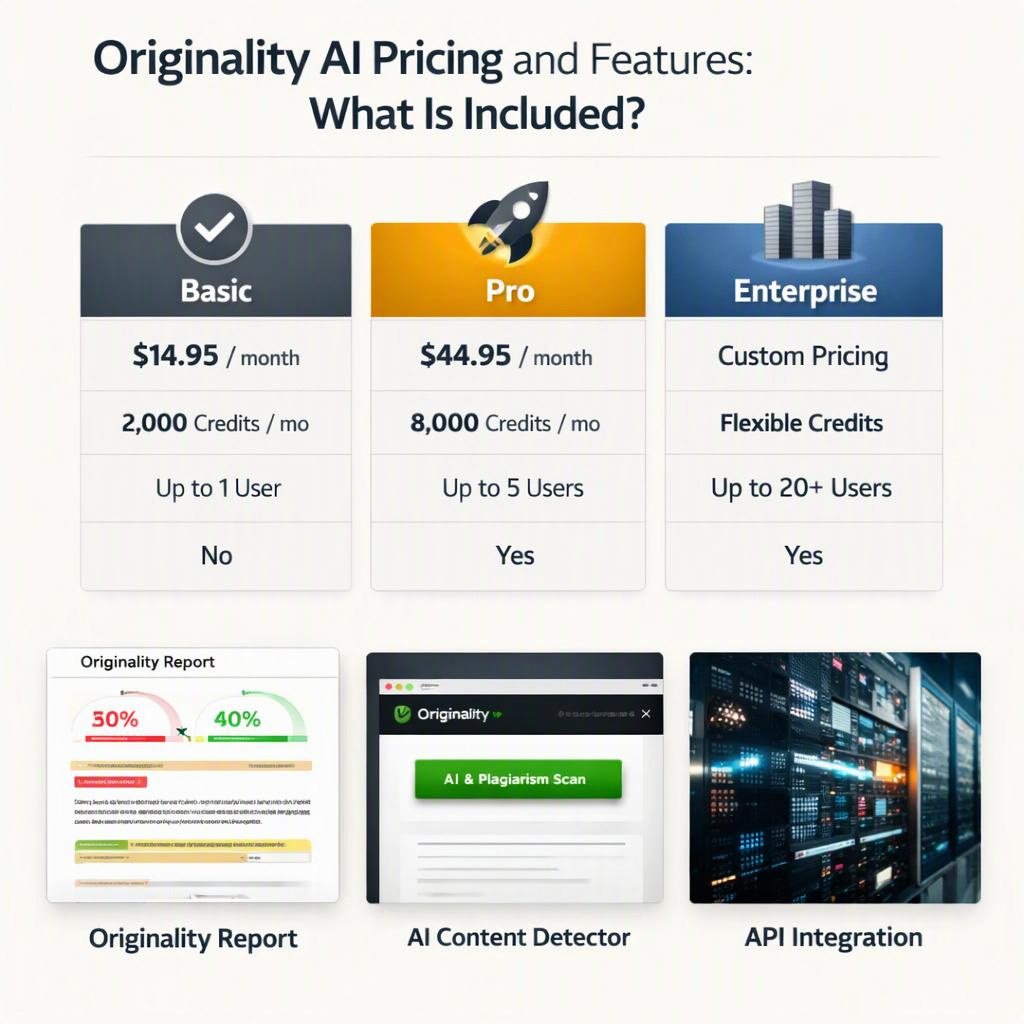
Originality pricing makes sense only when the payment commitment, usable allowance, and report outputs fit your publishing process. Originality is worth comparing for a repeatable prepublication review step, but its suitability remains conditional on current terms that are not verified here.
For occasional submissions, prioritize upfront cost and credit expiration. For steady publishing, focus on repeat-review consumption, recurring capacity, and editor access. In either case, keep the tool’s findings separate from the final publication decision.
Before choosing a plan, write down one month of expected submitted words and revision rounds. Compare that estimate with the official credit conversion, included checks, expiration rules, user limits, and checkout total. Save the terms and verification date with your estimate so you can reassess the purchase when your workload changes.
FAQ
- Do unused Originality credits expire or carry over? Current expiration and rollover rules are not verified here. Check the terms for the specific purchase option, including whether purchased and recurring credits are treated differently. Confirm what happens after cancellation rather than assuming an unused balance remains available indefinitely.
- Does checking the same document again use more credits? Repeat-check charges are unconfirmed. Verify whether resubmitting unchanged text, checking a revised version, or selecting another check consumes additional credits. Until you have that answer, track review rounds separately so your workload estimate does not hide potential repeat usage.
- What is included in an originality report? Exact contents require current report documentation and confirmation for the relevant plan. Ask which results are included, what each score means, and whether matching evidence costs extra. If your team needs shared reports or exports, verify those requirements before purchasing.
- When is Originality a logical option for a website? It is worth comparing when you need a consistent checking step and its documented outputs support your editorial decisions. For your publishing schedule, verify submitted-word capacity, repeat-check costs, report evidence, and editor access against the official terms before selecting an allowance.