
When people search for copyleaks vs turnitin smart detector accuracy, they usually want a simple answer: which tool is more dependable when the result could affect grades, reviews, or policy decisions. The most honest answer is that accuracy depends on the kind of writing being checked, the way results are reviewed, and how much risk an institution is willing to accept. In real academic settings, a useful comparison is less about bold vendor claims and more about how often a tool wrongly flags original work, misses machine-written text, or produces shifting results after small edits.

Before choosing a platform, it helps to review how to evaluate academic integrity tools based on outcomes rather than marketing language. Schools and universities should compare false positives, false negatives, reporting clarity, workflow fit, and appeal options. A score by itself should never be treated as proof of misconduct. Human review, assignment context, and consistent policy still matter most, especially when decisions carry real consequences for students and faculty.
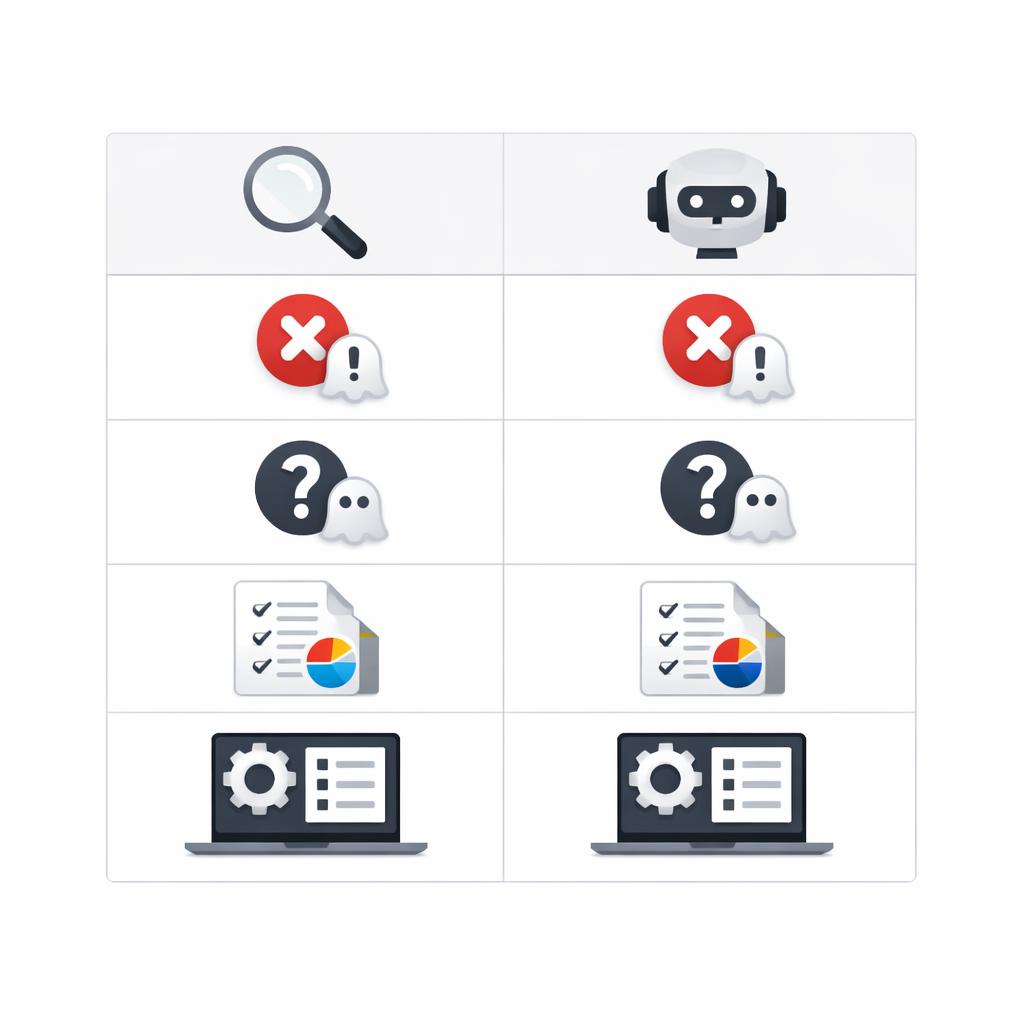
Image brief: Create a simple comparison table visual showing accuracy factors such as false positives, false negatives, reporting clarity, and workflow fit; place after the introduction.
How to evaluate detector accuracy without relying on marketing claims
The strongest way to judge performance is to test both tools on the same controlled sample set. That sample should include clearly human-written work, clearly machine-generated drafts, edited hybrid papers, multilingual submissions, and subject-specific academic writing. This approach gives a much more realistic picture than vendor summaries because real student writing is rarely neat or uniform. For users asking which detector has fewer false positives, the answer often changes depending on whether the text is polished, translated, heavily revised, or highly structured.
Consistency matters just as much as detection rate. If the same paper receives very different scores after minor changes, trust in the result drops quickly. Useful accuracy should show up in repeatable behavior, understandable reporting, and thresholds that make sense for human review. In turnitin vs copyleaks for academic integrity discussions, buyers should also ask whether instructors can explain the result in plain language. A detector becomes more valuable when it supports review instead of trying to replace it.
Key accuracy signals: false positives, false negatives, and consistency
False positives are often the biggest concern because they can place genuine student writing under suspicion. These cases may appear more often with short responses, formulaic assignments, non-native phrasing, and drafts that have been heavily edited. False negatives matter too, since missed machine-generated content can weaken trust in the process. The challenge is that reducing one problem can sometimes increase the other, so accuracy has to be judged as a balance rather than a single number.
Consistency is the signal many teams overlook. If reviewers see unstable scores across versions of the same paper, fair enforcement becomes harder. That is why many institutions focus on process over percentages. It also helps to read why detector scores need human review before setting disciplinary rules. For anyone asking how accurate writing detectors are in universities, the most reliable approach combines automated screening with instructor review, source checks, and a documented appeal path.
Copyleaks vs Turnitin: where accuracy differences show up in real use
In everyday use, differences often appear less in raw scoring and more in reporting style, integration, and how each platform handles edge cases. Some teams prefer a detector that gives clearer sentence-level indicators, while others care more about fit with existing academic workflows. Because of that, the practical outcome of a copyleaks vs turnitin detector accuracy comparison may depend on whether a reviewer values speed, explanation, or smoother LMS integration. A tool that is easier to interpret may feel more accurate simply because reviewers can verify results faster.
Revised documents are another area where differences become visible. Student work often passes through brainstorming, tutoring, proofreading, and multiple rounds of editing before final submission. That can create uncertainty for any detector. In those cases, one platform may seem stricter while the other appears more restrained, but that does not automatically make one better. It may reflect a different threshold or classification style. For high-stakes academic use, schools should test both tools on their own assignments before changing policy or signing a contract.
Best-fit scenarios for schools, universities, and content review teams
Schools with high submission volume usually care most about workflow efficiency, instructor adoption, and reports that are quick to interpret during routine grading. Universities may put more weight on documentation, policy alignment, and consistency across departments. Content review teams outside formal education often focus on screening speed and reducing manual triage. In practice, the better fit is usually the system that matches internal review capacity, not the one with the strongest headline claim.
A smaller institution with limited staff may benefit from simpler reporting and clear escalation rules. A large research university may care more about audit trails, committee-ready documentation, and compatibility with existing systems. In every case, detectors should be treated as indicators rather than verdicts. That neutral approach matters even more when results are compared across subjects, grade levels, and multilingual writing, where detector behavior can vary more than many buyers expect.
Conclusion
The main takeaway on copyleaks vs turnitin smart detector accuracy is that accuracy is not just a product feature. It is shaped by detection behavior, report clarity, reviewer training, and institutional policy. Both tools can be useful, and both can make mistakes. That is why a criteria-based evaluation is more dependable than trying to name a universal winner.
If you are comparing options, test them on your own assignments, define what level of error is acceptable, and require human review before any serious action is taken. For most buyers, the best choice is the detector that performs consistently on local samples and fits existing workflows without encouraging score-only decisions.

FAQ
Which detector is usually considered more accurate?
There is no universal winner. Perceived accuracy depends on the sample set, document type, revision history, and how reviewers read the report. A local pilot is far more useful than broad public claims.
Can either tool produce false positives on human writing?
Yes. False positives can happen with polished prose, predictable structure, translated text, short answers, and heavily edited drafts. That is why human review should always be part of the process.
Should a detector score be used as proof of misconduct?
No. A score should be treated as a signal for closer review, not final proof. Institutions should combine the report with instructor judgment, source checks, and a fair appeal process.
What matters most when comparing these tools for academic use?
Focus on false positives, false negatives, consistency across drafts, reporting clarity, and workflow fit. The best option is the one that supports fair, repeatable decisions in your real environment.