
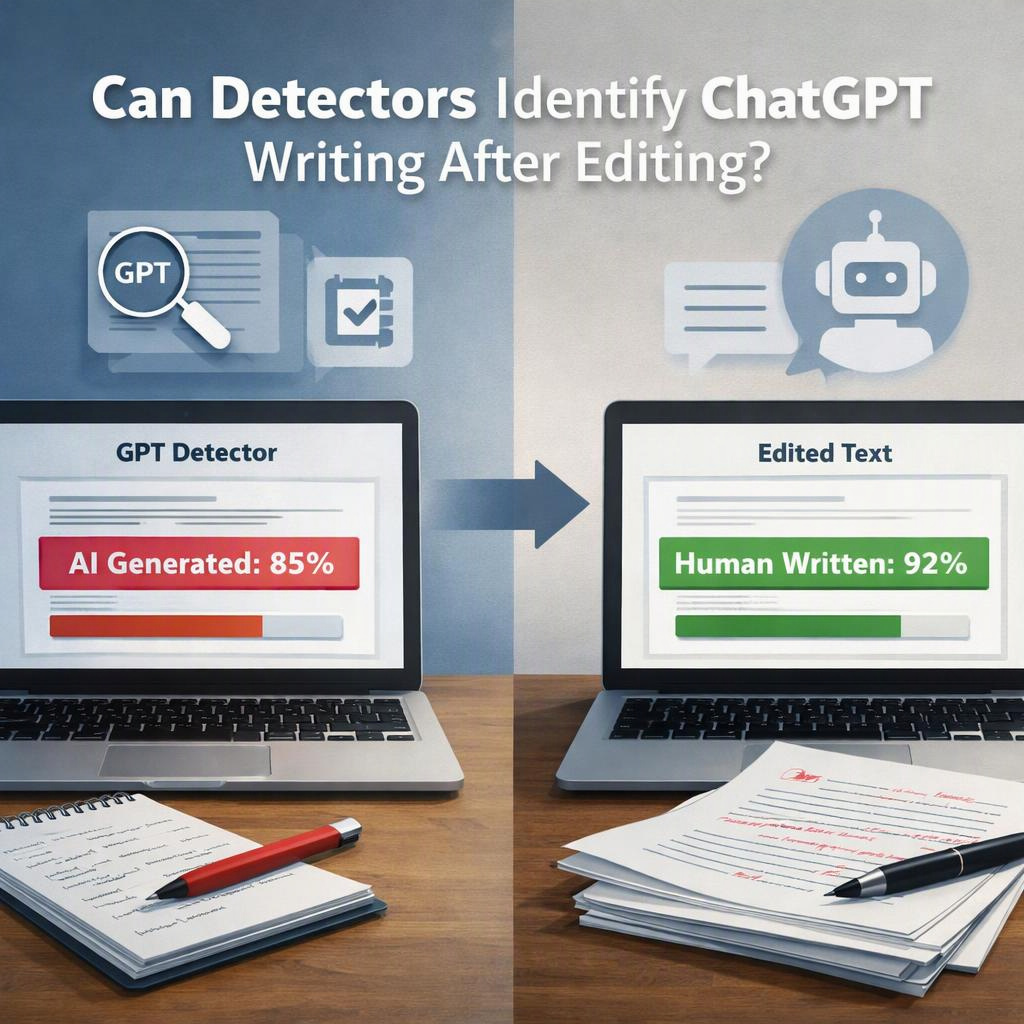
Sometimes, but a detector cannot reliably establish authorship from an edited passage alone. Revisions can change the result, and neither a flag nor a clear result proves how the text was written. If you are comparing an original draft with a revision, the useful question is what the result tells you—and what it leaves unanswered.
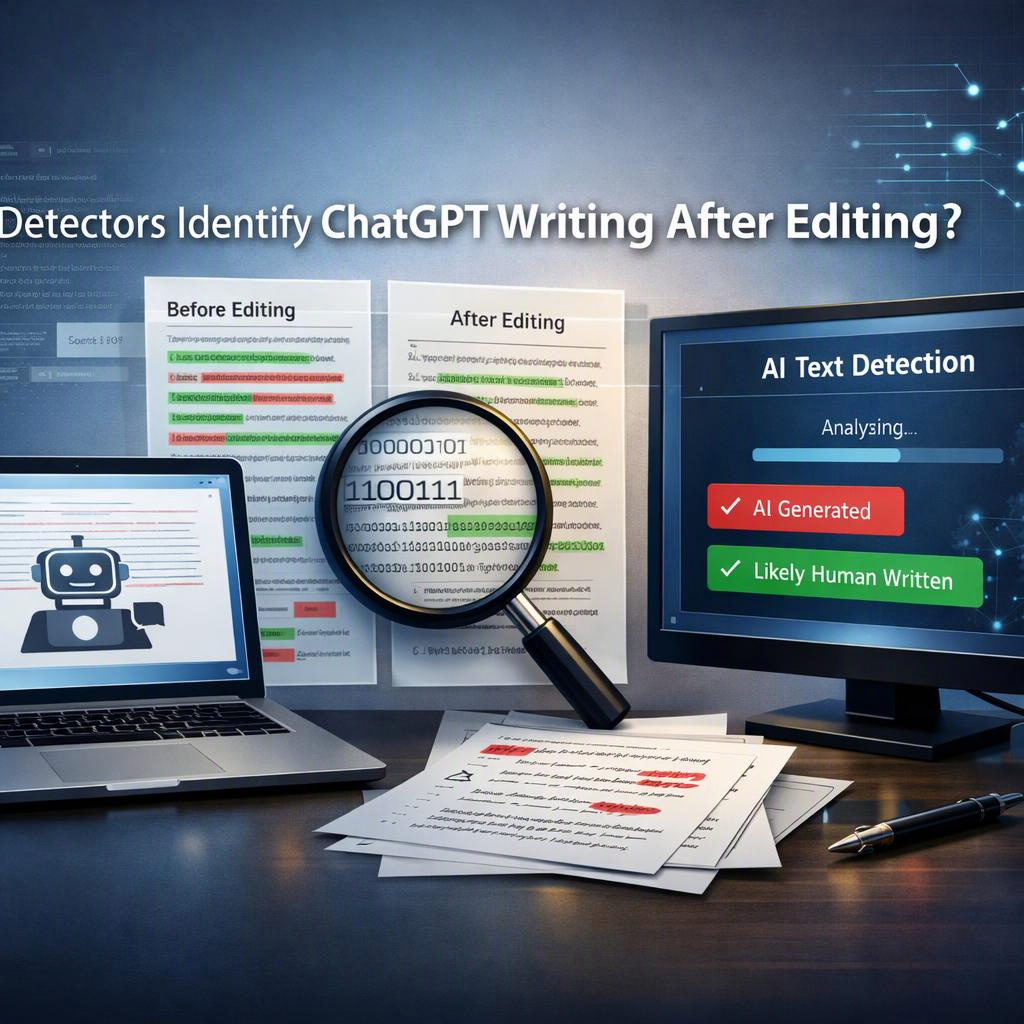
An edited draft may blend generated wording, original research, editorial changes, and the writer’s own reasoning. A detector cannot reliably separate those contributions or reconstruct their sequence. Even when the original came from ChatGPT, a changed score does not establish whether the revision meets an assignment’s or publication’s requirements.
The ChatGPT detector is worth comparing as a preliminary draft-checking option if its input requirements, result explanations, and privacy terms fit your work. Before using it, understand the limits of comparing scores.
Why Editing Can Change a Detector’s Result
A chatgpt detector evaluates patterns in the text you submit, not the document’s complete writing history. Depending on its design, it may assess statistical or learned language patterns. The result depends on both the passage and the system evaluating it. Consult the provider’s technical documentation for specific explanations of its methods; a score alone does not reveal how a classification was reached.
Fixing punctuation is different from rebuilding an argument around better evidence. Both change the input, but neither guarantees a particular outcome. A revision may receive a similar result, a higher score, or a lower one. Edit for accuracy, clarity, and purpose rather than trying to obtain a preferred label.
- Surface correction: Fixes spelling, punctuation, or presentation while leaving much of the wording intact.
- Substantive revision: Changes claims, organization, evidence, or reasoning, so the drafts may no longer be directly comparable.
- Length changes: Additions and deletions alter the material being evaluated. Record them alongside the results.
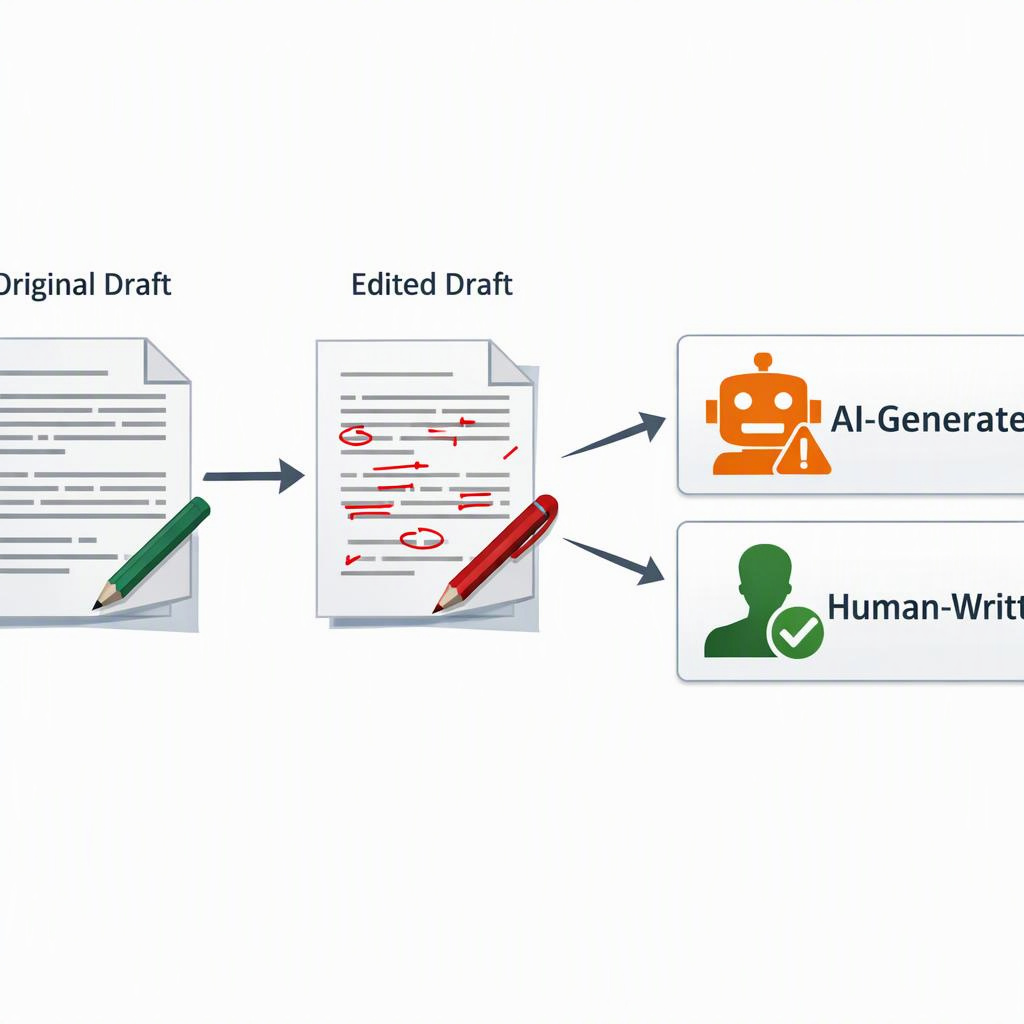
Conceptual illustration: Original draft → editing → revised draft. Either version may receive a similar or different classification. This illustrates the process; it is not evidence that editing consistently reduces detection.
How to Compare Original and Edited Drafts Fairly
A before-and-after check can show how a detector responds to two versions. It cannot prove authorship. Save both drafts before submitting either, and define your question narrowly: for example, whether the result changes after a specific revision. The steps below describe a comparison method, not a completed experiment or reported test findings.
Use the same detector and settings where possible. Submit comparable portions: checking an introductory paragraph against an entire revised article changes more than the wording. If a revision adds substantial material, document that difference rather than attributing the entire score change to editing.
Also record disclosed tool updates or version differences. When conditions cannot be matched, describe the comparison as limited. Do not treat outputs collected under different conditions as interchangeable.
- Draft version: Keep labeled originals and revisions, plus a short summary of the edits.
- Text length: Save the exact submitted passages and record their word counts.
- Detector version: Record the tool’s name and version when available.
- Settings: Use consistent supported options and note your selections.
- Date: Record when each check took place.
- Output: Preserve the label, score, and explanation exactly as shown, without recasting them as proof.
Read the output alongside the edit summary. If several things changed at once—length, structure, and supporting evidence—you cannot isolate which change caused a different result from that comparison alone.

When Detection Results Help—and When to Check Other Evidence
A false positive flags human-written text as generated. A false negative misses generated text. Both matter when reviewing edited work. One draft pair cannot establish a detector’s overall accuracy, especially when the writing history is uncertain.
A numerical score is not necessarily the probability that someone used ChatGPT. Interpret it that way only if the provider’s documentation explicitly supports that meaning. Different tools may use different scales, labels, and thresholds, so matching numbers need not mean matching assessments.
Before uploading unpublished, personal, or confidential material, check the provider’s current privacy terms, retention rules, and permitted uses. If those conditions do not suit the material, do not submit it. A useful comparison is not worth disclosing information you lack permission to share.
- Self-review — preliminary signal: Use the result to prompt a closer reading, not to certify the draft’s origin.
- Editorial review — corroboration needed: Examine revision history, source notes, factual accuracy, and the writer’s explanation of how the argument developed.
- Disciplinary or employment decisions — unsuitable for score-only judgments: Follow applicable procedures and assess independent evidence. Neither a flag nor a clear result settles the matter.
When the real question concerns attribution or disclosure, reviewing drafts and discussing the writing process may be more relevant than another detector check. Give the writer an opportunity to explain the work. Incomplete records also have limits: their absence does not, by itself, establish misconduct.
Conclusion: Use Detection as a Signal, Not Proof
Edited ChatGPT writing may still be flagged, but the outcome depends on the text and the detector. A higher or lower result does not establish who wrote the passage, how much a person contributed, or whether the work follows the relevant rules. Keep classification separate from an authorship judgment.
For a preliminary comparison of saved drafts, review the ChatGPT detector and check its supported inputs, score definitions, and privacy terms against your review needs. If those conditions fit, submit comparable passages under consistent settings and retain the revision history. This gives any difference context without turning a score into proof.
FAQ
Can a detector flag writing someone wrote without ChatGPT?
Yes. That is a false positive. A flag should prompt review, not an accusation. Consider drafts, source notes, and the writer’s explanation. People keep different records, so missing documentation is not proof that text was generated.
Does a low detection score prove that ChatGPT was not used?
No. A detector can miss generated writing, including revised material. A low score reflects its assessment of the submitted passage under particular conditions. It does not certify the document’s origin or confirm compliance with a disclosure requirement.
Can a chatgpt detector prove authorship after substantial editing?
No, not from the passage alone. Substantial editing may combine contributions that one label cannot distinguish. Agreement among detectors does not reconstruct the writing process either. Authorship questions require contextual evidence beyond text classification.
When is the linked ChatGPT detector a logical option?
It is a candidate for preliminary comparisons of saved drafts, not score-only disciplinary decisions. Before checking your versions, verify supported text lengths, output definitions, available settings, and privacy terms. Compare those requirements with your material and review purpose to decide whether the check will be useful and appropriate.
