
A brand visibility checker helps teams see how often a brand shows up across search results, web mentions, and competitor comparisons. For SEO managers, founders, and content marketers, it answers a practical question: how visible is the brand right now, and where are the biggest gaps? If you need a clearer view of awareness trends, rankings, and online mentions, this kind of tool can turn scattered data into a baseline you can actually use. It also works well alongside broader frameworks such as share of voice benchmarks when you want more context than raw mention counts alone.

In day-to-day use, a strong smart brand visibility checker does more than list mentions. It helps you compare your visibility with competitors, spot changes over time, and connect those shifts to content, PR, and search efforts. The goal is not to capture every single mention on the internet. The goal is to measure brand visibility online in a consistent way so your team can make better decisions from reliable patterns.
What a brand visibility checker does
A brand visibility checker pulls together signals that show where and how a brand appears online. Depending on the platform, that may include branded keyword rankings, brand mentions on websites, visibility in search features, review site presence, and relative exposure against direct competitors. Instead of checking each source one by one, teams get a single view of what is moving and what is staying flat. That shared view is especially useful when marketing, PR, and leadership all need the same reporting baseline.
The real value is not just volume. Context matters. One mention on a respected publication can be more important than several low-quality citations. Likewise, better rankings for branded terms can indicate stronger demand capture, while broader category rankings can show whether your brand is becoming easier to discover. Used well, a brand mention and share of voice tracking tool helps marketers see whether visibility is limited to a few channels or improving across a wider search and content footprint.
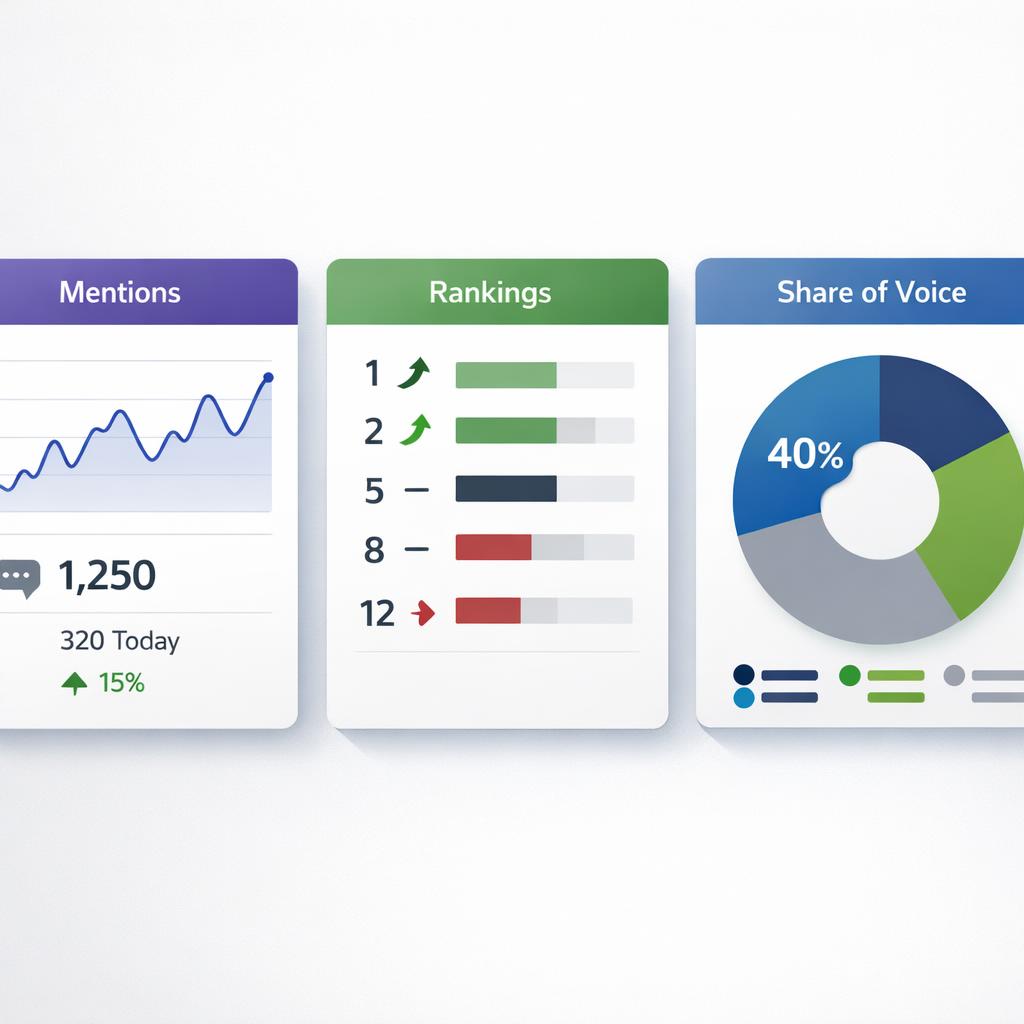
Key signals to track: mentions, rankings, and share of voice
Three signal groups usually matter most. First are mentions: where your brand name appears, how often it appears, and whether those references are positive, neutral, or simply visible enough to matter. Second are rankings: branded queries, high-intent non-branded terms, and visibility in search features that influence clicks. Third is share of voice: how much visibility your brand holds compared with key competitors across a topic, market, or keyword set.
Together, these metrics give you a more balanced picture than any single KPI. A brand can collect many mentions and still be weak in search. It can also rank well for branded terms while losing broader category visibility. A useful checker makes those differences obvious, so teams can separate awareness problems from search performance problems and respond with more focused content, outreach, or optimization work.
How to evaluate a checker before you adopt it
Start with scope. Ask what sources the platform monitors, how often the data refreshes, and whether it clearly separates brand mentions, search visibility, and competitor benchmarks. If your main use case is search, the tool should help you track branded search performance and compare visibility for selected non-branded topics. If your main use case is monitoring brand presence, then source quality, alert settings, and historical trends should carry more weight.
Reporting fit matters just as much as coverage. A good checker should let you segment by market, campaign, or competitor group without forcing manual exports every week. Trend lines, alerts, and clear summaries help stakeholders act faster when something changes. When teams ask how to measure brand visibility online, the best answer is rarely the platform with the longest feature list. It is the one that gives dependable data, useful comparisons, and reporting workflows your team will actually keep using.
Must-have features for reporting, competitor tracking, and trend monitoring
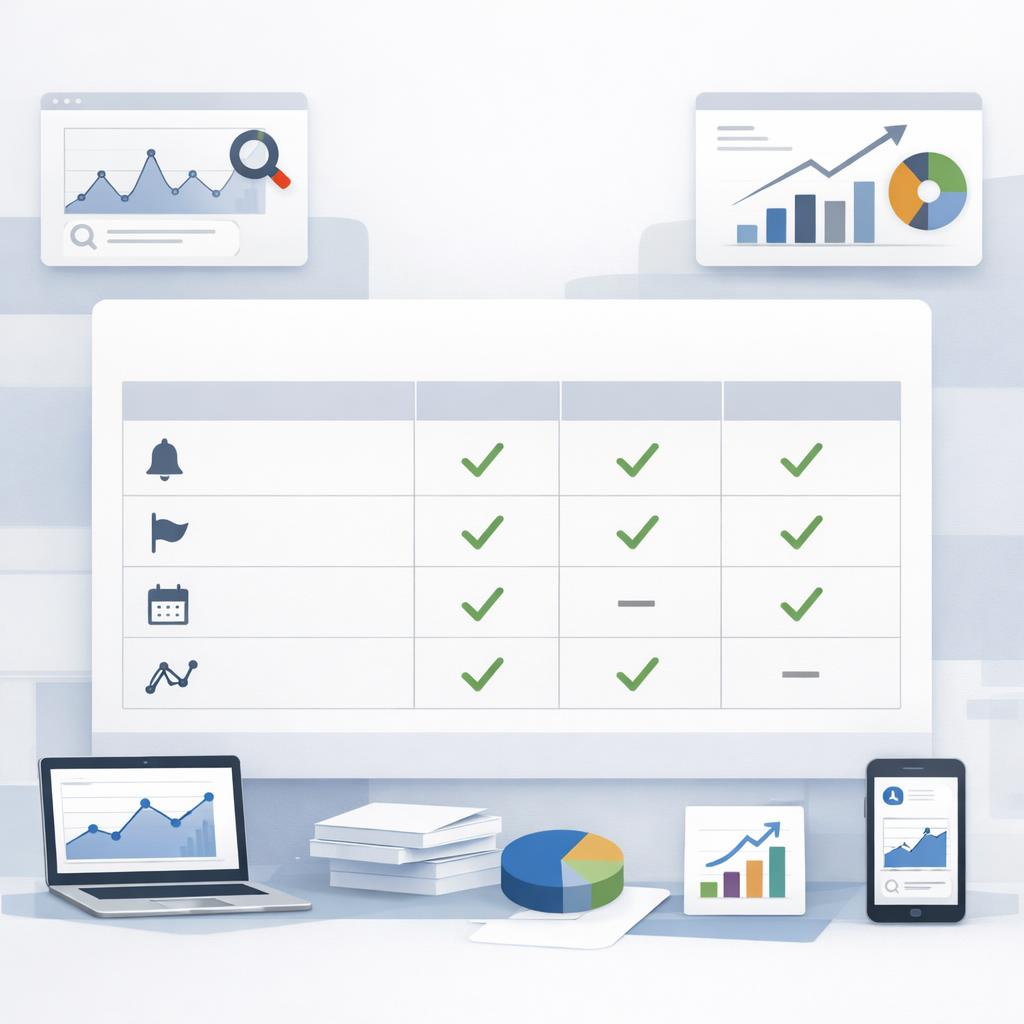
Look for customizable alerts, saved competitor sets, historical views, branded and non-branded keyword tracking, and easy exports. A comparison view is especially helpful when you need to compare brand visibility against competitors after a launch, campaign, or industry event. Filters for geography, device, and content type are also valuable, especially for teams working across multiple markets.
Trend monitoring should be simple enough for a quick weekly review but detailed enough for monthly strategy work. The best dashboards show whether gains are steady, seasonal, or tied to one-off spikes. Reporting should support both short updates for leadership and deeper analysis for channel owners. If the interface makes those tasks harder than they need to be, even a capable tool can end up underused.
How to turn visibility data into better marketing decisions
Visibility data only matters if it changes what the team does next. If mentions rise but branded search stays flat, the issue may be weak message recall or poor movement from awareness to demand. If competitors gain share of voice around a topic you target, that may point to content gaps, weaker publication coverage, or a need to refresh your page strategy. A brand visibility checker gives teams a repeatable way to test those assumptions instead of reacting to isolated wins.
Use the findings to prioritize actions by impact and effort. That might mean updating high-value pages, improving digital PR outreach, building supporting content around branded and category terms, or reviewing where competitor citations are outpacing yours. Keep claims grounded and treat trends as directional evidence, not guarantees. Over time, a steady review process will show which channels contribute most to discoverability and where the brand still needs stronger presence.
Simple reporting habits that help teams spot gains and gaps faster
Create a short weekly report with five items: total mentions, branded search visibility, competitor share of voice, top new sources, and notable declines. Then add a monthly review that explains why changes happened and what actions followed. This format keeps updates compact while still giving enough context to make decisions. It also helps non-specialists understand whether movement reflects campaign impact, competitor activity, or normal fluctuation.
To keep reporting useful, tie every metric to a decision. If a number does not influence content planning, outreach, or search prioritization, it probably does not need a permanent place in the dashboard. That discipline is what turns a checker from a passive report into a working tool for SEO and brand teams.

Conclusion
A brand visibility checker is most useful when it combines mention tracking, search presence, and competitor comparison in one practical workflow. For teams trying to measure awareness and search impact together, it creates a clearer view of what is improving, what is slipping, and where to focus next. The strongest approach is usually straightforward: choose dependable signals, review them on a steady cadence, and connect the findings to real actions across content, PR, and SEO.
If you are comparing options, focus on fit instead of feature overload. The right setup should help you measure brand visibility online, understand your position against competitors, and report trends in a way stakeholders can act on. That is what makes a brand visibility checker valuable over time.
FAQ
What metrics should a brand visibility checker include?
It should include branded keyword visibility, non-branded topic visibility where relevant, web mentions, competitor comparisons, and share of voice trends. Useful extras include alerts, historical reporting, and source-level detail so teams can tell whether visibility changes come from search movement, new mentions, or competitor gains.
How often should you review brand visibility data?
Weekly reviews work well for monitoring changes and alerts, while monthly reviews are better for interpreting trends and making strategy decisions. If your team runs frequent campaigns or operates in a fast-moving market, you may check a few indicators more often, but a consistent weekly and monthly cadence is usually enough for practical reporting.


