
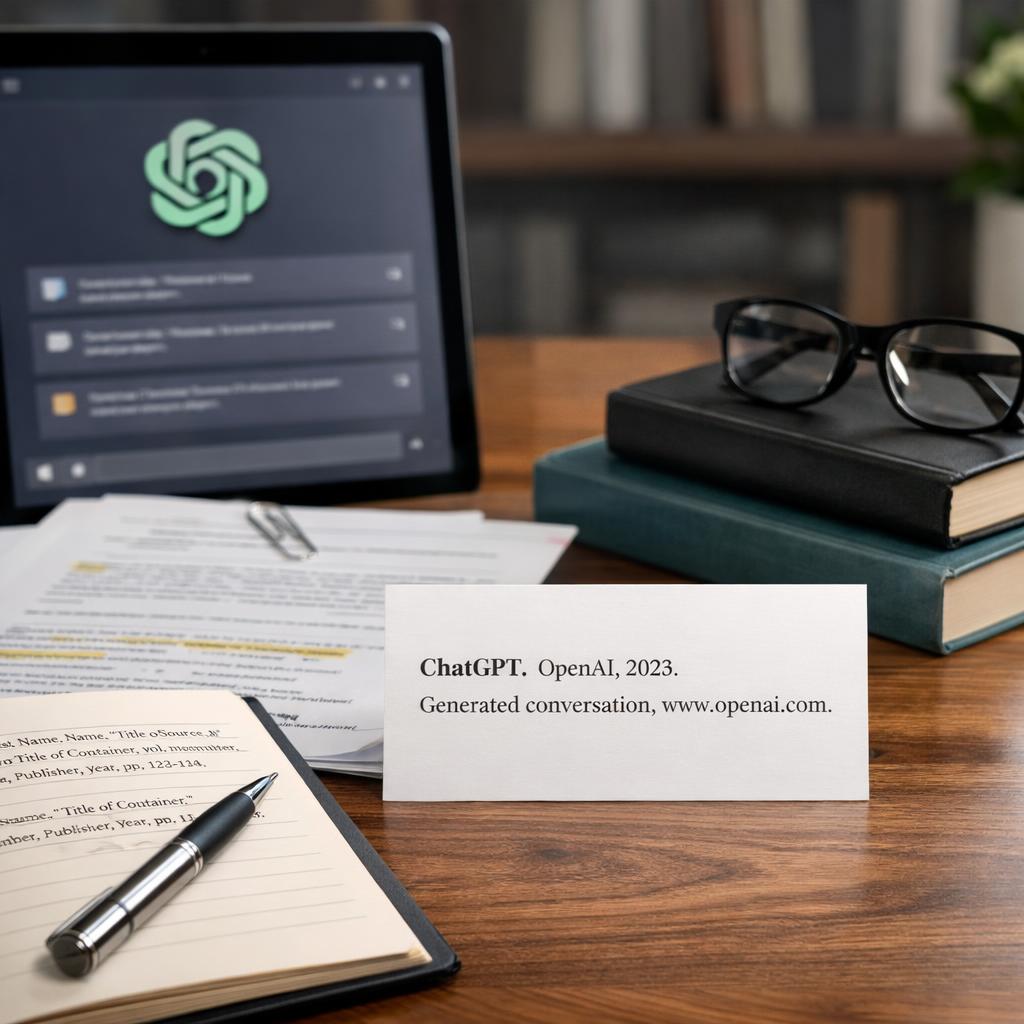
If you need quick, usable smart citation examples for chatgpt in mla, the easiest approach is to follow MLA’s basic pattern for a generated response and pair it with a matching in-text citation. This guide gives you clear, copy-and-adapt models for essays, discussion posts, and research assignments. If you want the broader rules first, see how to cite chatgpt mla in works cited for the full framework.
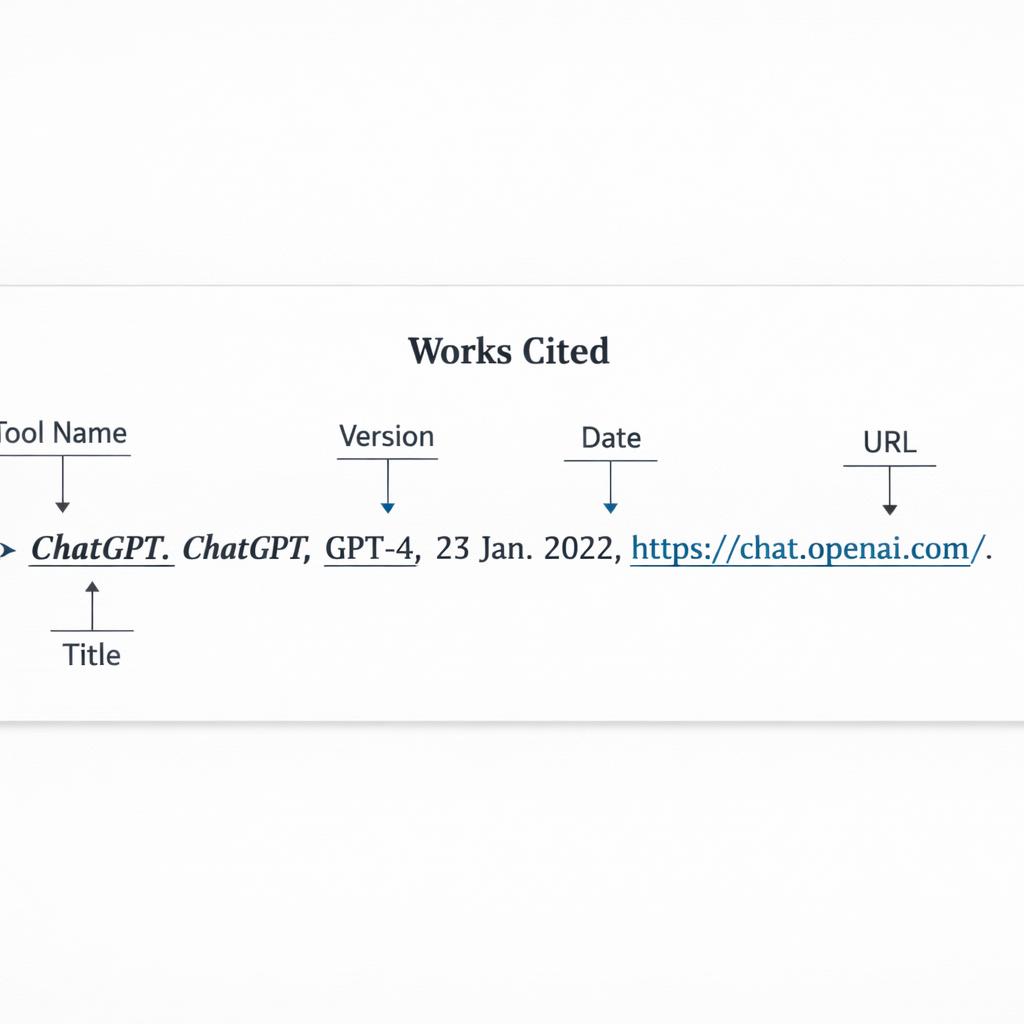
In most cases, your entry should identify the prompt or a short description of the response, name ChatGPT as the source, include a version only if it is available and relevant, give the date of the interaction, and list the platform URL. Instructor expectations can differ, so use these as reliable MLA-ready examples and then check your course guidelines before you submit.
What a ChatGPT MLA citation needs
An MLA entry for a chatbot response usually includes a few practical pieces: a title or description based on the prompt, the name ChatGPT, version or publisher details if your instructor wants them, the full date of the response, and the URL for the platform. If the conversation cannot be publicly retrieved, some instructors still allow you to cite it, while others may ask for a screenshot, transcript, or appendix.
For a mla format for chatgpt citation, consistency matters more than stuffing the entry with extra details. Use quotation marks for a prompt-based title when that makes sense, keep the date as specific as possible, and make sure the in-text citation points back to the first element of the Works Cited entry. If there is no natural title, a short descriptive label works well. The goal is simple: make it easy for your reader to understand what response you used.
Core details to include in your entry and in-text citation
Your Works Cited entry should begin with the element your reader will also see in parentheses in your paper. That is often a shortened prompt title, such as “Explain dramatic irony in Hamlet”, or a brief description like Response to prompt about climate policy. After that, list ChatGPT, include the version if shown, add the date, and finish with the URL.
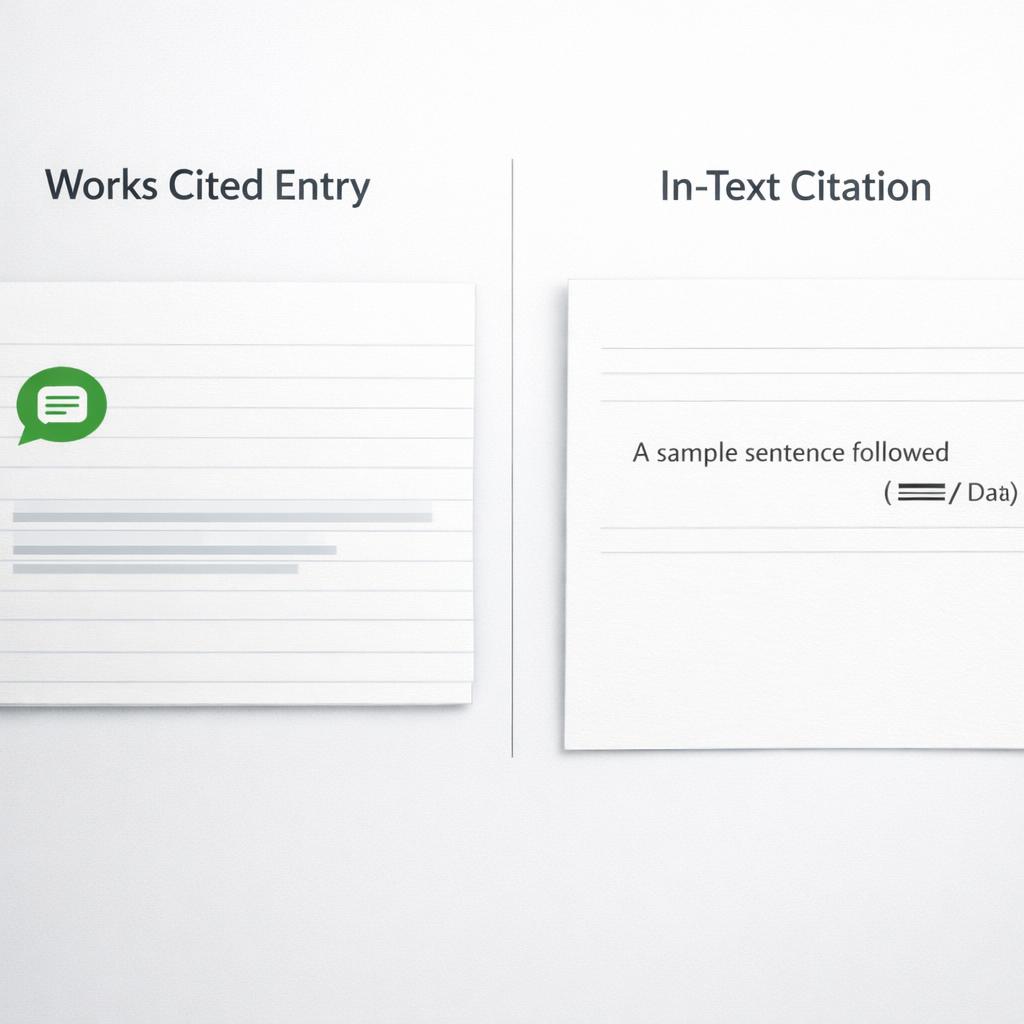
For a matching chatgpt mla in text citation example, MLA usually uses the first element of the entry in parentheses: (“Explain dramatic irony”) or (Response to prompt about climate policy). If you mention ChatGPT in the sentence, you still generally need the parenthetical citation unless your instructor says otherwise. Quote generated wording carefully, cite paraphrases the same way, and keep quotations short unless your analysis needs more context.
MLA citation examples for ChatGPT you can copy and adapt
Here is a basic works cited example for chatgpt mla: “Give three examples of symbolism in The Great Gatsby.” ChatGPT, OpenAI, 14 Feb. 2024, chat.openai.com. The matching in-text citation would be (“Give Three Examples”). If you paraphrase instead of quoting, the same parenthetical form still works because it points to the first element in the Works Cited entry.
Another model using a descriptive title is: Response to prompt about photosynthesis and light-dependent reactions. ChatGPT, OpenAI, 3 Sept. 2024, chat.openai.com. The matching parenthetical citation is (Response to prompt about photosynthesis). If your school has its own citation guidance, it helps to compare these models with MLA Works Cited rules. That side-by-side check can make how to cite chatgpt in mla works cited much easier.
Examples for Works Cited, in-text citations, and common mistakes
Quoted sentence example: One generated response describes Nick Carraway as “both observant and selectively judgmental” (“Analyze Nick Carraway”).
Paraphrase example: A ChatGPT response suggests that dramatic irony raises audience tension because readers or viewers know more than the character at a key moment (“Explain dramatic irony”).
Works Cited model: “Analyze Nick Carraway as a narrator in The Great Gatsby.” ChatGPT, OpenAI, 10 Jan. 2025, chat.openai.com.
In-text model: (“Analyze Nick Carraway”). Common mistakes include citing ChatGPT only in the sentence but not in the Works Cited list, using an in-text citation that does not match the first element of the entry, or leaving out the date. For strong smart citation examples for chatgpt in mla, accuracy and consistency matter more than fancy formatting.
Conclusion
The best smart citation examples for chatgpt in mla are clear, consistent, and easy to trace. Start your Works Cited entry with a prompt title or short description, name ChatGPT, include the date, and add the platform URL. Then make your in-text citation match that first element exactly. That one step prevents most MLA errors.
If details are missing, do not invent them. Use a concise description when the full prompt is unavailable, omit version information if none appears, and keep a saved copy of the conversation in case your instructor asks for proof. These examples are meant to help you adapt a citation quickly, whether you need a chatgpt mla in text citation example or a full works cited example for chatgpt mla. When in doubt, choose clarity and follow your instructor’s preferences.

FAQ
How do you cite ChatGPT in MLA in a Works Cited entry?
Begin with the prompt in quotation marks or a short descriptive label, followed by ChatGPT, the publisher if required, the date of the response, and the URL. A basic model is: “Explain the themes of Beloved.” ChatGPT, OpenAI, 8 Mar. 2025, chat.openai.com.
What does an MLA in-text citation for ChatGPT look like?
Use the first element of the Works Cited entry in parentheses. If the entry begins with a prompt title, your citation might look like this: (“Explain the Themes”). If it begins with a description, use a shortened version of that description instead.
Should you include the full prompt when citing ChatGPT?
Include enough of the prompt to identify the response clearly, but you do not always need every word if the original prompt was very long. A shortened title or concise description is usually enough, as long as it matches the Works Cited entry and stays accurate.
What if your instructor wants a different ChatGPT MLA format?
Follow your instructor’s guidance first. MLA models are helpful, but classroom policies can vary on whether to include version details, screenshots, transcript appendices, or full prompts. Keep a copy of the interaction so you can revise the citation if your teacher asks for more documentation.