
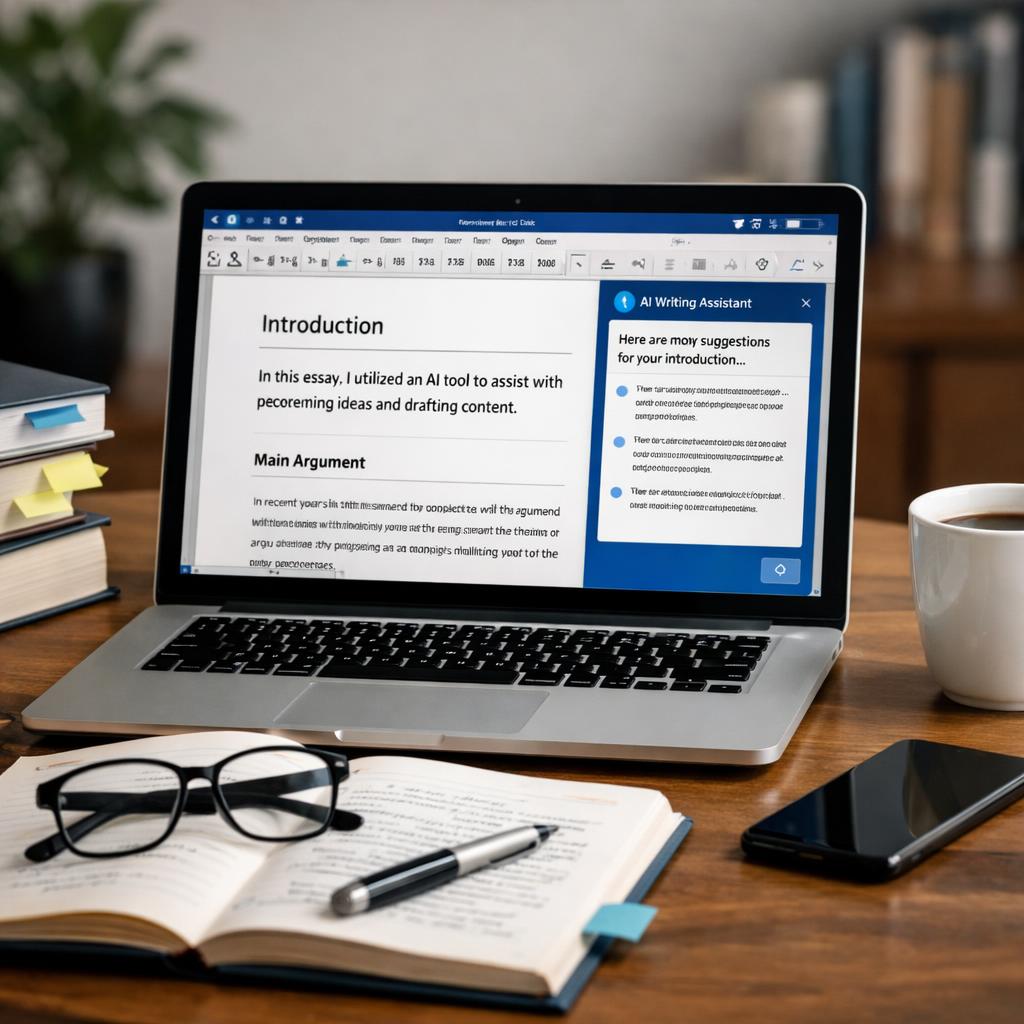
If you are wondering how to disclose smart use in essay introduction or note, the short answer is simple: give a brief, honest statement that explains what tool you used, why you used it, and where your instructor wants that information placed. In most classes, one clear sentence is enough. If your assignment also requires formal documentation, review citing generative tools in academic writing so your disclosure lines up with course or publication rules.
There is no single sentence that fits every school, professor, or publisher. Policies vary, and some instructors are much more specific than others. Still, most expect transparency rather than a long explanation. The goal is to make your process visible without interrupting the essay. This guide explains when a disclosure is needed, where to put it, and how to phrase it so it sounds natural, accurate, and easy to understand.
When a disclosure is needed and where to place it
A disclosure is usually appropriate when a generative writing tool helped in a meaningful way with brainstorming, outlining, drafting, revising, summarizing, or editing. If the tool suggested ideas you kept, changed sentences you used, or influenced the structure of the paper, that support should be acknowledged. If your school has a written policy, follow that first. A disclosure note also does not always replace a required citation, especially when an instructor asks for both explanation and formal documentation.
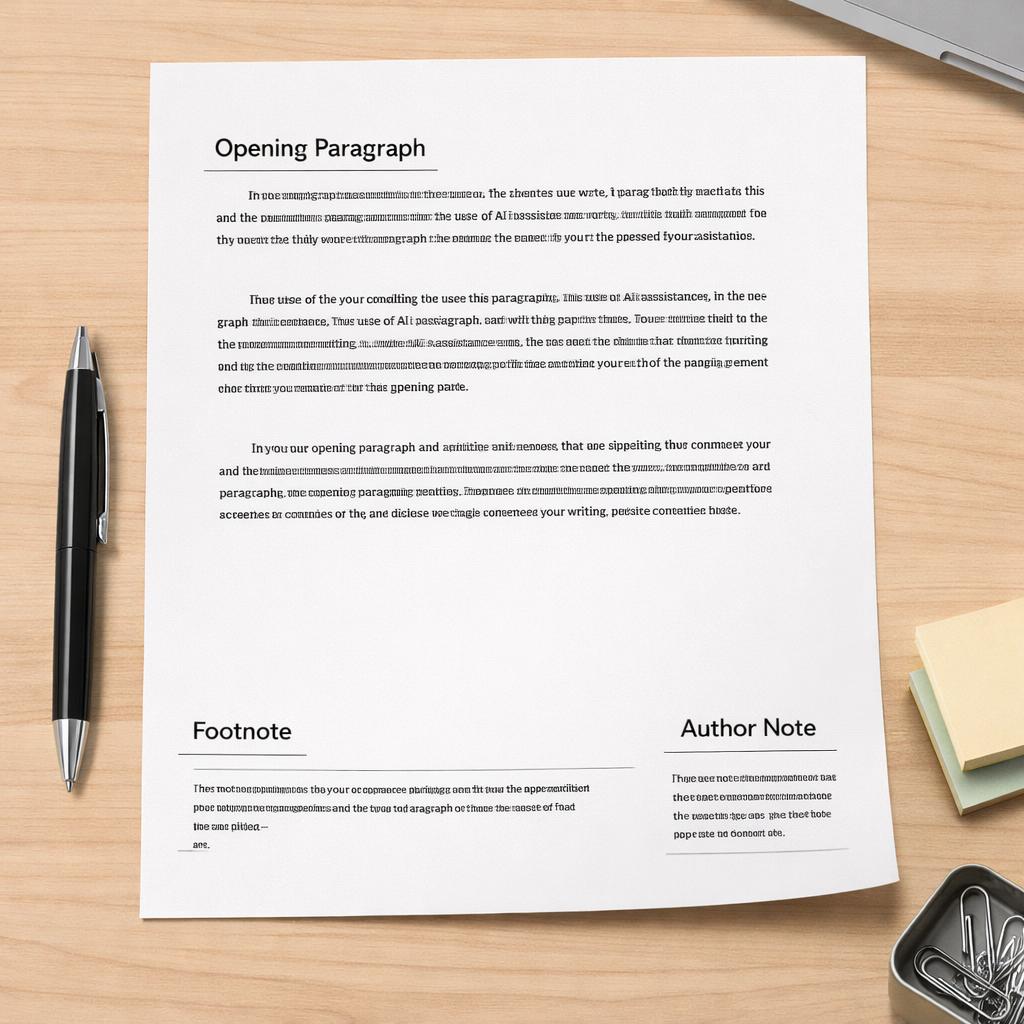
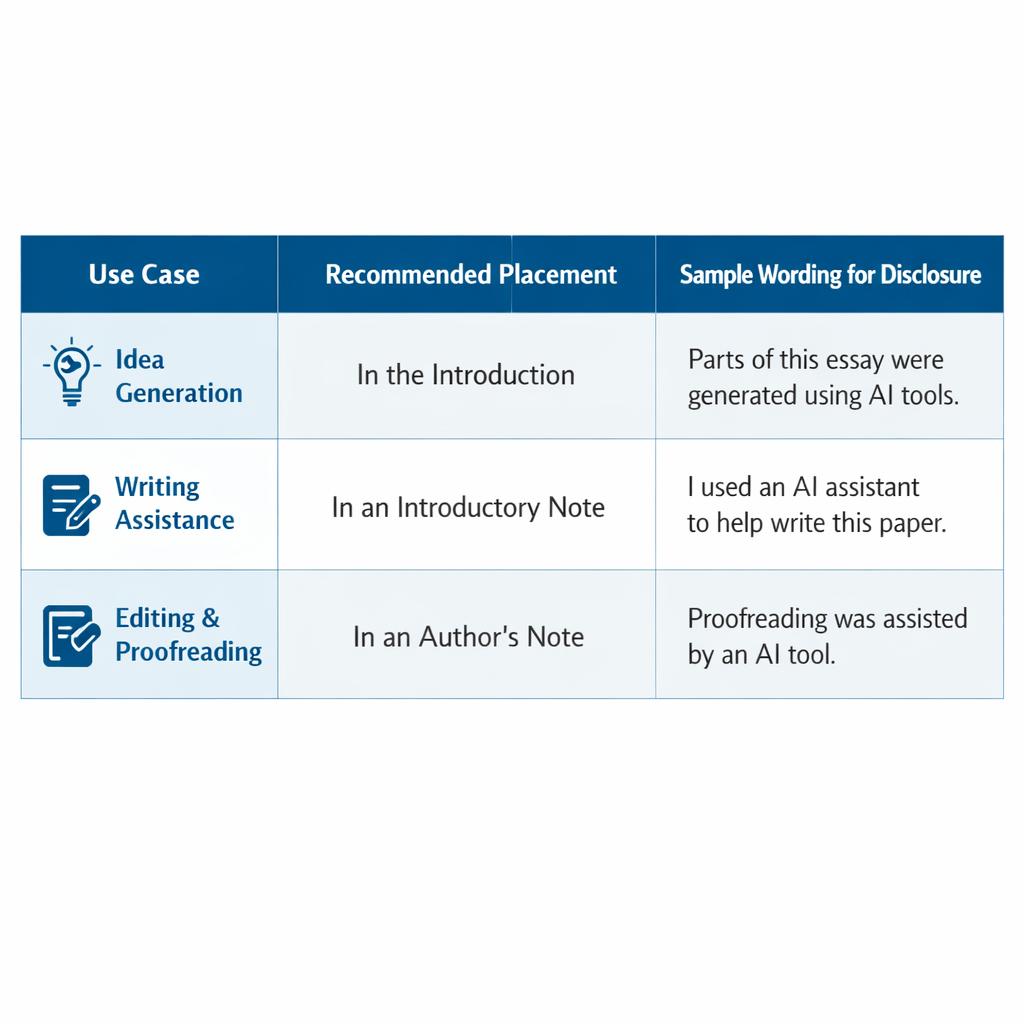
The best placement depends on the assignment type. In a short class essay, a single sentence in the introduction often works well because it gives immediate transparency. In a more formal paper, an author note or a methods-style statement may fit better and keep the main argument focused. Think of the disclosure as a factual record, not an apology. The reader should quickly see what help was used and what work remained your own. If you are unsure which format your class expects, it is worth checking before you submit.
Introduction vs. author note vs. methods-style statement
An introduction disclosure is often the most practical choice for a regular essay. It usually appears in the first or second paragraph and takes only one sentence. For example: I used ChatGPT on April 10, 2026, to brainstorm possible thesis directions, then developed and wrote the final argument independently. That wording is direct, specific, and easy for an instructor to evaluate.
An author note works better when the assignment already has a formal structure or when your instructor prefers disclosures outside the main text. A methods-style statement is often suitable for research reports, reflective assignments, or project documentation. For example: A generative chat tool was used on April 10, 2026, to suggest outline options and identify places needing clearer transitions; all claims, source choices, and final wording were reviewed and completed by the author. If you need to pair your disclosure with formal references, check MLA, APA, and Chicago citation formats before turning in the paper.
Simple disclosure templates you can adapt for essays
When students search for wording, they usually want something natural that does not sound stiff or evasive. A useful formula is to include four parts: the tool name, the date, the purpose, and your role in the final work. A dependable model is: I used [tool name] on [date] to help with [brainstorming/outlining/editing], and I independently reviewed, revised, and finalized the essay. This works because it tells the truth without taking over the page.
If your instructor prefers a note instead of an introduction sentence, a slightly more formal version can help: Author note: [Tool name] was used on [date] for limited assistance with [task]. The author evaluated all suggestions, verified course-required sources, and wrote the final submission. This format is especially useful when you need a cleaner academic tone. It also pairs well with style guidance if your class expects both a disclosure and source treatment.
Short examples for drafting, editing, and idea generation
For idea generation, you might write: I used ChatGPT on March 2, 2026, to generate possible research questions for this essay, then selected and developed the final topic myself. For outline testing or drafting support, try: I used ChatGPT on March 2, 2026, to test outline options for this paper; the final structure and wording were created and revised by me. For editing help, a strong option is: I used ChatGPT on March 2, 2026, for feedback on clarity and grammar, and I chose which edits to accept.
These examples work because they are specific and limited. They show what the tool did without overstating its role. Avoid vague wording such as I used a tool for help, because that does not explain the extent of use. At the same time, do not exaggerate dependence if the tool only gave minor editing suggestions. Match the sentence to what actually happened. A short, accurate note is usually better than a longer statement that sounds defensive.
Conclusion
The best answer to how to disclose smart use in essay introduction or note is to use a short, factual statement that matches both your assignment and your instructor’s policy. In most cases, you should name the tool, give the date, describe the purpose, and clarify what work you completed yourself. Place that disclosure in the introduction when you need immediate transparency, or use a note when a more formal placement makes sense.
Keep the wording plain, specific, and truthful. Do not assume a note replaces citation rules, and do not copy a template without adjusting it to your real use. If you want your paper to stay credible, concise disclosure matters. For related help, you can also review how to cite generative tools in academic writing before submitting.

FAQ
Should I disclose generative tool use in the introduction or in a note?
Use the location required by your instructor, school, journal, or publisher. If no rule is provided, a one-sentence disclosure in the introduction often works best for short essays, while an author note is usually better for more formal papers.
What is the best one-sentence disclosure for an essay?
A strong model is: I used ChatGPT on [date] to help with [task], and I independently reviewed, revised, and finalized the essay. Replace the bracketed details with your actual use and keep the statement accurate.
Do I need both a disclosure and a citation?
Sometimes. A disclosure explains how the tool was used, but some assignments also require style-based documentation. Always follow course instructions, and if your teacher asks for references, check the relevant citation format.
What if I only used a generative writing tool for grammar help?
You may still need to disclose it if your class policy expects transparency for editing support. A short note stating that the tool was used for limited clarity or grammar feedback is usually enough.