
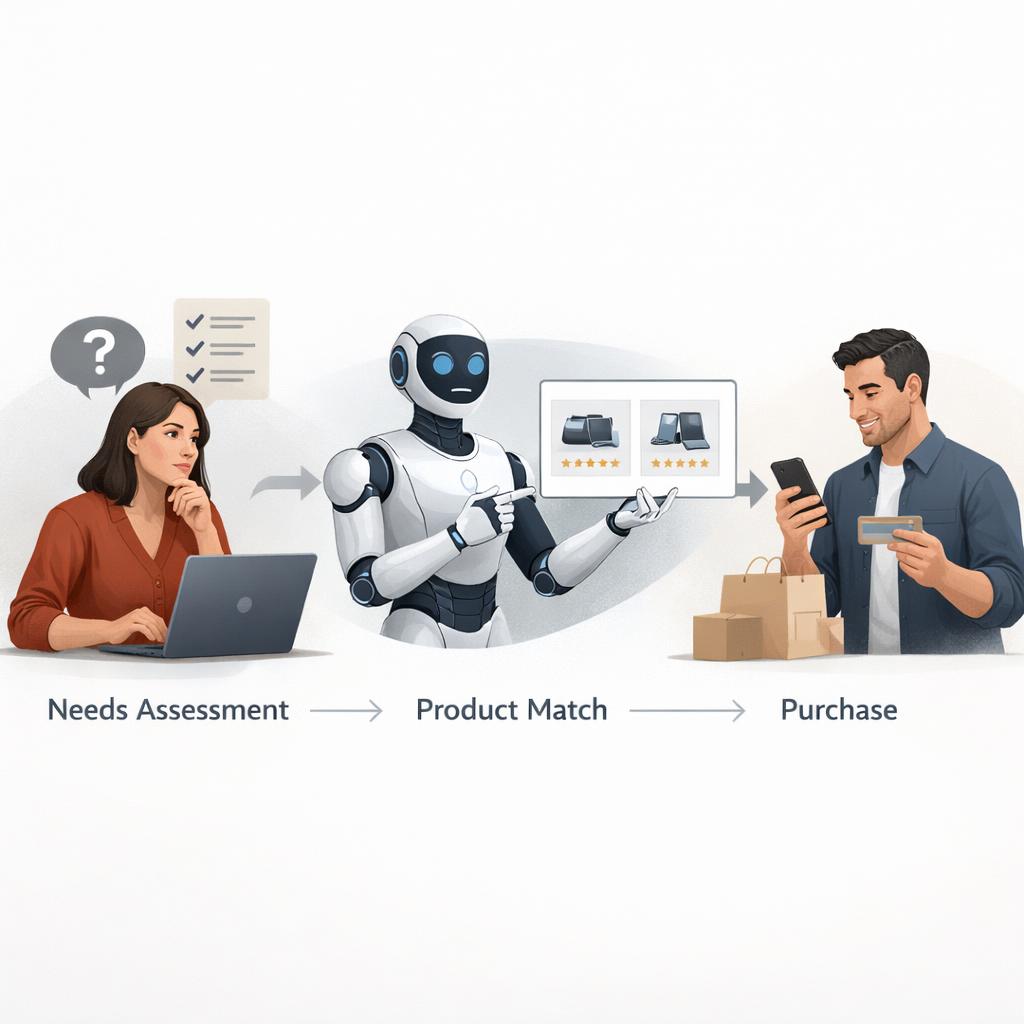
Guided selling helps buyers move from uncertainty to a confident choice by asking the right questions, narrowing options, and showing relevant recommendations in a clear sequence. For sales teams and ecommerce managers, it is a practical way to simplify complex catalogs, shorten decision time, and make digital buying feel more helpful. It is especially useful when customers do not know which product, plan, or bundle fits their needs. Teams exploring ways to reduce buyer friction often consider guided selling because it combines discovery, education, and product matching in one experience.

If you are asking what is guided selling, the short answer is simple: it is a structured buying path that uses customer inputs such as goals, budget, use case, or preferences to steer people toward the best-fit offer. It can appear as a quiz, decision tree, interactive form, chat flow, or sales-assist tool on a site. Done well, it supports both self-service buyers and sales-assisted journeys without overwhelming the user. In more advanced programs, smart guided selling can also help teams scale this support across larger catalogs while keeping the experience relevant and easy to follow.
What guided selling means for modern buyers
Modern buyers expect speed, clarity, and relevance. When a site shows too many similar options, people often hesitate, compare endlessly, or leave without taking action. Guided selling addresses that problem by replacing guesswork with a step-by-step path. Instead of forcing visitors to dig through technical specs or broad category pages, it asks a few useful questions and turns those answers into a focused set of recommendations. That is one reason guided selling for ecommerce has become more common in categories with large assortments, configurable products, subscriptions, and higher-consideration purchases.
It also reflects how people actually make decisions. Buyers often begin with needs, not product names. A homeowner may want easier maintenance, while a procurement team may need compatibility, service terms, and budget fit. Guided selling translates those needs into suitable options and can explain why a recommendation makes sense. That extra context builds confidence, reduces confusion, and makes digital experiences feel more consultative rather than purely transactional.
How guided selling differs from basic product filters
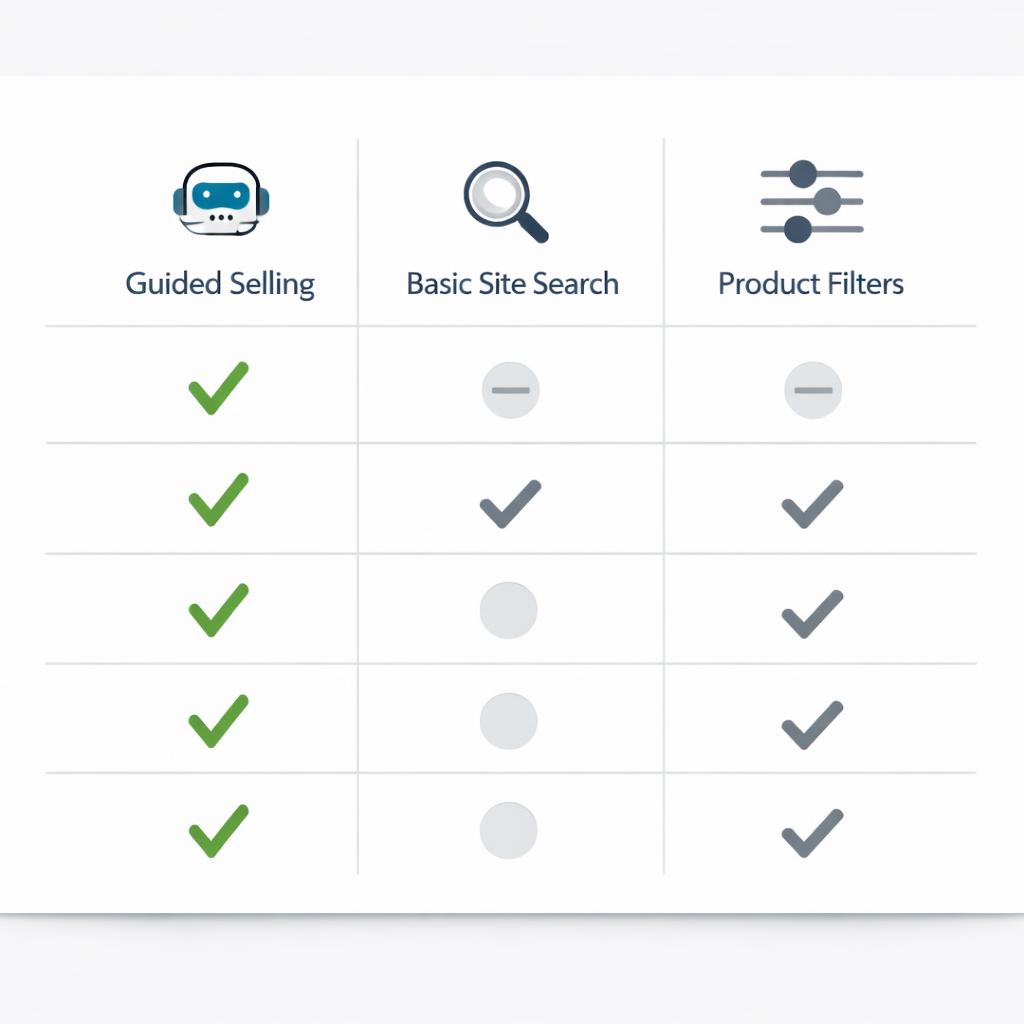
Basic filters help users sort by attributes they already understand, such as price, size, color, or brand. Guided selling goes further by interpreting buyer intent. It does not assume the shopper knows which attributes matter most. Instead, it starts with goals or constraints and maps those answers to recommended products, plans, or bundles. In practice, that makes it better suited to complex decisions, first-time buyers, and categories where technical terms can slow progress.
Another key difference is sequencing. Filters are static tools that ask the user to do most of the work. Guided selling is more interactive and educational, often offering explanations, trade-offs, and next steps as the buyer moves forward. It can also complement merchandising and search rather than replace them. Teams comparing approaches should think of guided selling as a decision-support layer that improves discovery and can work alongside product recommendation best practices already used on category and product pages.
Key benefits of guided selling for sales and ecommerce teams
The strongest benefits are usually practical. Guided selling can reduce choice overload, improve product discovery, and help visitors reach relevant options faster. For ecommerce teams, that may lead to better engagement with category pages, configurators, or quote flows. For sales organizations, it can support qualification by collecting structured buyer inputs before a conversation begins. Those insights help teams tailor follow-up, prioritize leads, and avoid repeating questions the buyer has already answered online.
It can also create a more consistent buying experience across channels. A website quiz, a sales-assisted form, and an in-store or call-center workflow can all follow the same logic, which helps keep marketing, merchandising, and revenue teams aligned. This consistency is one reason many organizations look for guided selling examples in software, electronics, furniture, insurance, healthcare, and industrial supply. In each case, the goal is similar: match buyers to the right option with less friction and more clarity.
Where guided selling delivers the most value
Guided selling delivers the most value when buyers face complexity. That includes large catalogs, technical products, multi-step service selection, or situations where the wrong choice creates returns, support tickets, or abandoned carts. It is also useful when customers arrive with a problem to solve rather than a specific item in mind. In those moments, a question-led journey can outperform a standard browse experience because it narrows the field faster and explains the reasoning behind the match.
Common guided selling examples include mattress finders, skincare routines, software plan selectors, industrial equipment configurators, and telecom package advisors. In B2B settings, it can support account qualification by guiding buyers toward the right edition, contract structure, or implementation path. In B2C, it often improves confidence for first-time or infrequent purchases. The value increases when the experience is connected to product data, availability, pricing rules, and the broader buyer journey from education to checkout or sales handoff.
Conclusion
Guided selling works best when it helps buyers make sense of choices they might otherwise struggle to evaluate on their own. By turning needs, preferences, and constraints into relevant recommendations, it supports a clearer buyer journey and a more useful digital experience. For sales leaders, marketers, and ecommerce teams, the opportunity is not to replace search or filters, but to add support where confusion is highest and confidence matters most.
If you are evaluating guided selling, start small and focus on moments where better guidance can reduce hesitation. Keep questions short, recommendations transparent, and measurement ongoing. As part of a broader conversion and merchandising strategy, guided selling can help teams create more relevant experiences while keeping the path to purchase simple and customer-centered. That is also where smart guided selling can be useful, especially for businesses that need to guide buyers across many products without making the experience feel heavy or complicated.

FAQ
What is the difference between guided selling and product recommendations?
Product recommendations usually show suggested items based on behavior, popularity, category context, or selected attributes. Guided selling is more interactive. It gathers buyer inputs through questions or decision steps, then uses those answers to narrow choices and explain why certain options fit. In short, recommendations are often one element within a broader guided selling journey.
How can guided selling improve conversion rates?
Guided selling can improve conversion rates by reducing choice overload, helping visitors find relevant options faster, and increasing confidence in the final selection. It is especially helpful in complex or high-consideration purchases where uncertainty slows progress. Results depend on the category, experience design, and ongoing optimization, so teams should measure performance rather than assume a fixed outcome.