
What happens after ai destroys college writing is not the end of writing itself. What breaks down is the old assumption that a polished take-home essay proves a student read carefully, thought deeply, and wrote independently. Generative AI can now produce competent papers in seconds, which means colleges can no longer rely on the final draft alone as evidence of learning. The bigger issue is whether schools can redesign teaching and assessment quickly enough to keep writing meaningful, challenging, and worth doing.

Why the question of what happens after AI destroys college writing matters now
Colleges are dealing with a rapid shift. Many assignments were built for a pre-AI classroom, and those tasks can now be completed with very little original effort. That change affects grading, academic integrity, student motivation, and the place of writing in higher education.
How generative AI changed drafting, homework, and assessment almost overnight
Tools that once felt experimental now generate summaries, arguments, outlines, and revisions on demand. That is why so many instructors are asking how AI is changing college writing assignments. Clean prose no longer guarantees deep reading or genuine analysis. Homework is easier to outsource, and assessment is far less certain.
What happens after AI destroys college writing for students and faculty
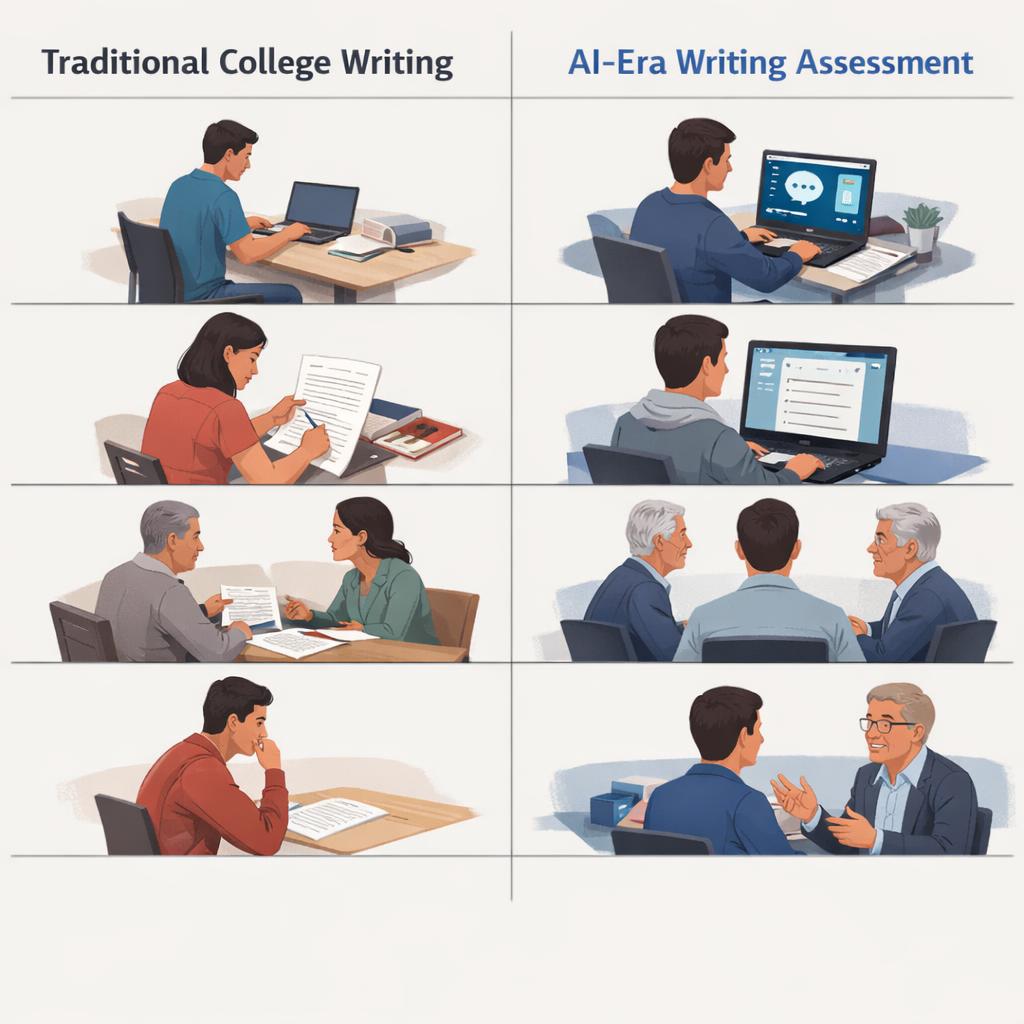
Students now have instant drafting support, but they also face a real temptation to skip the harder work of struggling, synthesizing, and revising. Faculty, meanwhile, spend more time wondering who actually wrote a paper and less time confidently responding to student ideas. Trust gets thinner when everyone knows text may be machine-generated.
The risks: weaker original thinking, unclear authorship, and lower trust
If students lean on AI too early, they may miss the mental effort that writing is supposed to build. The problem is not just plagiarism. It is weaker judgment, flatter arguments, and less practice turning evidence into insight. When authorship is uncertain, feedback loses value too, because the instructor may be responding to the tool rather than the learner.
The opportunity: more emphasis on oral defense, process, and revision
The future of writing instruction after generative AI could actually improve if colleges focus more on process. Oral defenses, annotated drafts, revision memos, and in-class writing reveal how students think, not just how finished a paragraph sounds. AI may push writing courses toward more authentic demonstrations of learning.
How colleges can redesign writing assignments to stay valuable
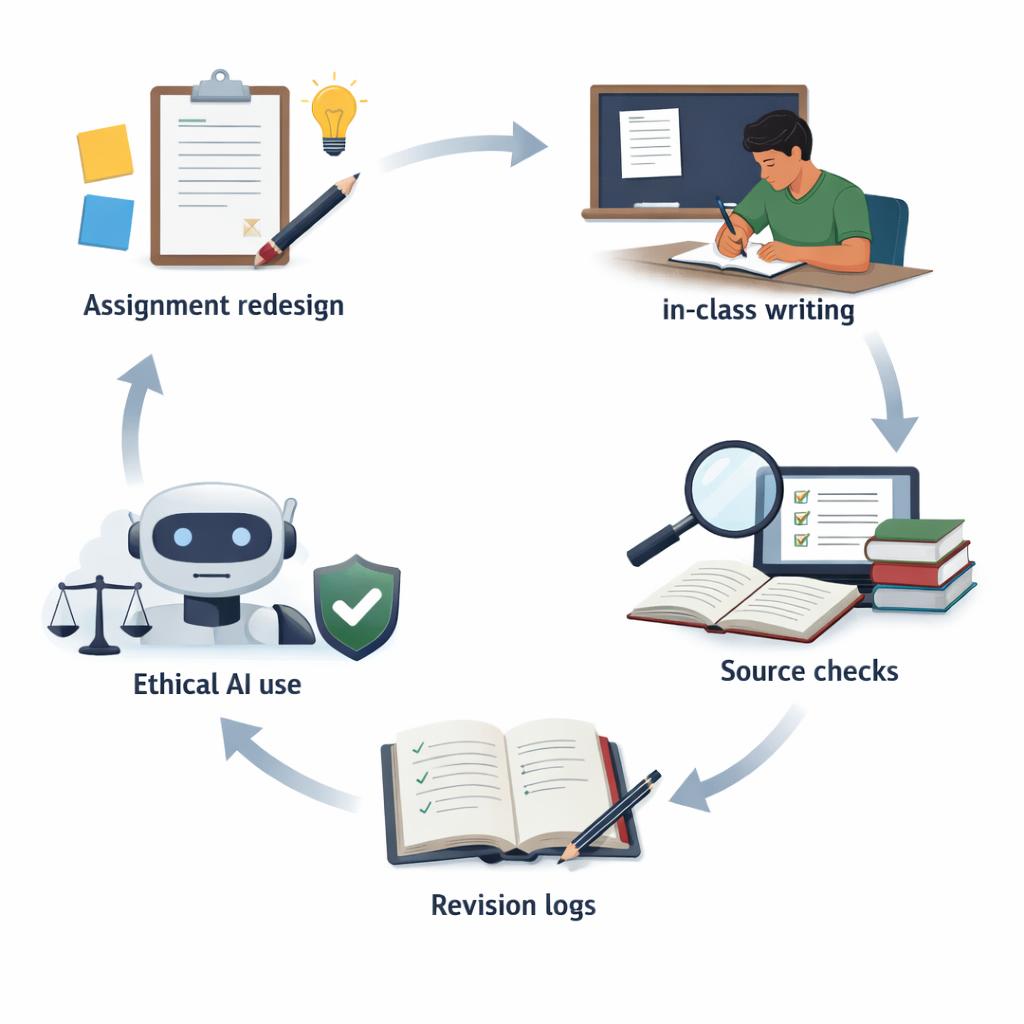
Knowing how colleges can redesign assessment for AI writing is now essential. Better assignments ask students to use course-specific evidence, connect ideas to class discussion, explain their choices, and document revision steps. Those tasks are harder to fake and more useful educationally.
Use in-class writing, staged drafts, reflections, and source-based prompts
Faculty can mix short in-class responses, proposal checkpoints, source annotations, and reflection paragraphs about how a paper evolved. Prompts tied to recent lectures, campus events, or local materials also reduce generic AI output. The goal is not necessarily to ban AI, but to make learning visible.

What strong writing instruction looks like in an AI-assisted future
Writing instruction now has to teach students when AI helps and when it weakens their work. Students need guidance on brainstorming, checking facts, revising tone, and spotting bias. They also need clear rules about disclosure and acceptable use.
Teach prompting limits, citation ethics, rhetorical judgment, and editing
Students should learn that AI often sounds confident while still being unreliable. It can invent sources, smooth over nuance, and produce fluent sentences without real understanding. Good instruction therefore includes citation ethics, rhetorical awareness, and careful editing. In this model, writing still matters because human judgment matters even more.
What happens after AI destroys college writing is not the end of writing
What happens after ai destroys college writing is a shift away from product-only assessment and toward richer evidence of thinking. Colleges that adapt can protect critical thinking by treating writing as inquiry, conversation, and revision rather than just a finished essay.
Why colleges that adapt can produce better communicators, not worse ones
If institutions respond well, students may leave college with stronger habits: defending claims aloud, documenting process, evaluating sources, and editing AI-assisted drafts responsibly. That is a far better outcome than pretending the old system still works. In that sense, what happens after ai destroys college writing may be the rebuilding of writing instruction on firmer ground.
FAQ
Will AI make college essays obsolete?
No. AI may make some traditional essay formats less trustworthy as assessment tools, but colleges still need writing to teach reasoning, argument, and communication.
How should professors respond to AI-generated writing?
Professors should set clear policies, redesign assignments around process and evidence, and include in-class or oral components that make student thinking visible.
Can college writing still teach critical thinking in the age of AI?
Yes. It may do so even better when courses emphasize analysis, revision, source evaluation, and rhetorical judgment instead of polished output alone.


