
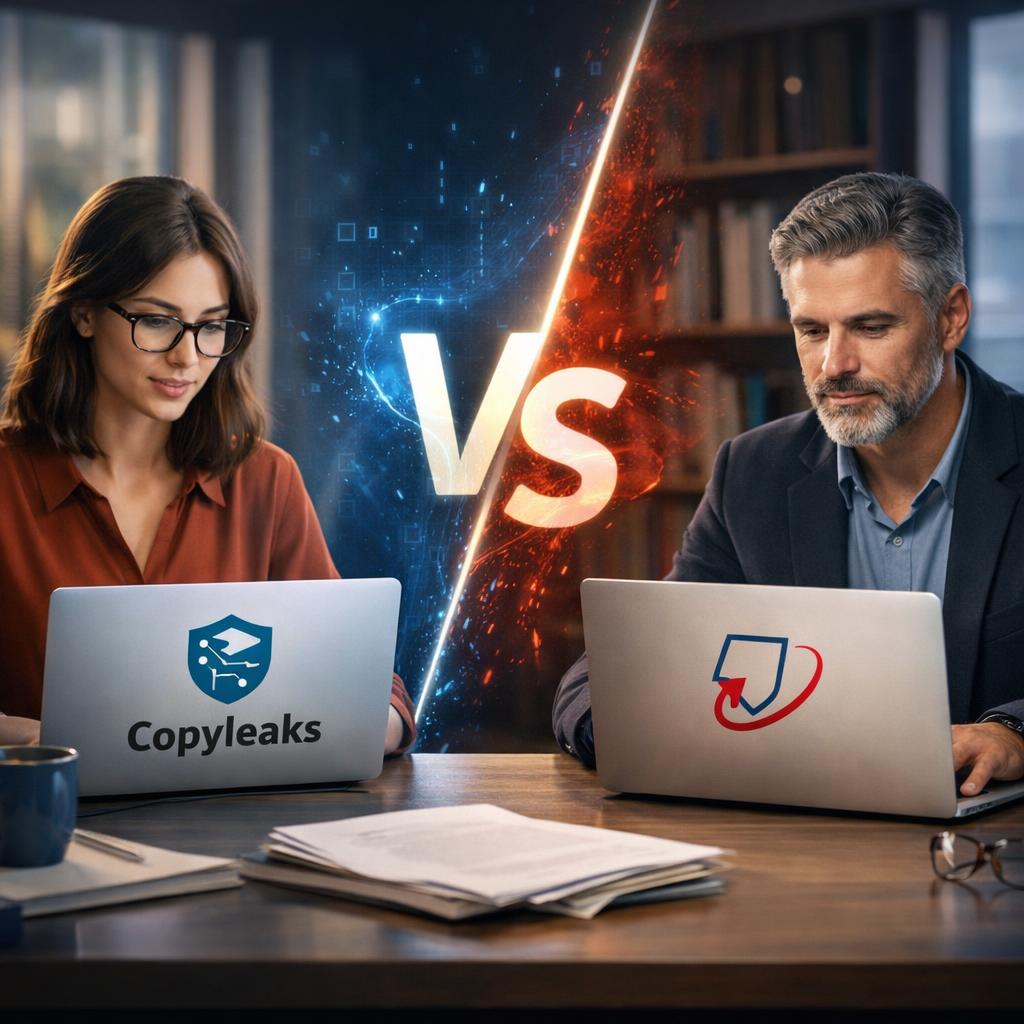
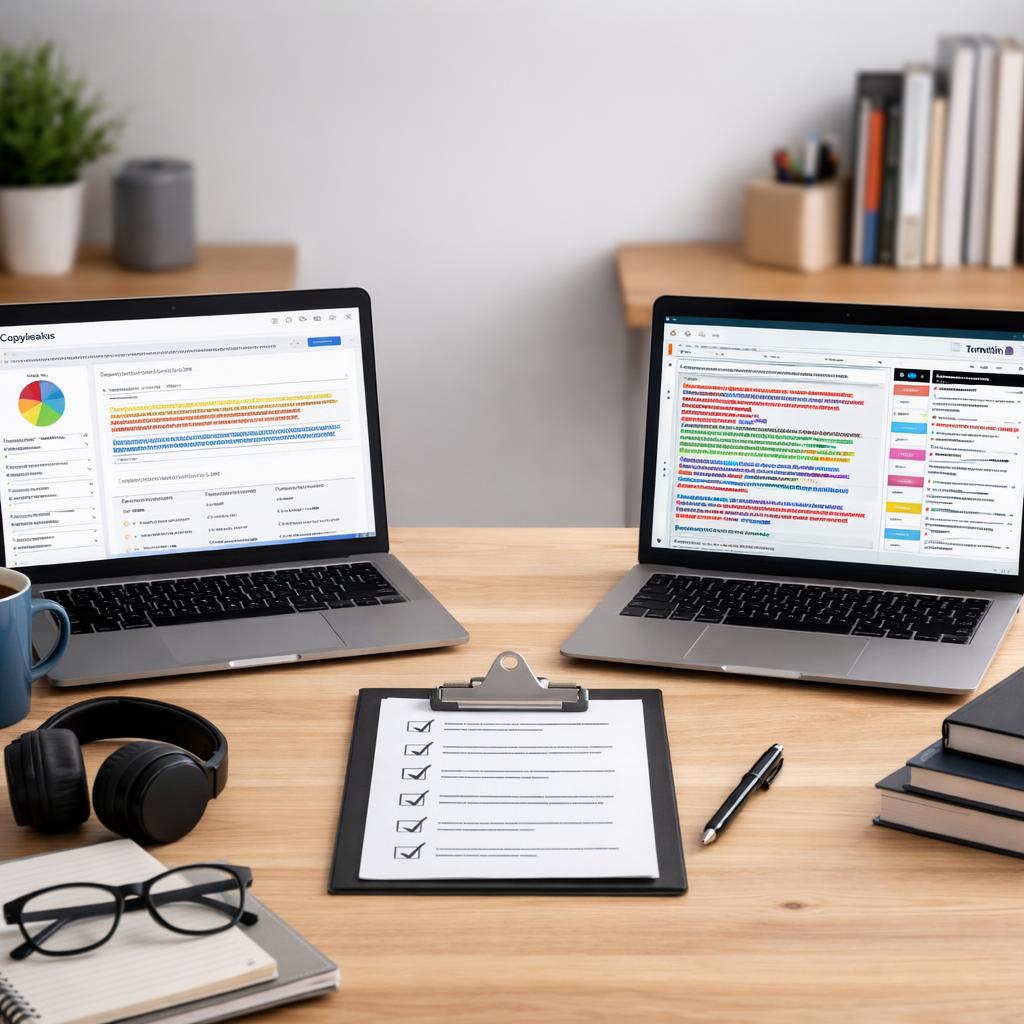
When comparing copyleaks vs turnitin for university instructors, there is rarely one universal winner. The better choice usually depends on your course mix, how much time faculty can spend reviewing flagged work, and what your campus expects around academic integrity, documentation, and student communication. Both platforms are widely used in higher education, but they can feel quite different once instructors begin reading reports, handling repeat submissions, and working through the LMS during a busy term.
That is why it helps to move past feature lists and focus on daily teaching realities. Instructors usually need reports they can interpret quickly, settings that do not create unnecessary noise, and workflows that fit grading rather than interrupt it. If your evaluation is part of a broader search for the best essay detector for college application essays, this guide keeps the focus on university instruction, faculty workload, and practical adoption.
What university instructors should compare first
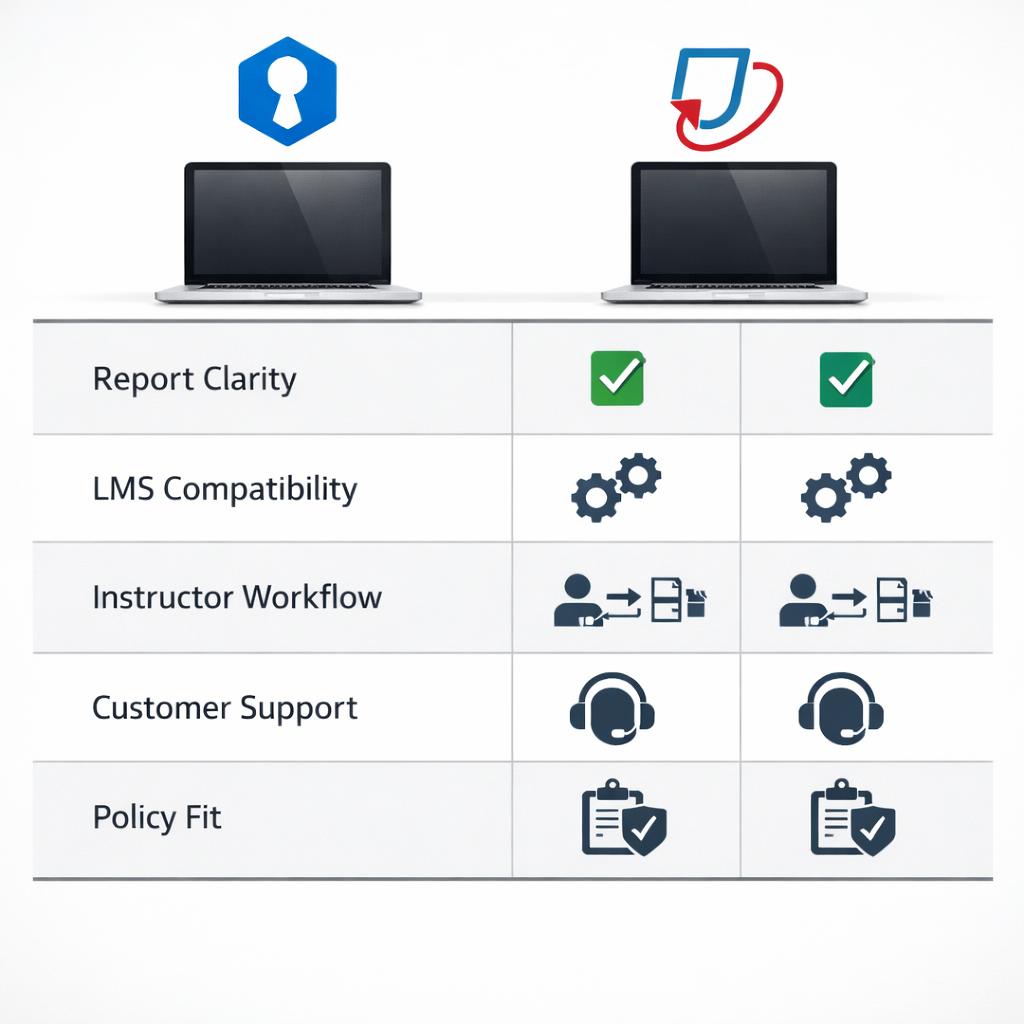
Start with the review experience, because that is where the platform either saves time or creates more of it. In a copyleaks vs turnitin for university instructors comparison, many faculty members care less about a long list of features and more about whether reports are easy to scan, whether match categories make sense, and whether the system helps them move from a flagged submission to a fair academic judgment. A strong report should help separate normal citation overlap, shared assignment language, and more serious concerns without forcing instructors to investigate every minor match.
Administrative fit matters just as much. Some institutions need centralized oversight, shared defaults, and clear processes across departments. Others prefer instructor discretion and course-level flexibility. Before narrowing your list, define what your campus actually needs: a tool that looks polished in a procurement meeting or one that supports everyday grading across different class formats. For a broader framework, see how essay detection tools are evaluated.
Reporting clarity and review workload
For many faculty, this is the deciding factor. The most useful report is not simply the one that finds overlap; it is the one that helps instructors interpret that overlap consistently. If a platform makes it easier to inspect sources, understand why something was flagged, and document decisions for student conversations or formal integrity processes, it can save a meaningful amount of time over the semester.
Review workload should also include what happens after the first alert. Ask how quickly instructors can move through a queue, whether teaching assistants can apply the same standards, and how much follow-up is needed to rule out harmless matches. In practice, the best option for many institutions is the one that reduces low-value flags while still giving faculty enough detail to support fair decisions. If your team wants more consistency in this stage, it may help to review how to review originality reports consistently.
Which platform fits different teaching and grading workflows
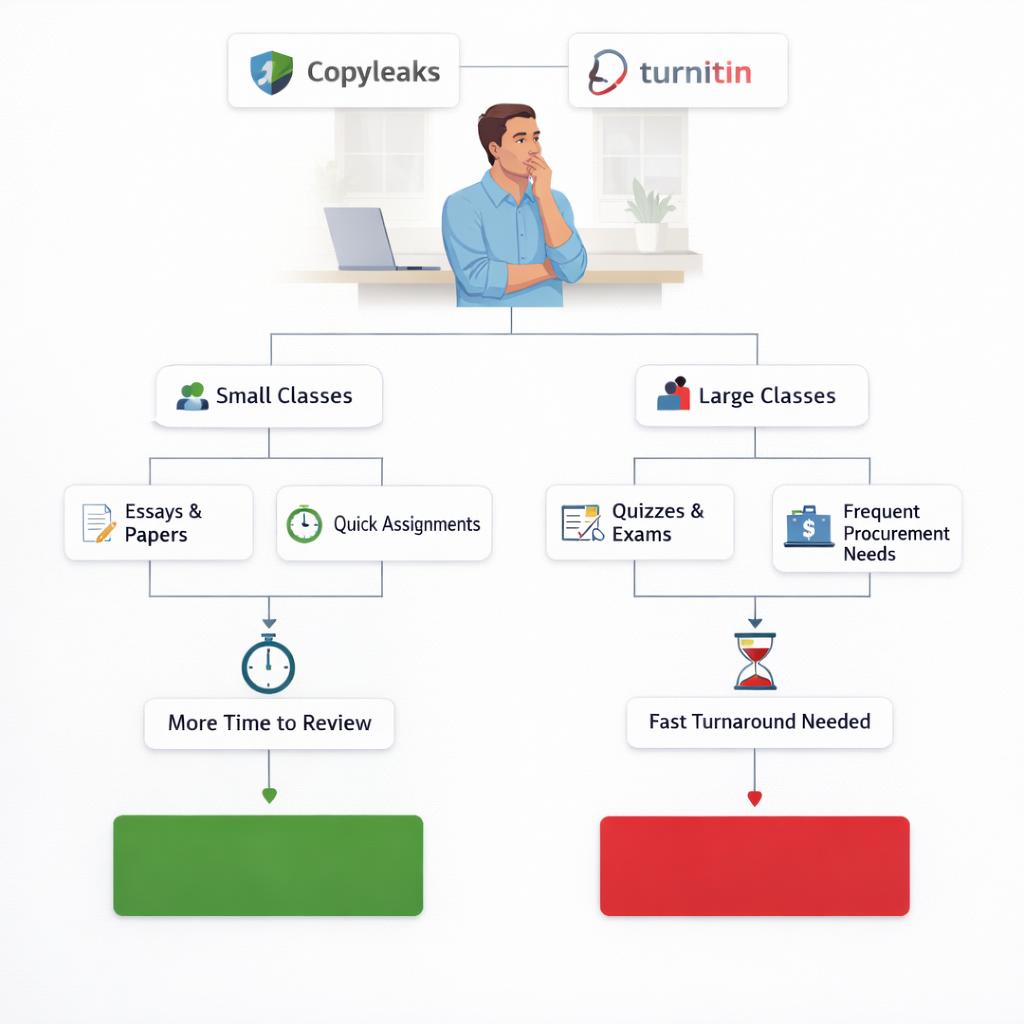
Workflow fit often shapes instructor satisfaction more than raw detection output. In large lecture courses, faculty may need fast queue management, predictable settings, and reports that can be reviewed at scale. In smaller writing-intensive classes, they may care more about nuance, revision support, and whether the platform helps distinguish a teachable citation issue from a case that may require formal escalation. That is why many departments compare tools by course type instead of relying only on vendor claims.
LMS integration is another practical issue that can easily be underestimated. If the platform fits naturally into assignment setup, submission review, and feedback, instructors are far more likely to use it consistently. If they have to jump between systems, manage extra logins, or troubleshoot unusual submission flows, adoption tends to drop. During any trial, test the full process from submission through documentation rather than looking only at sample reports.
Large lectures, seminars, and shared teaching teams
In large enrollment courses, the priorities are usually speed, consistency, and low friction. Shared assignments across many sections often benefit from common defaults, easier triage, and report formats that teaching assistants can learn quickly. In that setting, efficiency can matter more than deep customization. A platform that trims unnecessary review steps may deliver more value than one with a longer feature list.
Seminars and advanced writing courses often have different needs. Instructors may want greater flexibility in how they interpret originality findings alongside assignment context, drafting practices, and disciplinary citation norms. A tool that works well for high-volume screening may feel too rigid in discussion-based courses where close reading and revision are central to teaching. The most useful campus pilot includes both environments, since one department's ideal workflow may not reflect institution-wide needs.
How to choose based on policy, integration, and support
When departments make a final decision, policy alignment often matters as much as reporting quality. Ask whether the platform supports your institution's rules on student notice, instructor discretion, recordkeeping, accessibility, and case escalation. Some campuses want a tightly standardized structure across schools and programs, while others need room for department-level judgment. The right fit should make enforcement more consistent without making student communication harder.
Support and implementation deserve close attention as well. Review onboarding, training quality, LMS setup, responsiveness during peak grading periods, and whether the vendor helps faculty interpret edge cases. A platform can perform well in a demo and still create frustration if first-time users cannot get help quickly or if training materials are too general for university teaching. In many procurement processes, the strongest long-term choice is the one that works smoothly across academic integrity staff, IT teams, accessibility reviewers, and instructors.
Before a campus-wide rollout, ask practical questions. Can the system be piloted easily across disciplines? Can settings be governed centrally without removing all instructor flexibility? Can faculty explain reports to students in plain language? It is also worth checking how the platform handles resubmissions, template-heavy assignments, and common-source overlap across many sections. A short pilot with a simple scorecard for reporting clarity, LMS fit, support, and review workload usually produces a more reliable decision than brand familiarity alone.
Conclusion
For copyleaks vs turnitin for university instructors, the best choice depends on teaching context, review expectations, and institutional policy. Large survey courses may prioritize speed, shared settings, and efficient triage, while writing-focused programs may place more value on nuanced interpretation and instructional flexibility. Instead of asking which platform is best in the abstract, it is more useful to ask which one supports your faculty's real workload and your campus procedures.
A practical evaluation should include side-by-side faculty testing, report review exercises, LMS workflow checks, and policy questions that reflect actual classroom use. That kind of neutral, use-case-driven process usually leads to a better decision than relying on demos alone.
FAQ
Which option is better for large enrollment university classes?
For large classes, instructors usually need fast report scanning, predictable defaults, and minimal grading friction. The better option is the one that reduces triage time, supports consistency across many sections, and works smoothly for teaching assistants and graders.
What should instructors look for in similarity reports and writing flags?
Look for reports that clearly separate routine overlap from issues that need closer review. Helpful signals include readable source matching, understandable flag categories, and a format that makes it easier to explain findings to students without overstating minor similarities.
How important is LMS integration when comparing these platforms?
It is extremely important. Weak integration can slow grading, increase support requests, and discourage adoption. A strong setup should support assignment creation, submission review, and feedback with as little switching between systems as possible.
Should departments pilot both tools before making a decision?
Yes. A limited pilot across different course types usually reveals much more than a vendor demo. It shows how each platform performs in real university workflows, including report interpretation, faculty training, and day-to-day grading.


