

A detection percentage means what the tool’s scoring definition says it measures. It might describe the share of eligible text flagged as potentially machine-generated, a confidence-style assessment, or a combined metric. It does not necessarily show what percentage of your document a machine wrote. Before interpreting a result, check the explanation beside the score and the tool’s documentation.

The useful question is not “Is this number high?” but “What was measured, and what can I reasonably conclude?” A student reviewing an essay, an editor assessing a submission, and an educator investigating a concern need different next steps. The text detector is worth evaluating for an initial passage check because it provides the dedicated checking destination. Whether it fits your task depends on its documented scope, input requirements, and result guidance—not simply whether it returns a percentage.
Identify What the Percentage Actually Measures
Start by finding the score definition. A percentage sign does not explain what was counted, which text qualified for assessment, or what a flag means. If those details are missing, treat the result as unclear rather than assuming it describes the entire document.
- Flagged eligible-text share: This describes the portion of assessed text receiving a particular classification. The denominator may include only eligible prose, not everything you submitted. Check what the tool includes and excludes.
- Confidence-style score: This expresses an assessment under the tool’s scoring method. Unless its documentation explicitly supports that interpretation, it is not a calibrated probability of machine authorship or a breakdown of who wrote each sentence.
- Composite metric: Some tools combine multiple signals into one result. The published definition determines its meaning; a familiar percentage scale does not make it equivalent to another service’s score.
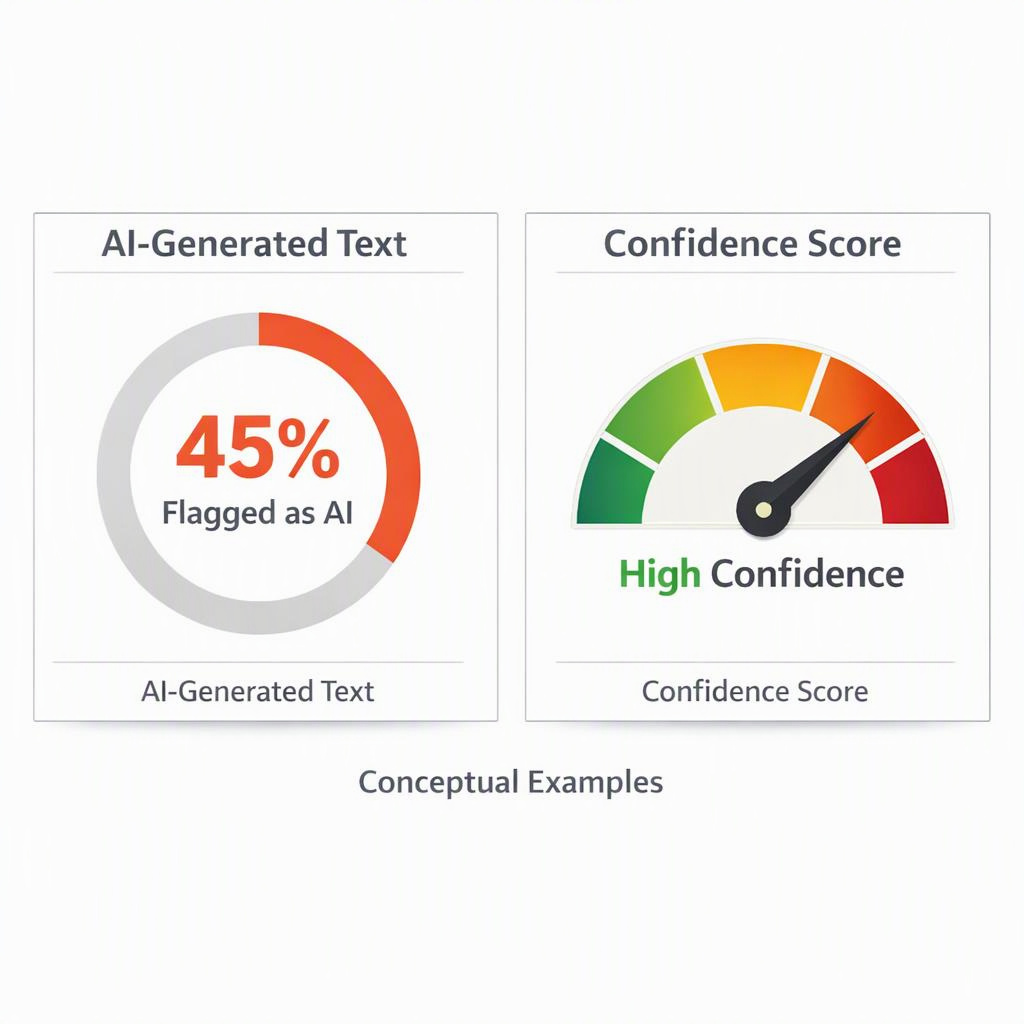
For example, a hypothetical “40% flagged” result might mean that 40% of eligible prose received a flag. It would not establish that a machine wrote 40% of the document. A confidence-style score of 40% could mean something entirely different. These are conceptual examples, not verified detector outputs. Read the definition before using either number to guide a decision.
Why Percentages from Different Tools Are Not Comparable
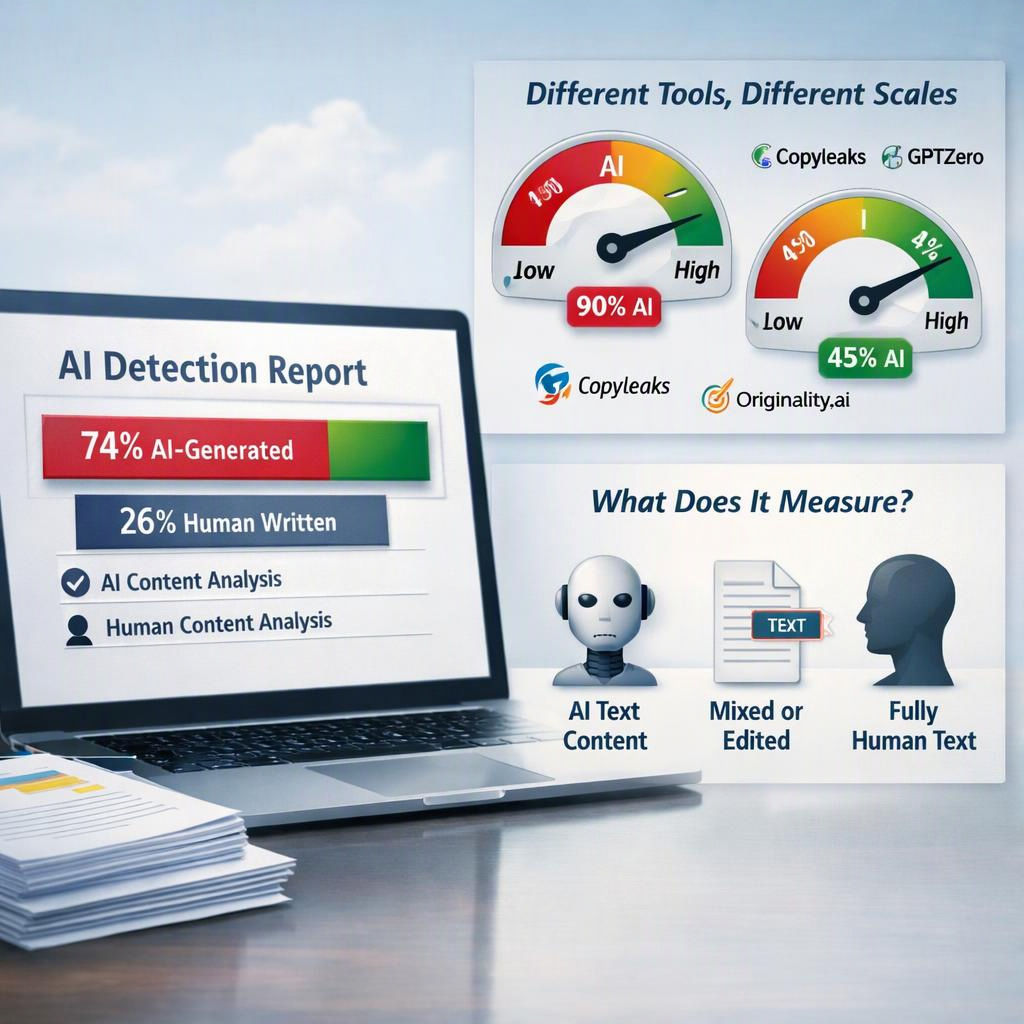
Two tools can show percentages while answering different questions. Even matching labels may hide differences in eligibility rules, classification thresholds, or text processing. Compare their documented methods before comparing their numbers. If the methods are unclear, you cannot establish that one score is higher or lower in a meaningful sense.
- Score definition: Determine whether each result represents flagged text, a confidence-style assessment, or a composite. Similar names do not guarantee equivalent measurements.
- Eligible text: Confirm that both tools assessed the same material. Exclusions can change the denominator even when you submit identical documents.
- Thresholds: Different classification boundaries can produce different flags. That difference alone does not establish which assessment is correct.
- Preprocessing: Check whether document extraction, formatting changes, or segmentation altered the passage received or assessed by either service.
- Tool version: Save the assessment date and any available version information. Method updates can limit comparisons with earlier results.
Do not average scores across tools. Combining unlike measurements produces a number with no established authorship meaning. Disagreement also does not prove that the highest, lowest, or majority result is right. First check whether the services assessed the same input in comparable ways. If you cannot verify that, record the separate findings and their limitations instead of presenting a combined verdict.
Check the Evidence Before Acting on a Score
Your response should reflect the stakes. During personal or editorial review, a result can prompt you to examine unclear explanations, unsupported claims, or inconsistent sourcing. Fix those problems because they affect the writing, not because a detector flagged it. For decisions involving grades, publication, employment, or misconduct allegations, a percentage alone is insufficient evidence of authorship.
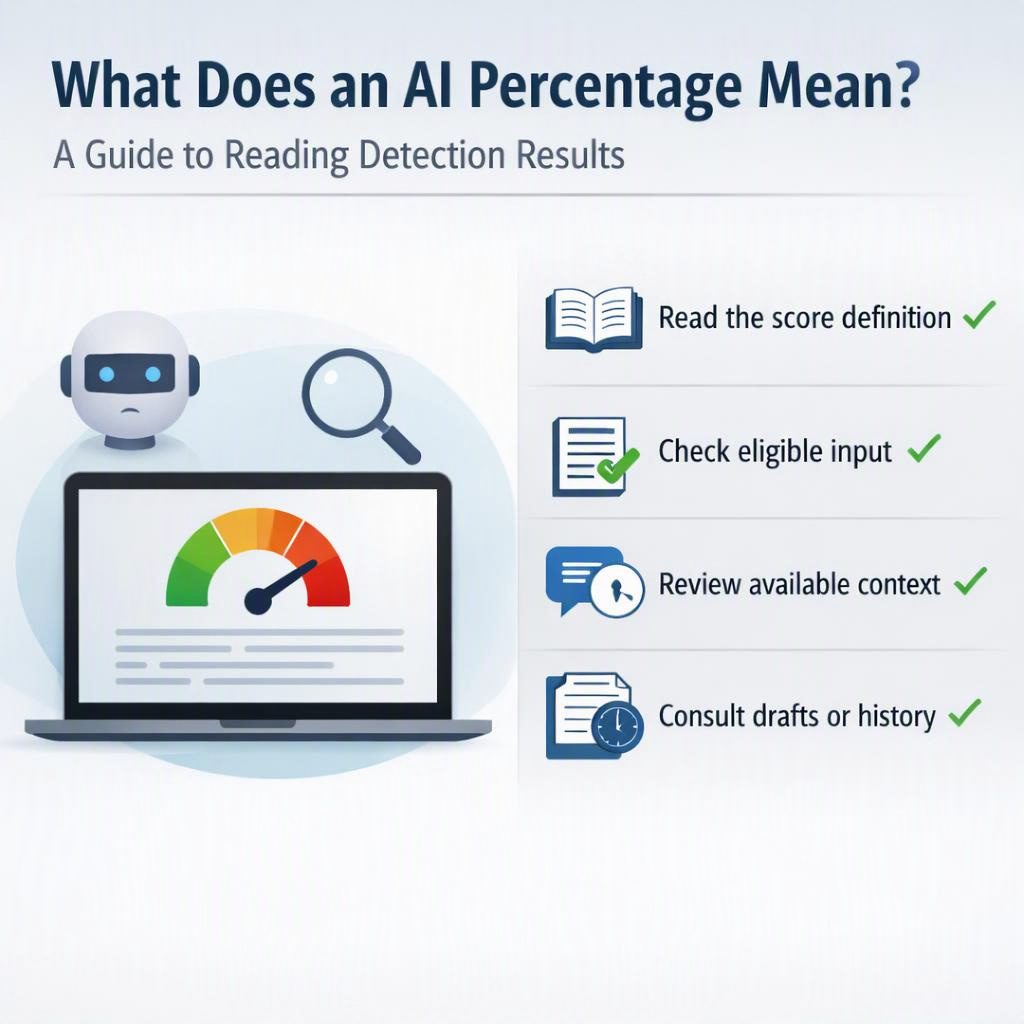
- Save the score explanation: Keep the original result, its definition, and any stated limitations together. A number separated from its explanation is easy to misinterpret.
- Check the submitted text: Confirm that you uploaded or pasted the intended passage and that it meets the tool’s documented assessment conditions.
- Review the requirements: Consider the assignment or editorial brief, permitted assistance, quotations, and disclosure rules. A detector does not decide whether a writer followed those requirements.
- Examine the writing process: Review available notes, sources, drafts, and revision history. Invite the writer to explain their choices without treating missing records as automatic proof of misconduct.
If a concern remains, follow the applicable human review process and give the writer an opportunity to respond. Process evidence also needs interpretation: no single missing draft settles authorship. Where the tool’s documentation does not support your use case, rely on appropriate contextual review rather than forcing an interpretation from the score.
Revise for accuracy, clarity, sourcing, and compliance—not repeatedly to obtain a lower number. No cutoff is universally safe or universally incriminating. A changed score does not, by itself, show that the writing improved or that an authorship question was resolved.
Conclusion: Treat the Percentage as a Signal, Not Proof
A detection percentage is a tool-specific measurement, not a record of who wrote each passage. It can support an initial review only when its definition and input conditions are clear. A high score does not prove machine authorship, and a low score does not certify an entirely human writing process. Different services’ percentages are not interchangeable simply because they share a scale.
For a passage you want to screen, review the detector’s scope and result guidance before submitting it. Compare its supported input and stated limitations with your task, then decide what drafts, source checks, or human review you would need before acting. This keeps the check useful without asking it to answer questions it cannot resolve.
FAQ
Does a high detection percentage prove that a machine wrote the text?
No. It reports an assessment under a particular scoring method, not verified authorship. Check what the score measures and which text was assessed. Any consequential decision also needs contextual evidence and a fair review process.
Can human-written text receive a high detection score?
Yes. Detectors can misclassify human writing. Without relevant, documented evaluation evidence, you cannot determine how often that happens for a particular tool or passage. Review the explanation and writing process rather than demanding revisions solely to lower the score.
Does a low percentage mean no machine assistance was used?
No. It means the assessed text received a low result under that method. It does not independently rule out assistance. Check permitted-use and disclosure questions against the assignment, publication policy, or other applicable requirements.
When is the site’s detector a logical option?
It is worth comparing for an initial passage review, not as a substitute for resolving disputed authorship. If that matches your scenario, check the detector page for supported input, score definitions, and stated limitations. Compare those details with your review requirements before deciding whether its results would be useful.


