

Yes, Turnitin detector false positive examples do exist, and they matter because a flagged result may reflect writing patterns rather than clear proof that a paper was machine-written. For students, instructors, and academic support teams, the practical takeaway is straightforward: treat the score as a prompt for review, not a final judgment. If you need broader context before relying on one result, it helps to understand how accurate Turnitin detector is overall.
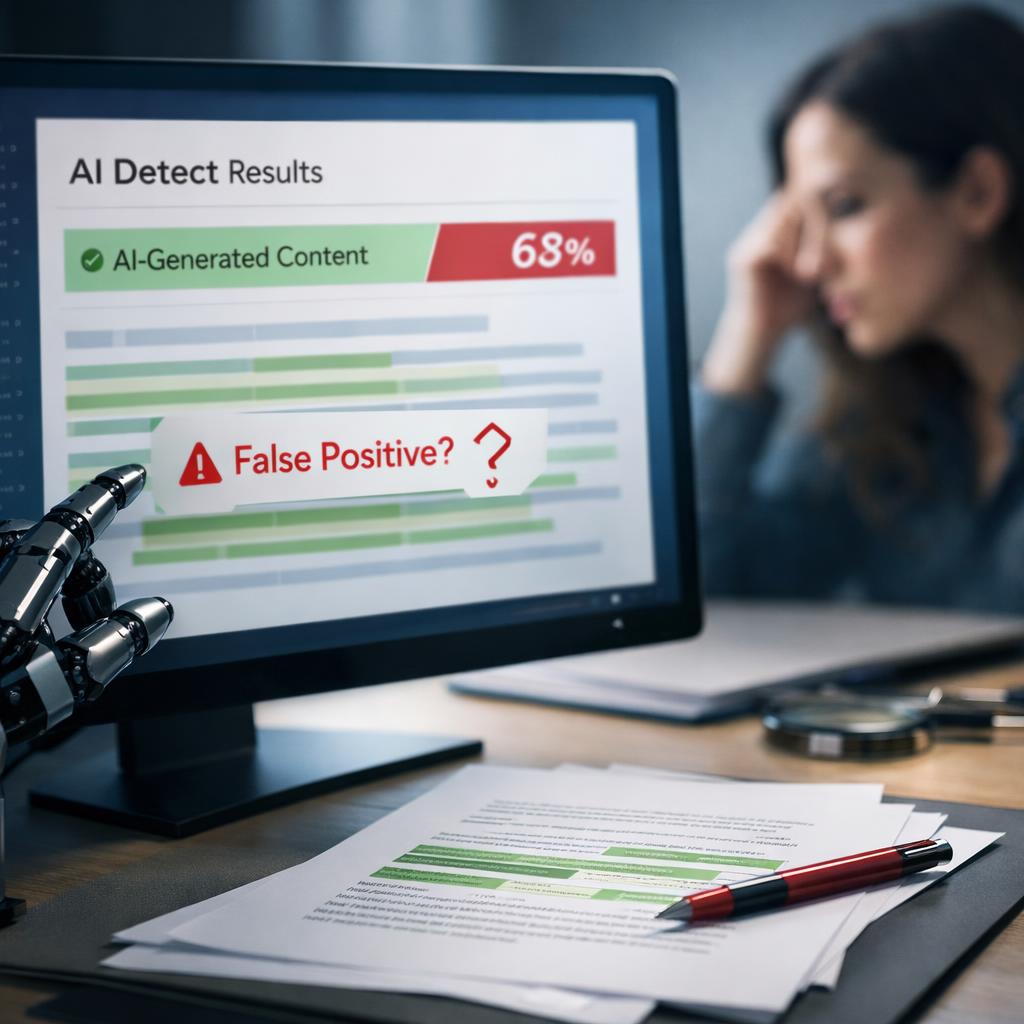
This question often comes up from students asking why Turnitin flagged human writing, from instructors reviewing a surprisingly polished draft, or from schools trying to create a fair process. In many cases, writing that is very clean, highly structured, heavily revised, or intentionally neutral in tone can look more suspicious than it should. The examples below show what realistic false positives can look like, why they happen, and how to review them fairly.
What Turnitin detector false positives look like in practice
Most false positives are not dramatic. They usually involve ordinary academic writing that happens to be unusually consistent. A student might submit a well-edited essay with strong topic sentences, balanced paragraph length, and clean grammar throughout, then see portions flagged despite writing the paper independently. Another common example is a short response or literature summary that uses standard transitions, compressed wording, and a neutral tone. Because the writing is efficient and predictable, it can sometimes resemble text that was generated quickly.
Common examples: polished essays, formulaic summaries, and non-native English writing
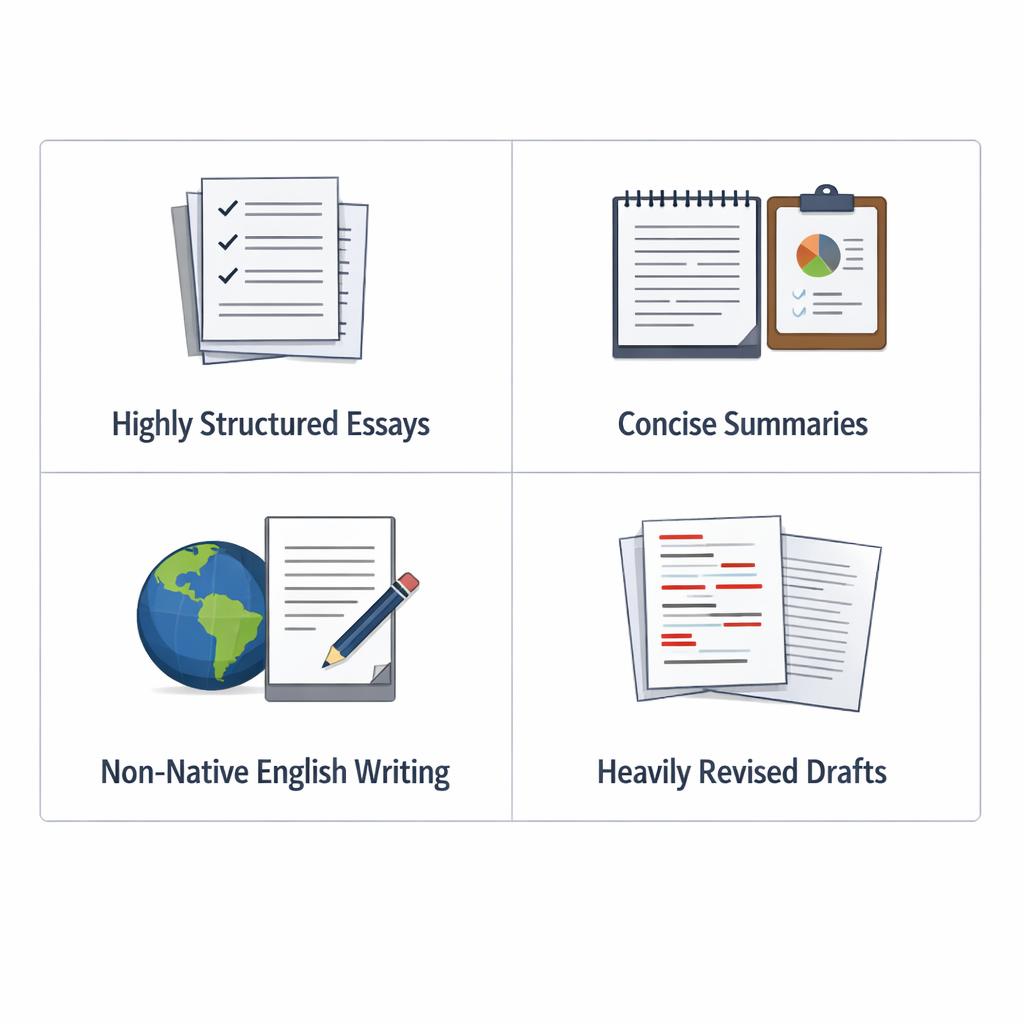
Several patterns appear again and again in turnitin smart detector false positive examples. One is the polished essay that has gone through multiple rounds of revision until the prose becomes very even from beginning to end. Another is the formulaic summary written closely to the assignment rubric, with limited personal voice and repeated academic phrasing. A third involves non-native English writing that relies on safe sentence structures and textbook-style wording. In each case, the work can be fully human while still matching stylistic patterns that raise suspicion.
- Highly structured essays: uniform paragraph design and steady sentence rhythm can seem unusually consistent.
- Concise summaries: compressed, neutral language may resemble generated text.
- Non-native English writing: cautious, repetitive phrasing can be misread as machine-like.
- Heavily revised drafts: repeated edits may smooth out the quirks that normally show individual voice.
Why false positives happen and what they do not prove
False positives happen because detection tools assess patterns in language, not authorship intent. That means careful human writing can sometimes overlap with the features the system treats as suspicious. If a paper uses repeated sentence lengths, predictable transitions, standard citation language, and restrained claims, it may fit a pattern associated with generated text even when the student wrote it alone. This is why one screenshot or percentage score cannot answer the bigger question of reliability by itself.
Patterns that can raise suspicion: predictable structure, repeated phrasing, and heavy editing
Predictable structure is one common trigger, especially when every paragraph follows the same sequence: topic sentence, support, example, conclusion. Repeated phrasing is another, such as frequent use of stock transitions like “in conclusion,” “moreover,” or “it is important to note.” Heavy editing also matters. When a paper has been reviewed by a tutor, writing center, grammar checker, peers, or the student several times, the final version can lose the rough edges that make human drafting look more natural.
Still, these signals do not prove misconduct. They do not show who created the first draft, how the paper developed, or whether the student can document their process. They only suggest that the text deserves closer review. That distinction matters. A false positive is not evidence that the system is always wrong, but it is enough reason to avoid treating any flagged passage as automatic proof.
If you are comparing tools or review methods for this scenario, a broader accuracy guide is worth checking because it helps place individual flags in context. That is especially useful for instructors building a consistent policy or for students deciding how to respond to a report.
How to review a flagged paper fairly before making a decision
The most reliable response to a flagged result is to compare the paper with real authorship evidence. Look at draft history, saved outlines, research notes, timestamps, source use, and prior writing samples. In many school settings, that evidence is more useful than debating the percentage alone. If you need a more structured process, review how to evaluate a flagged paper fairly so the same standard is applied across cases.
Use a simple evidence checklist instead of relying on one score alone
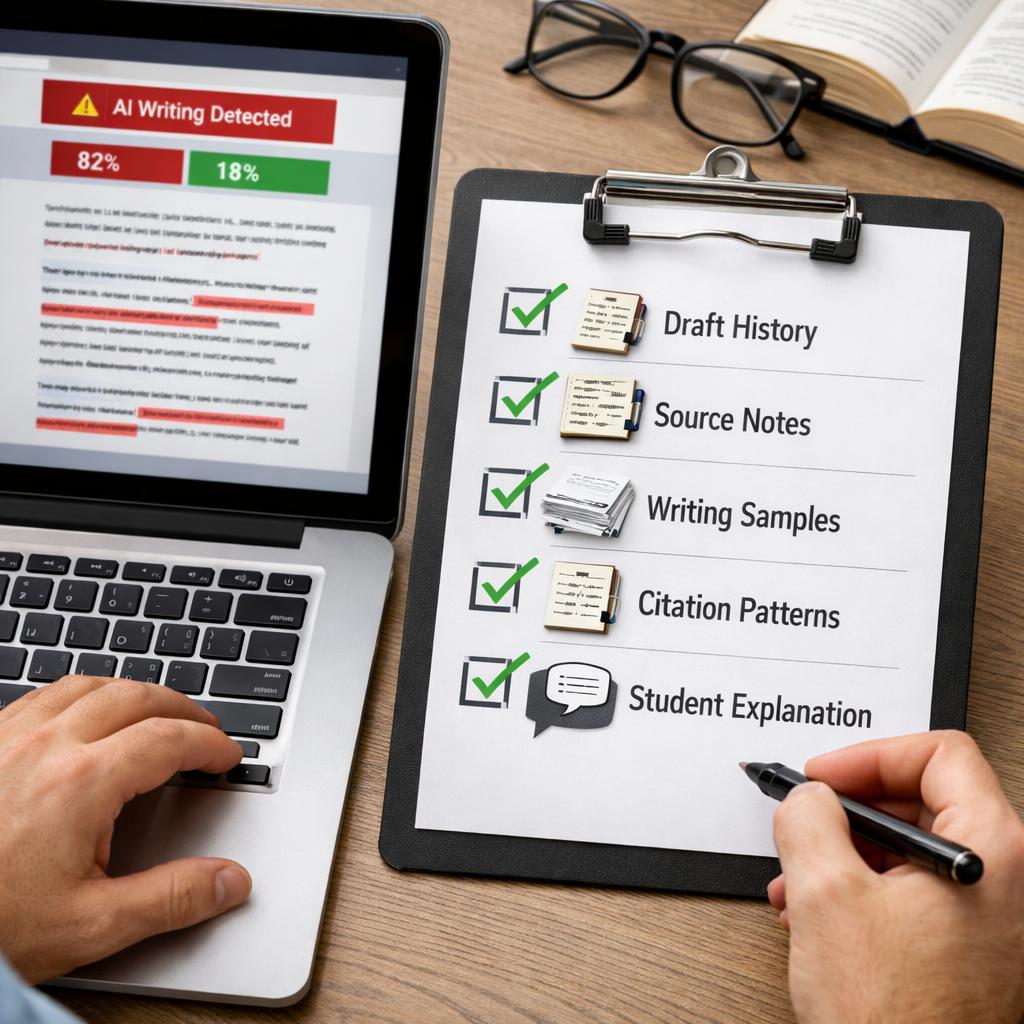
A practical checklist helps reduce overreaction. Ask whether the student can show version history, notes tied to cited sources, or earlier drafts that developed over time. Compare the flagged paper with previous assignments for sentence rhythm, vocabulary choices, organization, and citation habits. Look for sudden shifts in style rather than polished writing by itself. A student who normally writes in a similar voice may simply have produced a cleaner final draft, while a paper with abrupt stylistic breaks may justify deeper review.
- Draft history: shows whether the paper evolved gradually.
- Source notes: connects research activity to the final submission.
- Known writing samples: helps compare voice, pacing, and structure.
- Citation patterns: can show continuity or a sudden mismatch.
- Student explanation: adds context before any decision is made.
These checks are worth comparing because they answer the user’s real concern better than the score alone: is this paper genuinely suspicious, or does it simply read in a way that triggered the detector? For educators, that comparison offers a lower-risk way to make decisions. For students, it provides a clear path to defend legitimate work. Before taking action, compare the flag against revision history, writing consistency, citation behavior, and available documentation so the review stays evidence-based rather than score-driven.
Conclusion
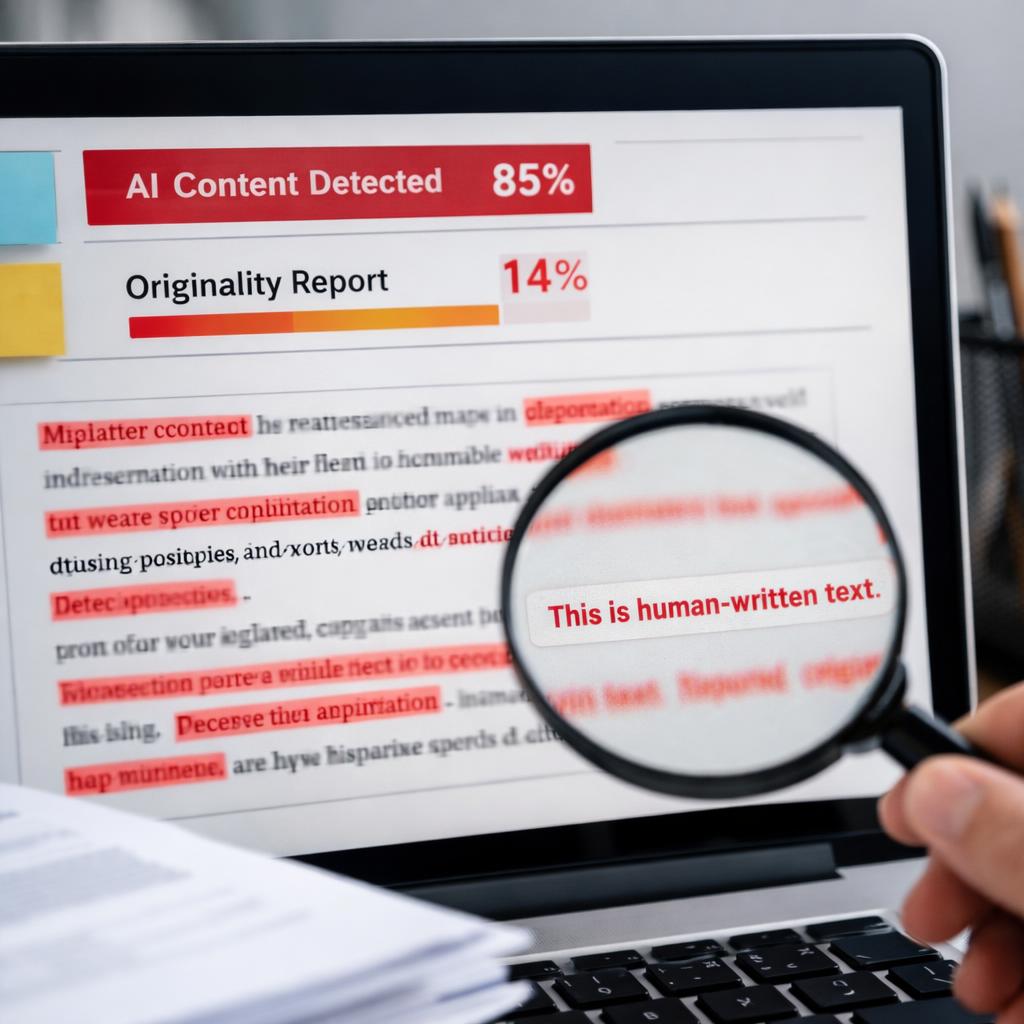
Turnitin smart detector false positive examples show that a flagged result can reflect style, revision intensity, or writing context rather than definite proof of machine-written work. Polished essays, concise summaries, non-native English writing, and heavily edited drafts are all realistic cases where human writing may be questioned. The most accurate conclusion is conditional: a flag may be meaningful, but only when it is supported by other evidence.
If you are reviewing a suspicious result, compare the paper’s draft history, citation habits, revision pattern, and similarity to known writing samples next. That gives you a more defensible judgment and helps avoid overreacting to one report. For broader context, review how accurate Turnitin detector is and then check how to evaluate a flagged paper fairly before making an academic integrity decision.
FAQ
Can Turnitin flag human writing as machine-generated?
Yes. That is the central issue behind turnitin smart detector false positive examples. A paper can be flagged because its structure, wording, or consistency resembles patterns the detector treats as suspicious. A flag should begin a review, not end one.
What kinds of writing are most likely to trigger a false positive?
Writing that is highly structured, concise, repetitive in phrasing, or heavily revised is more likely to raise concern. Non-native English writing can also be affected when it relies on safe, textbook-like sentence patterns. These traits may be fully human but still look unusually uniform.
What should I do if Turnitin says my paper is smart generated?
Start by gathering authorship evidence. Save outlines, notes, document history, research materials, and earlier drafts. Be ready to explain how you wrote and revised the paper. If the review becomes formal, ask that the decision consider your documentation, writing history, and citation record rather than the score alone.
When is the broader Turnitin accuracy guide a logical option to review?
It makes sense when you need more than example cases, especially if you are an instructor setting policy, a student responding to a flag, or a writing team trying to standardize review. It is less useful if your issue is purely technical. Before relying on any single report, compare the tool’s general reliability, your evidence of authorship, and the context of the assignment.


