
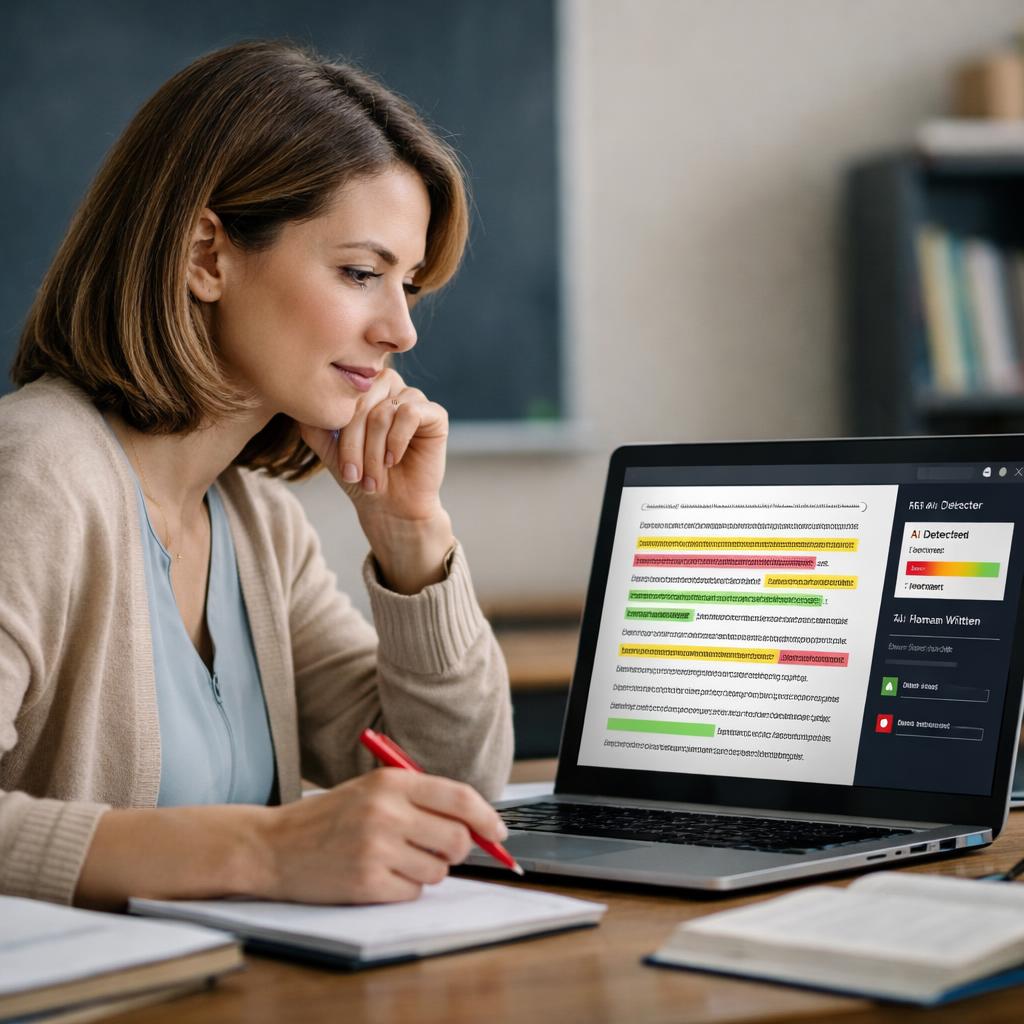
Teachers need a practical, fair way to review student writing when a tool flags passages that may read like machine-generated text. A strong smart detector for teachers with sentence highlights should help instructors focus their attention, not make the decision for them. In real classroom use, the most helpful systems show which sentences raised concern, explain confidence levels in plain English, and fit naturally into everyday grading. Schools should still rely on teacher judgment, student context, and policy-based procedures such as classroom integrity guidelines.
This article explains how sentence-level highlighting works, which features matter most in school settings, and how to choose a tool responsibly. It also covers limits, reporting needs, and fair follow-up steps so teachers can review flagged passages without overinterpreting the results.
Why sentence highlights matter in classroom review
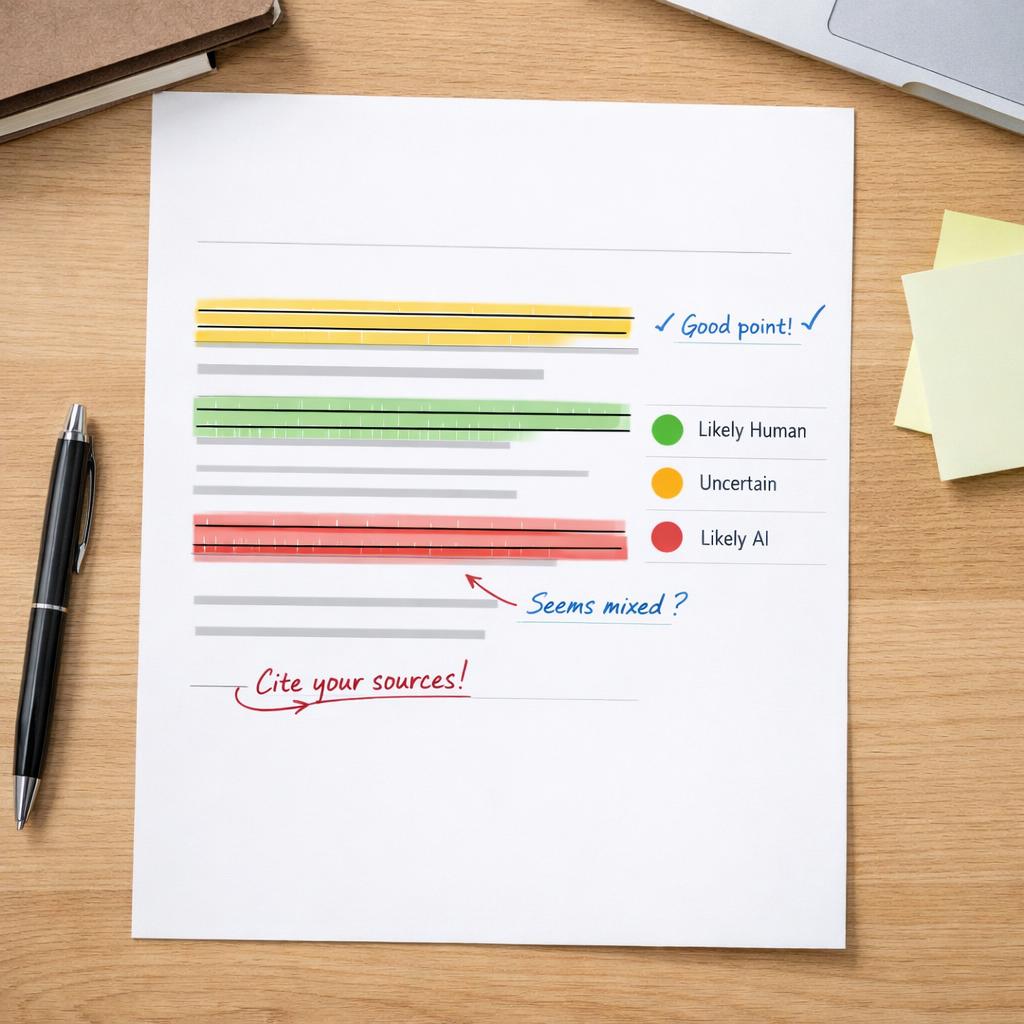
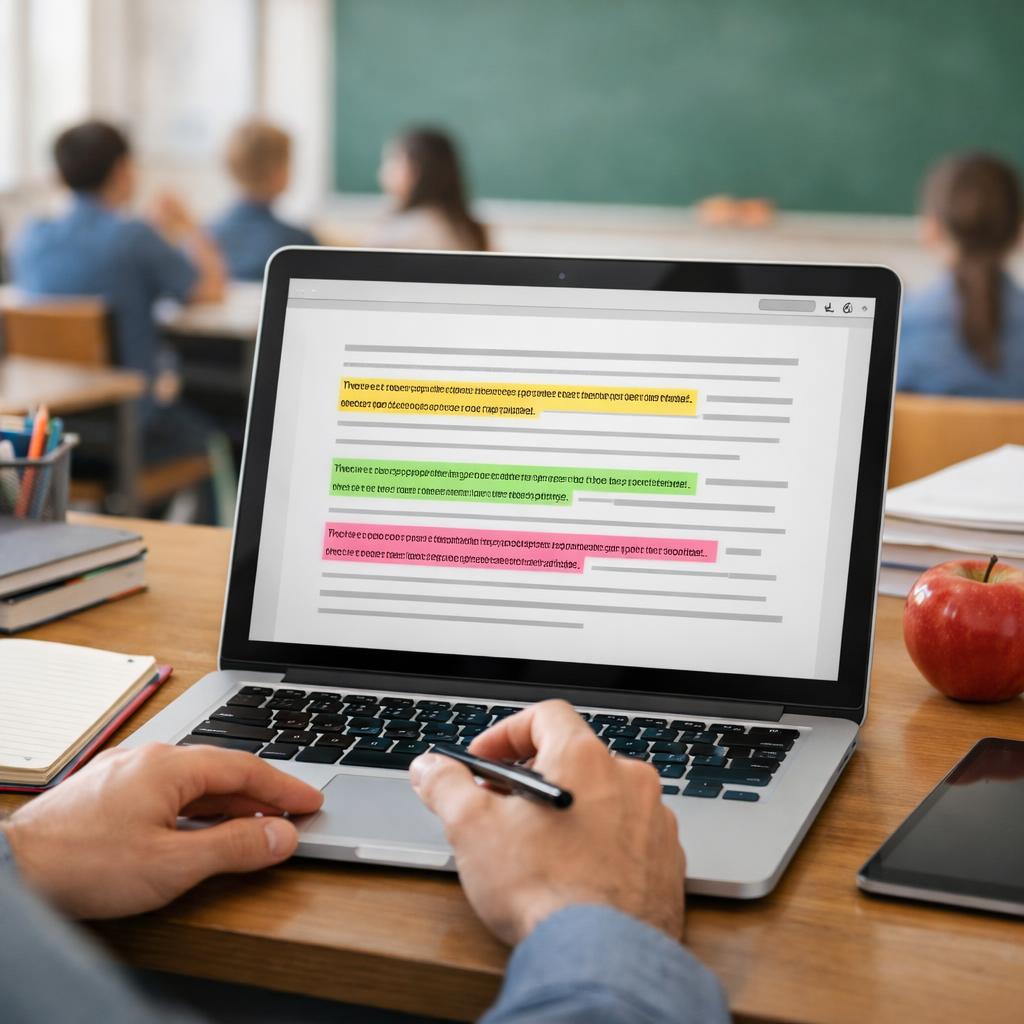
Sentence-level highlighting matters because it narrows a teacher’s attention to specific passages instead of forcing a full paper review from scratch. For busy instructors, that can turn a rough screening step into something genuinely useful. A teacher-facing detector with highlighted passages also supports better student conversations, since the instructor can point to exact wording, transitions, or sections that need clarification instead of making broad claims about the entire draft.
In practice, highlights are most useful when they make the workflow clearer. A teacher can open a report, scan the marked sentences, and compare them with the rest of the essay, previous drafts, or in-class writing. That kind of targeted review saves time and creates a stronger record if questions come up later. It also works well alongside existing processes for reviewing student writing consistently.
Just as important, highlights are not evidence on their own. Strong student writing, heavy revision, formulaic assignments, or second-language writing patterns can all affect results. A highlighted sentence may simply mean the wording is polished, generic, or structurally predictable. That is why teachers should treat the output as a prompt for closer review, not as a final judgment.
What highlighted passages can and cannot prove
Highlighted passages can show where a detector believes the writing deserves a second look. That is useful for triage, note-taking, and consistency, especially in large classes with many submissions. They may also help teachers see whether concern is concentrated in one part of the essay, such as the introduction, summary, or conclusion.
What highlights cannot do is prove misconduct, authorship, or intent. A flagged sentence does not reveal whether a student drafted it independently, revised heavily with feedback, or used acceptable support like tutoring or a template. The responsible standard is straightforward: use the tool to guide questions, then confirm concerns through writing history, assignment context, and direct student discussion.
Features teachers should prioritize before adopting a tool
When schools compare tools, raw accuracy is only part of the picture. The best detector for teachers with sentence highlights should also be readable, transparent, and easy to use consistently across different assignments. Look for clear sentence-by-sentence flagging, confidence indicators that make sense to nontechnical staff, and reports that avoid exaggerated certainty. A useful system should work reasonably well on short reflections, discussion posts, and longer research papers without making every polished sentence look suspicious.
Usability matters just as much as detection quality. Teachers should be able to save notes, revisit reports, and document why a paper received extra review. If the system allows instructors to compare drafts or attach comments, it becomes much easier to support a fair process. Privacy and retention settings also deserve close attention, especially for districts and colleges that need to protect student data and maintain clear records.
Another key question is whether the tool fits the systems teachers already use. If reports can be exported, attached to a case file, or shared with an academic integrity office, follow-up becomes smoother and more defensible. Good reporting should include highlighted passages, confidence markers, timestamps, and space for teacher notes. For many schools, the ideal setup also fits an LMS or grading workflow so instructors do not have to copy and paste every submission by hand.
Reporting, workflow fit, and practical classroom use
A good classroom tool should make review easier, not more complicated. Teachers already manage grading, feedback, parent communication, and policy documentation, so any added step needs to be simple. The best reports are scannable, printable if needed, and easy to revisit later during an appeal or administrative review.
Workflow fit also affects consistency across departments. When instructors use the same reporting format and review path, schools are less likely to produce uneven outcomes. That consistency matters when multiple teachers, support staff, or administrators are involved. In short, the right tool should help teachers document concerns clearly while keeping the process manageable.
How to use results fairly with students
Fair use starts with transparency. If a school uses an smart detector for teachers with sentence highlights, students should know when writing may be reviewed, what the tool does, and what it does not do. Policies should clearly explain that highlighted text is only a signal for further review. That protects students from overconfident interpretation and helps teachers approach concerns with a neutral mindset.
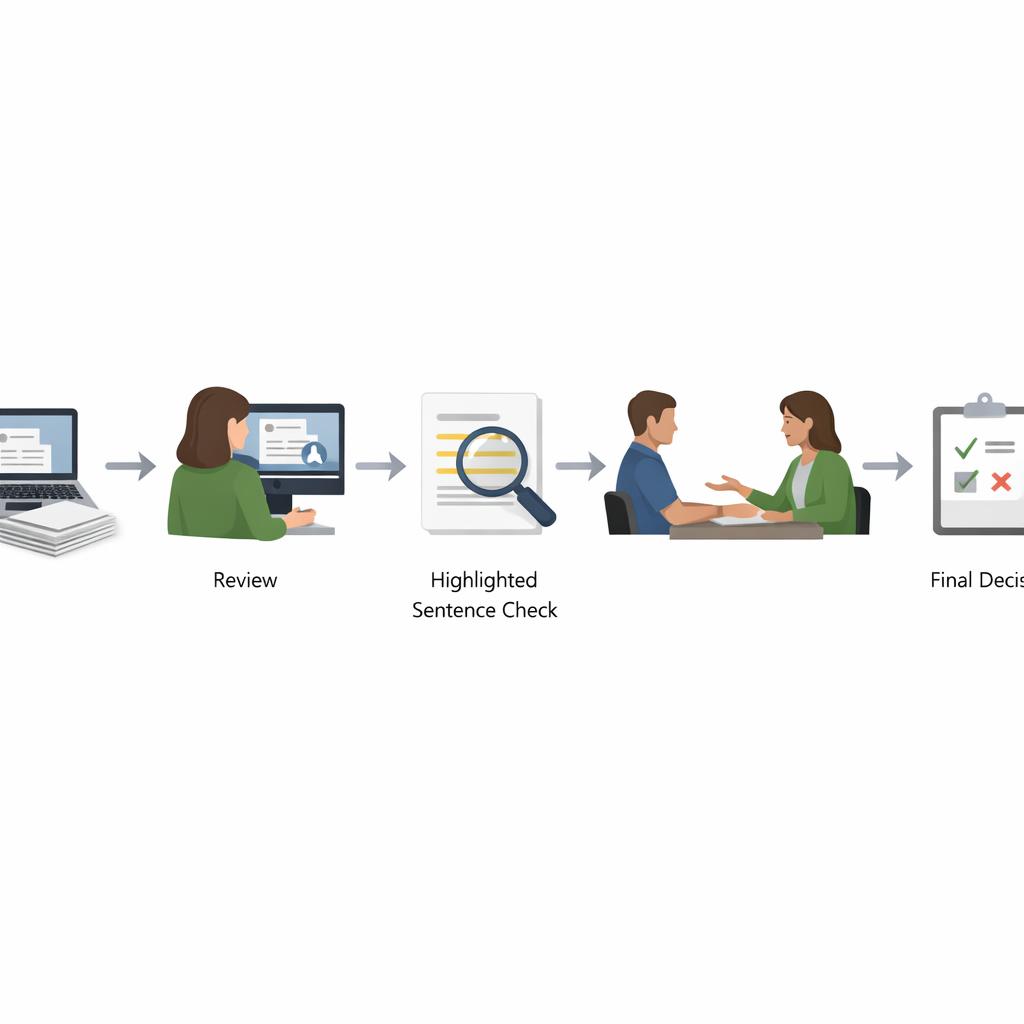
A practical review process is simple. First, read the paper normally. Then examine the flagged sentences in context and ask whether they reflect unusual shifts in tone, vocabulary, specificity, or source use. Compare the submission with earlier drafts, outlines, in-class writing, or revision history if those materials are available. Often, concern becomes weaker or stronger only after the teacher sees the full writing process.
When meeting with a student, keep the conversation grounded in evidence rather than accusation. Ask open questions about how the assignment was planned, what was revised, and why certain sections are written the way they are. If concerns remain, follow school policy for documentation and next steps. If the explanation is reasonable and supported by the writing history, close the matter and record the review. This approach keeps the process educational, fair, and easier to defend if questions arise later.
Conclusion
Choosing an smart detector for teachers with sentence highlights is less about chasing a perfect score and more about finding a review tool that supports clarity, workflow fit, and fair decision-making. Sentence highlights can save time and improve conversations because they show where a paper may need closer attention, but they should never be treated as proof on their own.
The strongest approach combines sentence-level signals with teacher expertise, assignment context, student discussion, and policy-based procedures. When schools choose a tool that is transparent, easy to document, and aligned with classroom needs, teachers can review writing more confidently and responsibly.
FAQ
How accurate are sentence highlights in student papers?
Accuracy varies by tool, writing type, student level, and revision history. Highlights can be useful for directing attention, but they are not reliable enough to stand alone. Teachers should always verify concerns with context, drafts, and discussion.
Should teachers treat highlighted sentences as proof of misconduct?
No. Highlighted sentences are review signals, not proof. A fair process requires human judgment, school policy, and a chance for the student to explain their writing process before any decision is made.
What makes the best detector for teachers with sentence highlights?
The strongest option balances clear sentence flagging, understandable confidence markers, exportable reports, privacy safeguards, and smooth classroom workflow. It should help teachers review efficiently without overstating certainty.
Can a sentence highlighting detector for student essays reduce grading time?
It can reduce follow-up time when concerns arise because it directs the teacher to specific passages. It should not replace normal reading or grading, but it can make review more focused, consistent, and easier to document.


