

If you are asking how does smart detection work for chatgpt essays, the short answer is this: detectors compare patterns in a piece of writing with patterns often found in machine-written text. They do not know who wrote the paper, they cannot read intent, and they cannot prove misconduct on their own. What they do is estimate whether an essay resembles generated writing based on signals such as predictability, repetition, and a style that stays unusually even from start to finish.

To place this topic in context, it helps to start with what is an smart detector. Within that broader topic, this article focuses on essays: what detectors look for in ChatGPT-style writing, how the scan turns into a score, and why human review still matters before any academic action is taken.
What detectors look for in ChatGPT-style essays
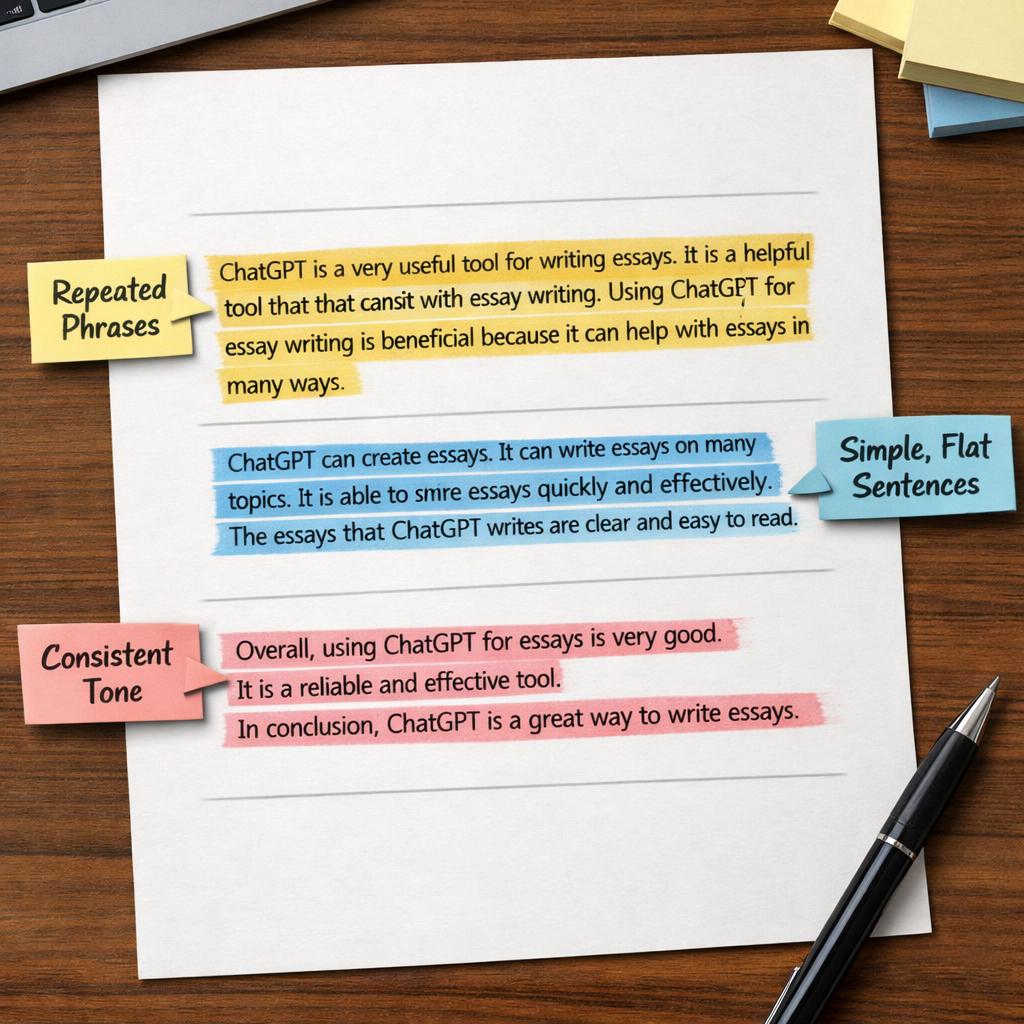
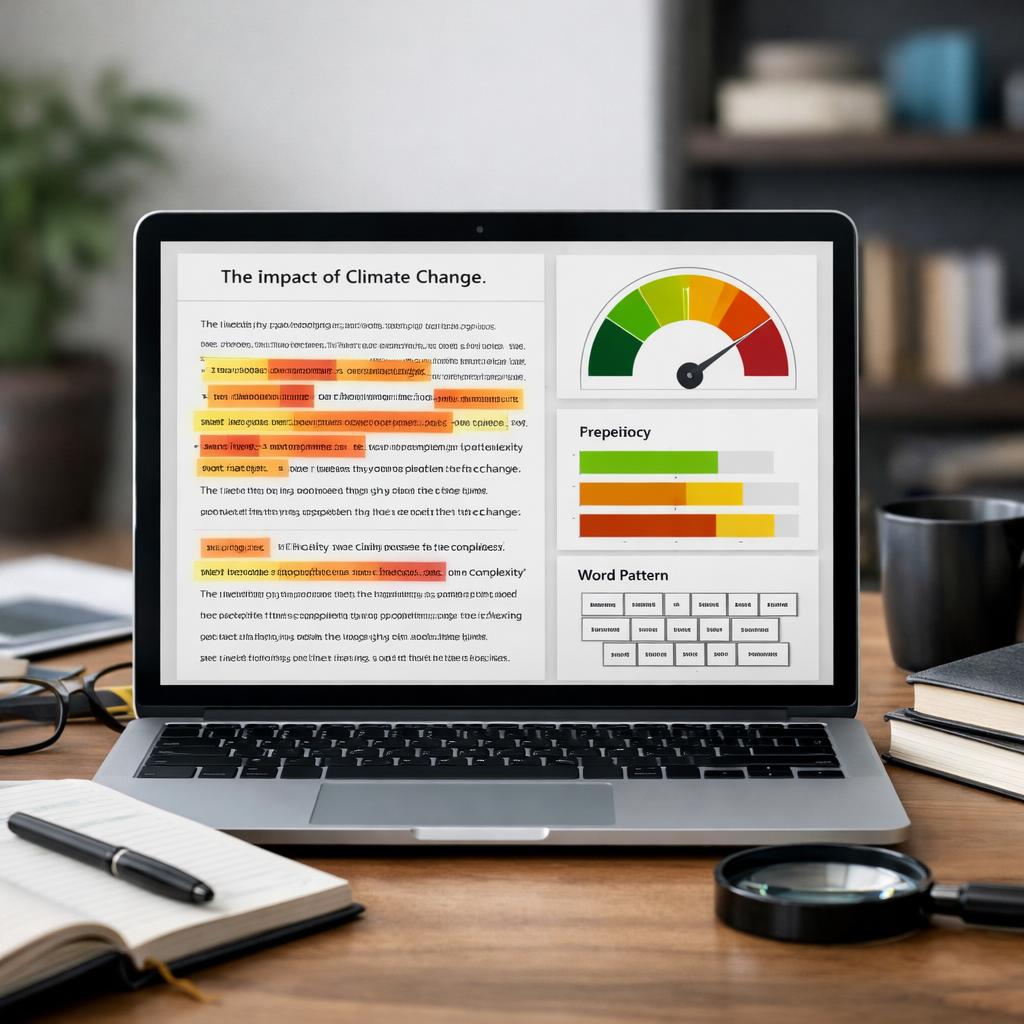
Most essay detectors look for language patterns that appear more often in generated text than in typical student work. A tool may notice highly predictable word choice, repeated sentence openings, similarly sized paragraphs, and a polished but flat tone that barely changes. It may also flag writing that stays consistently tidy without the small shifts in rhythm, emphasis, and phrasing that many human drafts naturally contain.
Common text signals: predictability, repetition, and uniform tone
Common signals include low variation in sentence structure, familiar transitions repeated across paragraphs, and a level of consistency that feels almost too controlled. That does not mean strong writing is suspicious. It means the system is asking whether the overall pattern looks closer to generated output than to the uneven, varied style often seen in real student drafts. This is also why false positives happen. Clear, formulaic, or heavily edited human writing can look similar to generated text in certain situations.
- Predictability: words and phrases appear in expected sequences
- Repetition: similar wording or structure returns across paragraphs
- Uniform tone: the voice stays steady with little natural drift
- Limited variation: sentence length and rhythm change less than expected
How the detection process works from scan to score
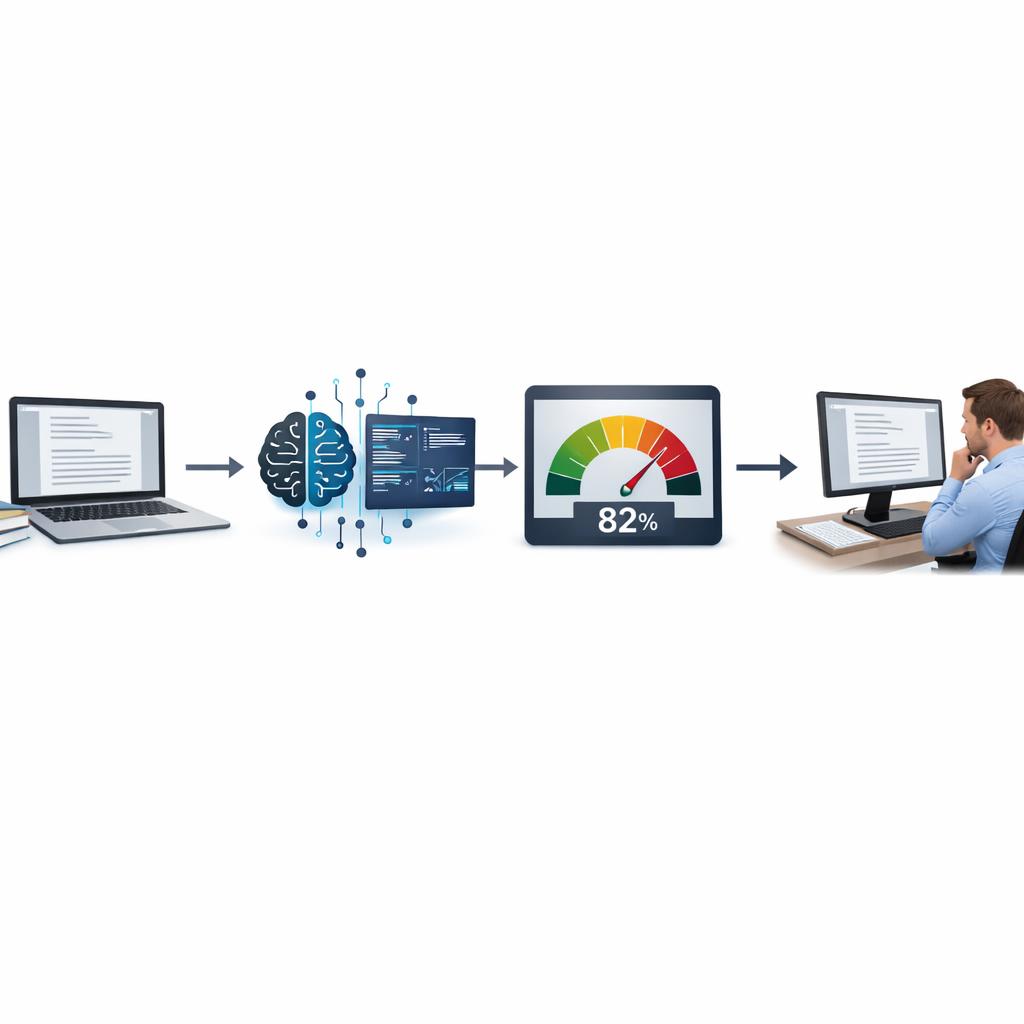
In simple terms, the process begins when an essay is submitted as text. The detector breaks the writing into smaller parts, measures language features, compares those features with known patterns, and then returns a probability-based estimate. Some systems assess the whole document at once, while others inspect smaller sections to find passages that appear more likely to be machine-written. A practical way to picture it is as a sequence: text input, signal analysis, pattern comparison, score output, then human review.
Why probability scores are not proof
This point matters because scores are easy to misread. If a detector says an essay is “likely” generated, that does not prove ChatGPT wrote it. It only means the writing shares traits often associated with generated output. The reverse is also true. A low score does not prove the work is entirely human-written. These tools are best used as screening aids, not as final judges in a classroom, writing center, or disciplinary process.
- Input: the full essay or selected passages are scanned
- Feature review: wording, structure, and consistency are measured
- Comparison: the pattern is matched against expected signals
- Output: the system returns a likelihood estimate, not a verdict
In practice, accuracy depends on context. Short essays give the detector less material to analyze. Highly edited text may look more human, while polished human work may look less natural to a detector. Topic also matters. A standard five-paragraph response on a familiar subject may use stock phrasing that increases the chance of a flag even when the student wrote every word.
What affects accuracy and how to interpret results carefully
Accuracy is shaped by several factors, including essay length, topic, editing level, student proficiency, and whether the text was revised after it was first generated. Short passages are harder to judge because there is less pattern data. Heavily revised text can weaken the signals a detector expects to find. At the same time, polished human writing can sometimes look machine-like. That is why people often ask whether these tools are accurate. The honest answer is that they can be useful, but they are never perfect. False positives and false negatives are both possible.
Anyone reviewing an essay should pair the score with other evidence such as drafts, notes, revision history, citations, and the student’s known writing style. If the detector result conflicts with strong signs of genuine authorship, human judgment should carry more weight. For a closer look at reliability concerns, see detector accuracy and limitations. In academic settings, these tools can support review, but they should not replace judgment, due process, or direct conversation with the writer.
When human review should override the score
Human review matters most when the sample is short, the assignment encourages formulaic phrasing, or the student is known for clean, structured writing. It also matters when an essay includes technical vocabulary, translation artifacts, or accessibility-related support that may influence style. A detector can highlight patterns, but only a person can interpret those patterns fairly in context.
Conclusion
So, how does smart detection work for chatgpt essays? It works by scanning writing for patterns that appear more often in generated text and then assigning a probability-based estimate. That can be useful for identifying passages that deserve a closer look, but it does not prove authorship and should never be treated as final evidence. The most important takeaway is simple: detectors are screening tools, not decision-makers.
If you want to understand how essay detectors identify ChatGPT-style writing, focus on signals like predictability, repetition, and an unusually consistent tone. If you want to interpret results responsibly, focus on context, drafts, and human review. A score may raise a question, but only a careful review process can answer it fairly.
FAQ
Can detectors reliably tell if an essay was written with ChatGPT?
Not reliably enough to serve as proof on their own. They estimate whether a passage resembles generated writing, but even a high score can be wrong. That is why academic decisions should include human review and supporting evidence.
What signals make a ChatGPT essay more likely to be flagged?
Essays are more likely to be flagged when they show predictable wording, repeated phrasing, limited sentence variation, and a highly uniform tone. Those signals do not confirm anything by themselves, but they are common reasons a detector may assign a higher likelihood score.
Why do detectors flag human writing?
Human writing can be flagged when it is very polished, formulaic, heavily edited, or too short to provide enough context. Structured academic styles, non-native English patterns, and assignment templates can also affect the result.
Can editing a generated essay change the score?
Yes. Revision can change the signals a detector sees, especially when structure, wording, and rhythm are meaningfully rewritten. Even then, the result remains an estimate, which is why scores should always be reviewed carefully rather than treated as proof.


