
If you are asking how accurate is turnitin smart detector in 2026, the clearest answer is this: it can spot patterns often linked to machine-written text, but it cannot prove who wrote a paper or exactly how it was created. That difference matters. For students, a flag can feel serious. For instructors, it can be a useful prompt to look closer. For schools, it should never replace a fair review process.

In real classroom use, Turnitin detector accuracy in 2026 depends on several variables, including the length of the sample, the type of assignment, how much the text was revised, and how carefully the report is interpreted. For a practical foundation, see how to read a Turnitin report. The most reliable approach is to use the report alongside drafts, citations, prior writing, and instructor judgment instead of treating one score as final truth.
Short answer: Turnitin can flag patterns, not prove authorship
When people ask how reliable Turnitin is for detecting generated text, they often want a yes-or-no answer. In practice, that is not how the tool works. It reviews wording patterns, sentence flow, and other textual signals that may resemble machine-written content, then estimates whether parts of a submission fit that profile. That can help identify papers that deserve closer review, but it is still not the same as proving authorship.
Accuracy also means different things to different readers. Students usually care about avoiding false accusations. Instructors often care about whether suspicious work is surfaced consistently. Administrators may focus on whether policies can be applied fairly across classes and departments. Because those goals are different, confusion about accuracy is common. A detector can be useful for screening while still being too limited to support discipline on its own.
The most responsible way to read a report is to treat it as one piece of evidence. If a submission shows unusually even phrasing, vague development, or generic transitions, follow-up may be appropriate. But if that same paper also matches the student’s previous work, includes authentic draft history, and responds directly to class discussion, the broader context should carry more weight. In academic settings, “accurate” does not just mean getting a label right. It means helping people make better decisions.
What affects Turnitin detector accuracy in 2026
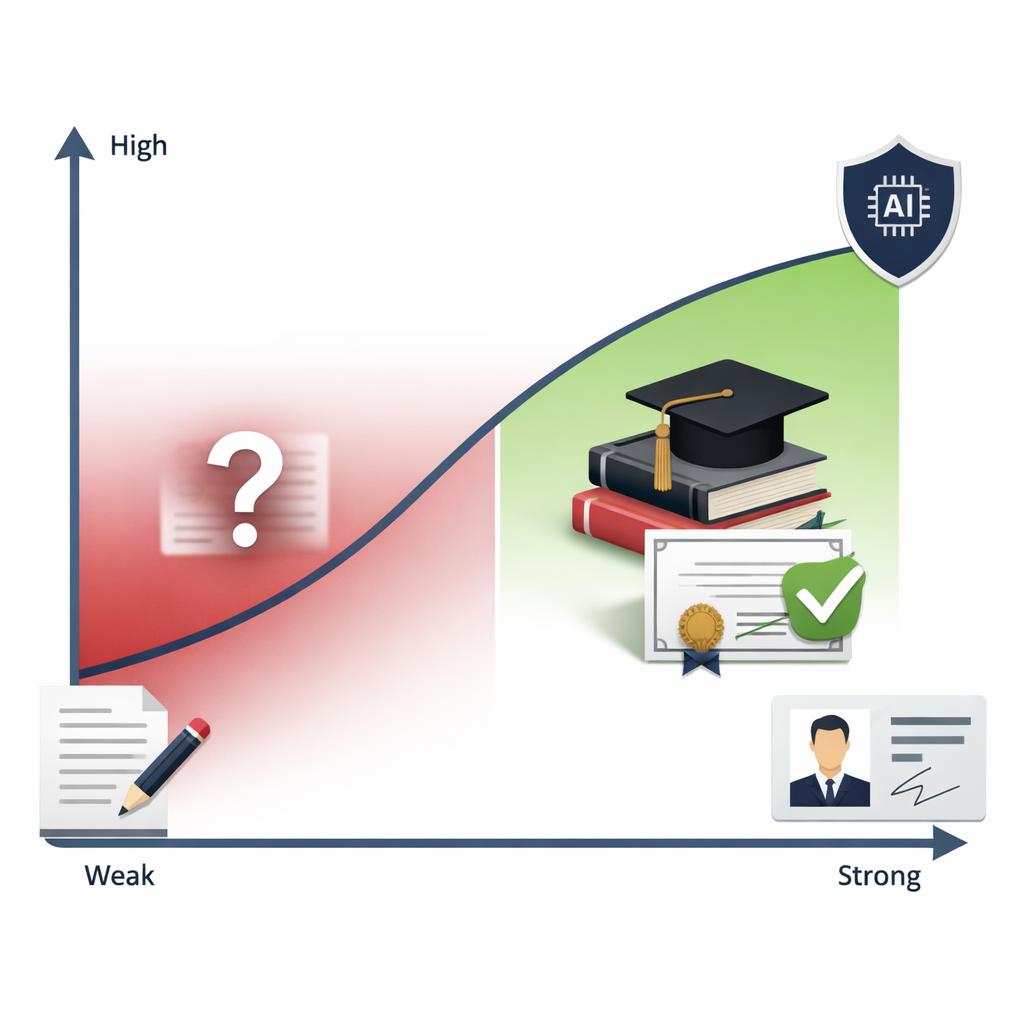
Several factors shape results. Longer submissions usually give the detector more material to assess, while very short passages leave less evidence and can be harder to classify with confidence. Revision matters too. If machine-written text has been rewritten sentence by sentence, blended with human writing, or adjusted to match a student’s usual voice, the signal can weaken. That is one reason the question “Can Turnitin prove a paper was written with a chatbot?” misses the point. It cannot reach certainty from text patterns alone.
Assignment type also matters. Formulaic essays, repeated discussion prompts, and tightly structured classroom responses can look more uniform than open-ended writing. That can increase the risk of false positives. The same concern can apply to multilingual writers or students writing under time pressure, since their work may rely on safe transitions and predictable phrasing. On the other hand, well-edited machine-written content may pass with little attention. So both mistaken flags and missed detections remain possible.
Mixed authorship makes interpretation even harder. A student might brainstorm with a chatbot, write a rough draft independently, then revise with outside help. The final paper may contain several layers of writing choices that do not fit a simple label. In those situations, Turnitin may detect traces that seem unusual, but it still cannot reconstruct the full writing process. That is why a flagged percentage should never explain itself.
How to use Turnitin results fairly in academic settings
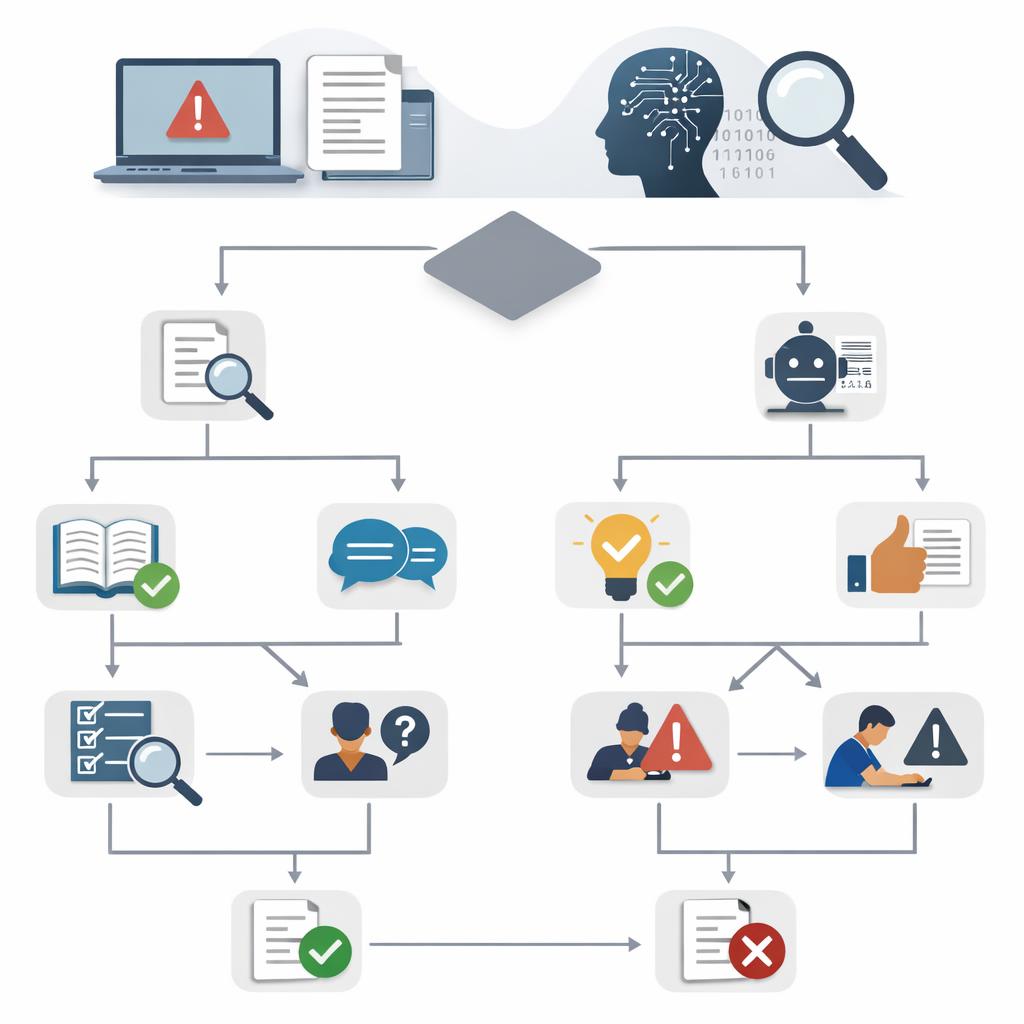
The fairest use of Turnitin is procedural, not automatic. A flagged submission should start a review, not end one. Instructors should compare the paper with earlier assignments, look for abrupt changes in tone or skill level, and ask whether the prompt itself encouraged generic responses. When possible, they should also review drafts, notes, outlines, and version history. Schools that want a clearer framework can support staff with academic integrity best practices so expectations are consistent and transparent.
Documentation is just as important as the initial report. If concerns remain, instructors should record what raised the question, what evidence was reviewed, and how the student responded. That protects everyone involved from overreliance on one tool. It also creates a more defensible process if the issue moves beyond the classroom.
For students, the best response to a flag is preparation, not panic. Save outlines, research notes, draft files, and revision history. Those materials can help show how your paper developed over time. For instructors, the best practice is simple: use the detector as a screening aid, verify concerns with additional evidence, and make final judgments through human review. That is the most realistic answer to how accurate is turnitin smart detector in 2026: helpful in context, sometimes insightful, but never definitive on its own.

Conclusion
How accurate is turnitin smart detector in 2026? Accurate enough to highlight writing that may deserve a closer look, but not accurate enough to prove authorship or misconduct by itself. Its real value is in screening and prioritizing review, not in delivering a final judgment. False positives can happen, heavily edited work can blur signals, and assignment context can strongly influence what gets flagged.
For students, that means a flagged result is not automatic evidence against you. For educators and institutions, it means responsible use requires context, drafts, clear policy, and professional judgment. If Turnitin is part of your workflow, the smartest approach is to treat it as one input among many. That balanced view gives a more useful picture of detector accuracy in 2026 than any single score ever could.
FAQ
Can Turnitin detect paraphrased chatbot writing?
Sometimes, but not consistently. Heavy paraphrasing, rewriting, or blending with original material can reduce the patterns the detector relies on. A report may still raise questions, but it should be reviewed carefully and never treated as standalone proof.
Does Turnitin give false positives on human-written essays?
Yes. Human-written work can be flagged when it is highly structured, generic, repetitive, or written in a cautious style that resembles machine-generated prose. This is one reason instructors should compare the submission with drafts, prior work, and the assignment context.
Can instructors rely on a detector score alone?
No. A score or label should only begin a review process. Fair evaluation should include earlier writing samples, class performance, source use, revision history, and direct discussion with the student when needed.
What should students do if their work is flagged?
Stay calm and collect evidence of your writing process, such as outlines, notes, version history, and research records. Clear documentation can help explain how the paper was developed and support a more accurate, fair review.


