
No rewrite can guarantee a particular Turnitin result or acceptance by your instructor. If you are searching for how to bypass turnitin, the direct answer is that different wording does not establish whether your work follows course rules. Revision may change what a report highlights, but it cannot authorize prohibited assistance, fix unsupported claims, or prove who wrote a submission.

The right response depends on the problem: a similarity match, a generated-writing indicator, an unclear editing policy, or a result you believe is wrong. Each calls for different evidence. A lower percentage is not a substitute for accurate citations, original reasoning, and permission to use outside help.
Before rewriting or uploading your draft elsewhere, check the assignment’s editing and disclosure requirements. Then confirm which report you received. These two steps can prevent unnecessary edits and help you protect the records you may need to explain your writing process.
Read the Right Turnitin Score Before Changing Your Draft
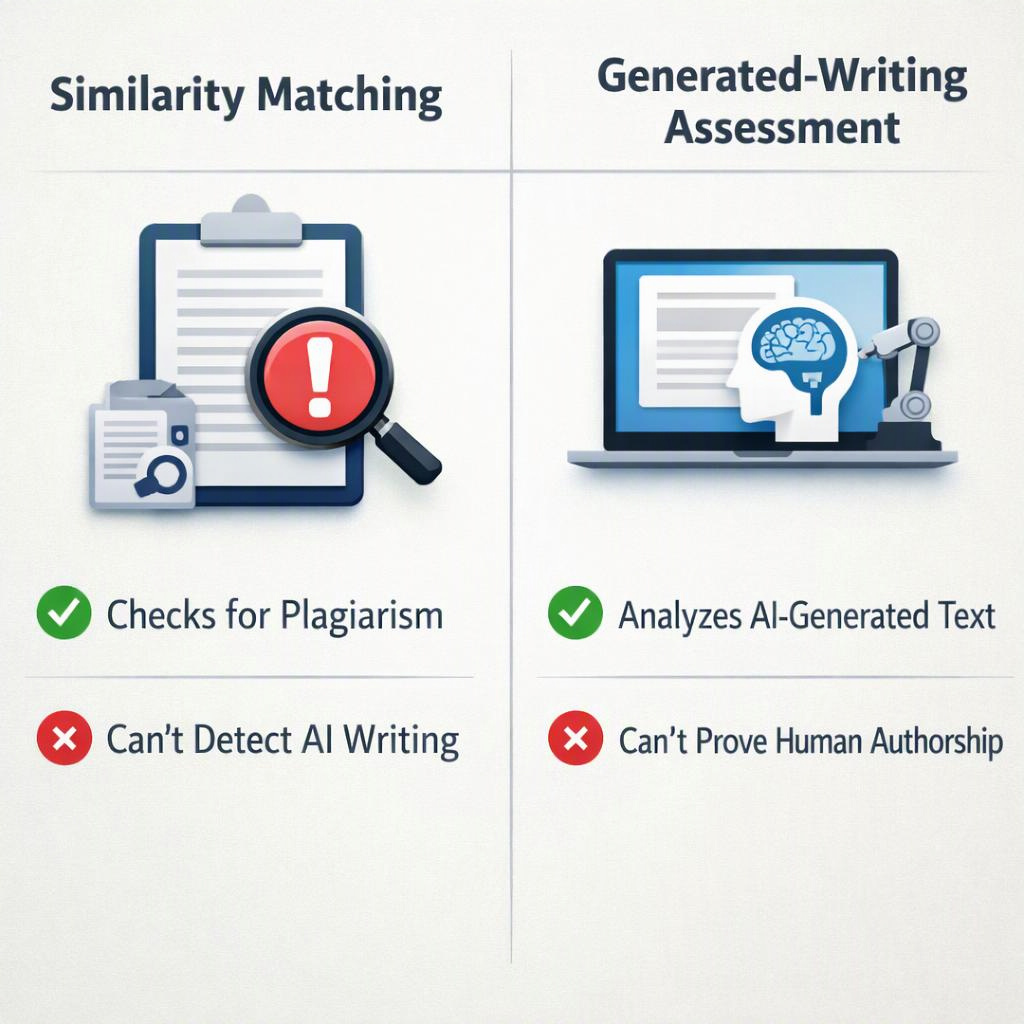
Turnitin’s similarity report identifies text that matches material in its comparison sources. Its generated-writing assessment addresses a separate question: whether eligible prose shows patterns associated with machine-generated writing. As Turnitin explains in its guidance on understanding the similarity score, similarity does not itself determine plagiarism. A correctly cited quotation can produce a match, while an uncited borrowed idea may not produce an obvious textual match.
- Similarity matching: Review the highlighted passages alongside their sources. Check quotation marks, attribution, and whether a paraphrase follows the source’s wording too closely. The overall percentage does not explain these details.
- Generated-writing assessment: Treat this as a separate indicator, not conclusive proof of misconduct. Consult Turnitin’s official detection overview for current explanations of its scope and limitations.
- Assignment compliance: Neither report decides whether your collaboration, editing assistance, or disclosures meet course requirements. Those decisions depend on institutional policy and the instructor’s directions.
Can rewriting change a score? Yes, it may change textual overlap, but that alone says little about the quality of the revision. Report settings and submission context also matter. Correcting a citation improves attribution even if the match remains. Removing a necessary quotation just to reduce a percentage can weaken the paper rather than make it more original.
Separate Legitimate Revision from Unsupported Bypass Claims
Useful revision strengthens your argument, organization, accuracy, and expression. It does not merely replace words with synonyms. When course rules permit editing assistance, you can compare an essay humanizer with manual revision. This option is worth comparing if you need permitted sentence-level editing and its stated functions match that task. Verify those functions rather than assuming it preserves meaning or changes detector results.
- Manual revision — the writer-led option: Start here when your argument needs development, sources need clarification, or you want direct control over phrasing. Work from your notes, source texts, and assignment criteria.
- Rewriting assistance — a conditional option: Consider it only when permitted and when you can check every change. Reject edits that exaggerate findings, introduce unsupported facts, or detach citations from the claims they support.
- Instructor review — the dispute-resolution option: Choose this route for a questionable flag or unclear permission. A rewriting service cannot decide an authorship dispute or grant an exception to course rules.
If you are considering a free humanizer for a Turnitin submission, check its actual usage limits, data-handling terms, and any disclosure obligations first. “Free” does not necessarily mean unlimited or confidential. Test an allowed option on a non-sensitive excerpt, then compare claims, qualifications, terminology, and citations against your original. Smoother prose is not an improvement if it changes what the evidence supports.

Document a Disputed Result Instead of Chasing a Lower Score
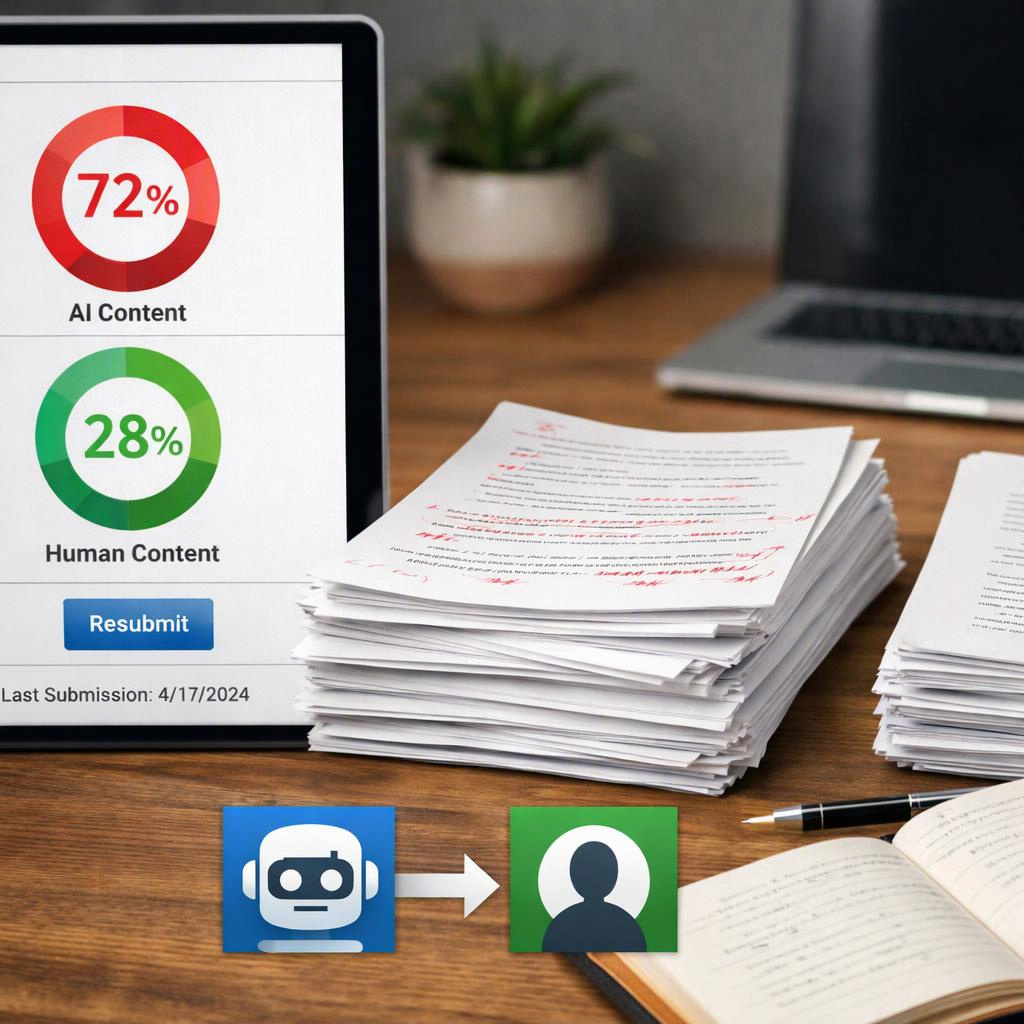
An unexpected generated-writing indicator calls for contextual review, not automatic acceptance or dismissal. False positives are possible, and a flag alone cannot reconstruct how you wrote a paper. Ask your instructor which passages raised concern, which assignment rule is relevant, and how to request review. Preserve the submitted version before making edits so everyone can discuss the same text.
- Assignment rules: Save the prompt, syllabus, and any instructions about editing, collaboration, or disclosure.
- Dated drafts: Keep outlines, intermediate versions, and available document history showing how the paper developed.
- Source notes: Retain reading notes and citation records that connect your sources to specific claims.
- Tracked revisions: Preserve substantive edits and be ready to explain the reasoning behind them.
- Instructor correspondence: Keep questions, permission decisions, and review instructions together for easy reference.
If a recheck is permitted, record the draft version, date, report type, and known settings. A different result shows what that particular check reported; it does not establish institutional clearance. Another service’s result cannot reliably stand in for your institution’s Turnitin report. Avoid repeated uploads simply to find a reassuring number, especially without checking storage and submission terms. Process records can support a review, but they cannot guarantee its outcome.
Conclusion
Rewriting may change a Turnitin result, but it cannot guarantee acceptance or replace proper attribution. The useful response is to identify the report, examine the relevant passages, and check the rules for your assignment. Revise to improve the work, not merely to move a number.
If your concern is writing quality, focus on clear reasoning, accurate source use, and edits you can explain. If you dispute a result, preserve the original submission and request contextual review before revising it. Describe any repeat checks as observations, not proof that your work has been cleared.
For an assignment that allows rewriting assistance, review the essay humanizer’s stated functions and terms alongside manual revision. Compare meaning preservation, citation handling, usage limits, storage terms, and disclosure requirements before uploading. This helps you choose an editing method that fits the assignment without sacrificing accuracy or your writing records.
FAQ
Does a low similarity score mean Turnitin has cleared my submission?
No. It means the report detected limited matching under its conditions, not that your institution has approved the work. You still need to check attribution, quotation marks, and source use. Your instructor may also assess authorship, reasoning, and compliance with assignment rules.
Can a free humanizer guarantee a lower generated-writing score?
No. Rewriting does not support a dependable guarantee, and a lower result would not prove compliance. Evaluate any permitted editing option by its verified limits, accuracy, privacy terms, and disclosure requirements—not promises of avoiding detection or receiving automatic acceptance.
What should I do first if I suspect a false positive?
Save the report and submitted draft, then gather dated versions, research notes, and relevant instructions. Ask which passages need explanation and what review procedure applies. Another detector’s output may differ, but it is not definitive proof that the disputed report is wrong.
When is an essay humanizer a logical editing option?
Only when the course permits it and its verified functions match your editing needs. It is not a solution for concealing prohibited assistance or settling a disputed flag. For an allowed editing task, confirm permission and data terms, then compare a non-sensitive sample for preserved meaning, intact citations, and changes you can explain.


