
If you need to know how to write an smart policy for students in high school, the best starting point is a clear student use policy that tells students what they can do, what needs teacher approval, and what is off-limits. Most schools do not need abstract guidance. They need language that works in real classrooms, supports learning, reduces confusion, and fits district rules, privacy obligations, legal review, and existing academic honesty standards.

Start with a simple statement of purpose, explain where the policy applies, and define student responsibilities in words families and staff can understand. This article offers a practical framework for a student use policy for high school template, along with tips for documentation, family communication, and rollout. If your school is revising related expectations, connect this policy to academic honesty policy examples so students hear one consistent message across classes.
Start with purpose, scope, and clear student expectations
Open with a short statement explaining why the school allows these tools at all. Keep it grounded in instruction: support student learning, strengthen thinking, and protect fairness, privacy, and classroom goals. Then define the scope. Say whether the rules apply to school-issued devices, personal devices used for schoolwork, homework, class projects, tests, and extracurricular academic programs. It also helps to state plainly that a teacher’s directions for a specific assignment override the general school policy.
Next, spell out student expectations in plain language. Students should ask when unsure, verify information before submitting work, disclose use when required, protect personal data, and follow assignment directions. Make it clear that students remain responsible for the final work they turn in, even when they use tools for brainstorming, outlining, revising, or studying. Mention that rules may vary by course, grade level, or assignment type. A policy is easier to follow when students can read it in one sitting and understand how it applies in everyday situations.
Define allowed, limited, and prohibited student uses
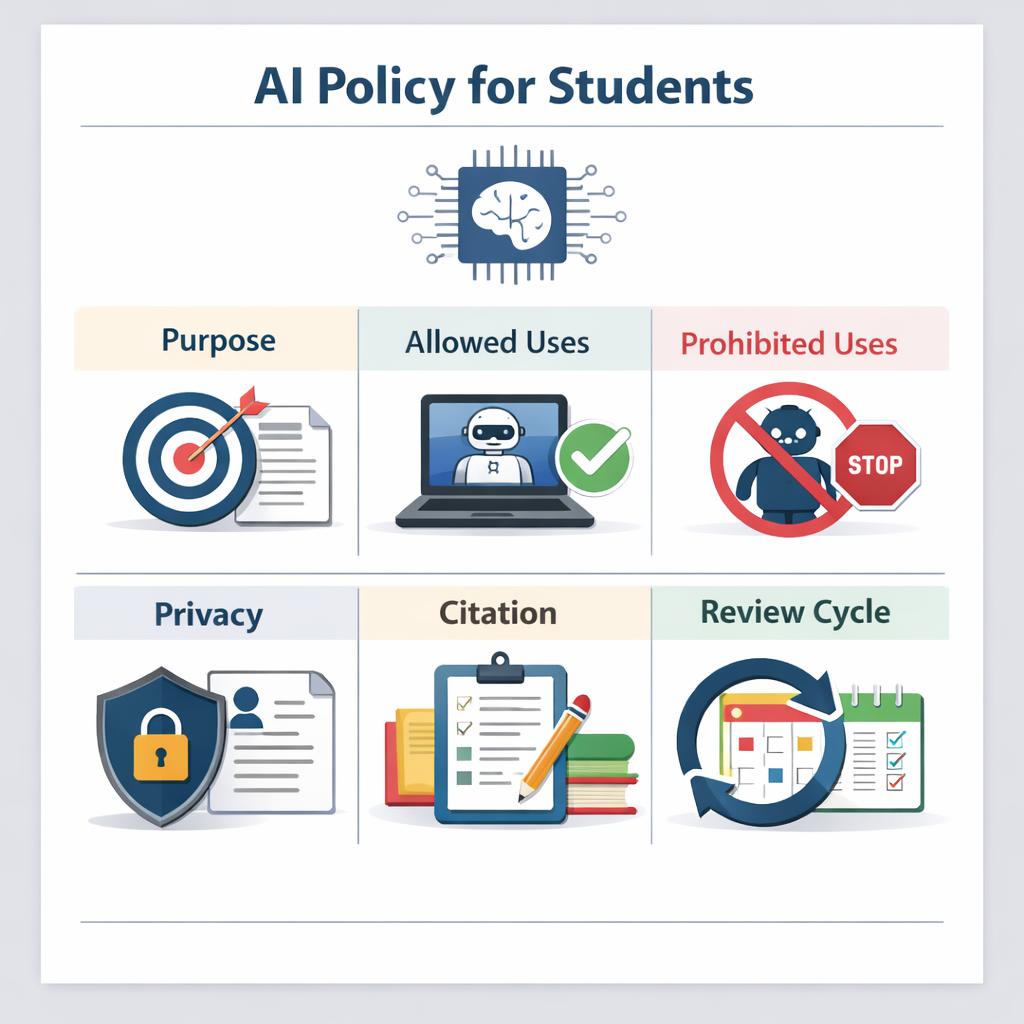
A simple three-part structure works well. Allowed uses might include brainstorming topics, generating study questions, checking grammar, building study guides, or translating directions if the teacher permits it. Limited uses should require teacher approval. Examples include drafting part of an essay, summarizing a source, getting coding help, or creating visuals for a graded assignment. This middle category is useful because it gives teachers flexibility without treating every use the same.
Prohibited uses should be direct and specific. Schools commonly ban submitting generated work as original thinking, using tools during quizzes or tests without permission, inventing sources or quotations, entering confidential student information into outside platforms, or ignoring teacher instructions. Add a brief consequences statement that points back to current discipline and academic integrity procedures. In most cases, it is better to rely on existing systems than to create a separate set of penalties. When students, families, and staff can scan the categories quickly, compliance tends to improve.
Build policy rules for privacy, academic honesty, and implementation
A complete policy should address privacy, fairness, and authorship in straightforward language. State that students may not enter personal, confidential, or protected information into outside platforms unless the district has approved the tool and the use meets school privacy standards. Schools should also think about access. If a class expects students to use a tool outside school hours, there should be an alternative for students who cannot access it at home. For related support, connect the policy to student privacy and acceptable use guidelines so rules are easy to find and consistent.
Academic honesty expectations should focus on student responsibility, transparency, and fact-checking. Students should submit work that reflects their own understanding, review claims before turning in an assignment, and avoid presenting generated text as independent analysis. It is also helpful to define plagiarism broadly enough to cover unapproved generated content, fake citations, and fabricated quotations. Keep the tone instructional rather than overly punitive. The goal is not only to prevent misuse but also to teach students how to use these tools responsibly in school settings.
Set documentation, citation, teacher approval, and rollout steps
One of the easiest ways to reduce confusion is to tell students exactly when disclosure is required. A policy might ask students to add a short note when they used tools for brainstorming, outlining, editing, or image creation. Some teachers may want a simple statement, while others may ask students to name the tool, describe the help they received, or attach prompts and drafts. The rule should fit the assignment and grade level rather than becoming unnecessarily technical.
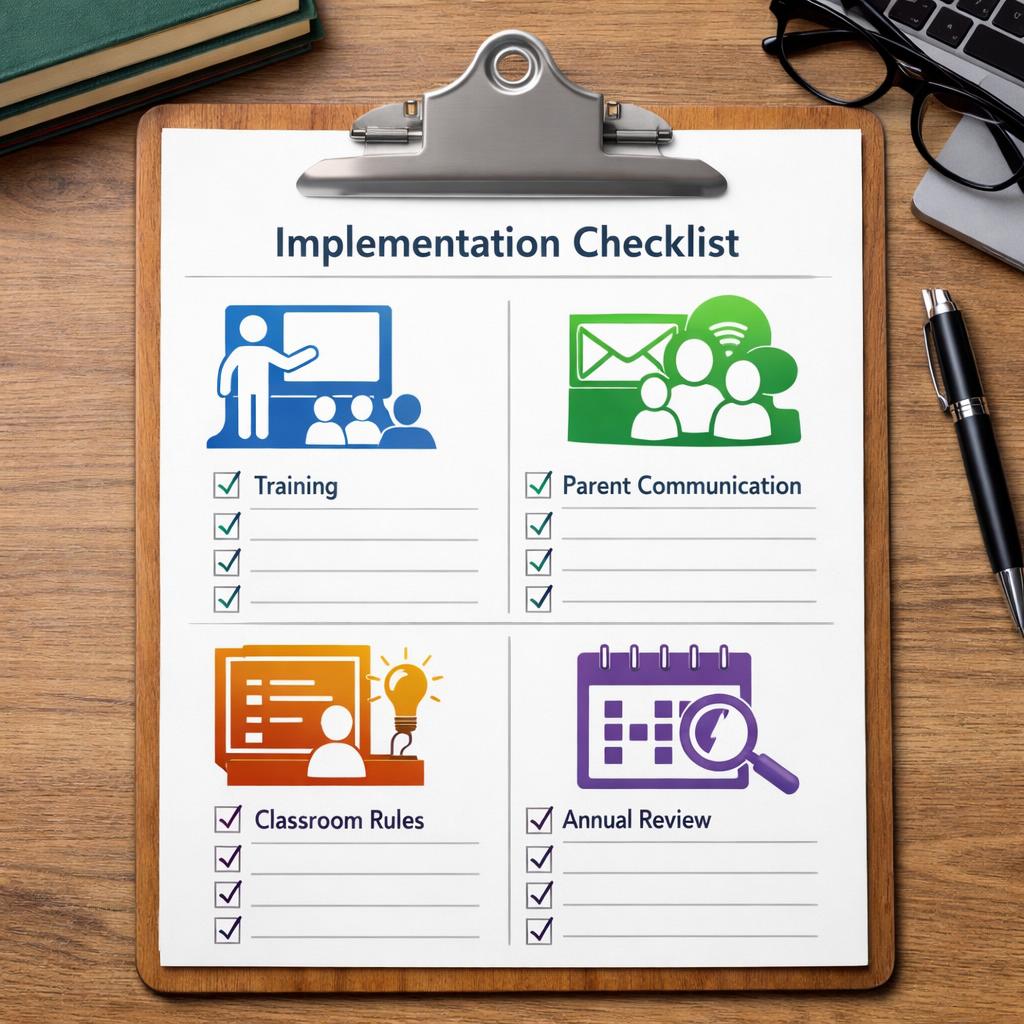
Teacher approval rules should be just as clear. Students may need permission before using tools for essays, lab reports, presentations, code, or take-home assessments. Citation expectations should stay simple and as schoolwide as possible. If your school has not chosen a formal method yet, start with a plain-language disclosure model and refine it later. For rollout, give staff a short guide, sample syllabus language, and subject-specific examples. Families should receive a one-page summary that explains the purpose of the policy, privacy protections, and how teachers will share assignment-level rules. Review the policy regularly—often each semester in the first year, then annually after routines are established. If you are still deciding how to write an smart policy for students in high school, remember that a clear first version is more useful than a delayed perfect one.
Conclusion
Learning how to write an smart policy for students in high school comes down to clarity, consistency, and alignment with local rules. A strong student use policy explains its purpose, defines allowed and prohibited uses, protects privacy, supports academic honesty, and gives teachers a workable process for approval and disclosure. It should also fit district expectations, legal review, and existing student conduct policies. When the language is simple and the rollout is organized, schools can support learning while giving students, families, and staff clear boundaries they can actually follow.
FAQ
What should a high school student use policy include?
It should include the policy purpose, scope, allowed uses, limited uses, prohibited uses, privacy rules, academic honesty expectations, disclosure or citation requirements, consequences, and a review process. It should also make clear that a teacher may set stricter rules for a specific assignment or course.
How do schools address cheating and plagiarism in the policy?
Schools should explain that unapproved generated content may violate academic honesty rules when a student presents it as original work. The policy should require disclosure when tools are used, prohibit fake sources or quotations, and connect enforcement to existing academic integrity procedures rather than building a separate discipline system.
Should every teacher use the exact same classroom rules?
No. The schoolwide policy should create a baseline, but teachers may apply stricter limits depending on course goals, grade level, or assignment type. What matters most is that those differences are communicated clearly in advance and applied consistently within each class.
How often should a school review the policy?
Most schools should review it at least once a year. During the first year, a semester review is often helpful because staff can identify unclear language, respond to new privacy concerns, and update examples based on real classroom use.