
Understanding the difference between smart plagiarism and smart detection starts with a simple idea: these tools answer different questions. In academic settings, a plagiarism check compares a paper against published sources, websites, databases, and sometimes earlier student submissions to spot matching or closely reused text. A detector tool, on the other hand, estimates whether the writing style looks machine-written. That difference matters for students, instructors, and reviewers who want to make fair decisions based on evidence rather than assumptions. For a broader overview, see academic integrity and machine-written content basics. When these tools are treated as interchangeable, people may overstate what a score means or skip the careful human review that academic integrity cases require.

What plagiarism checks and detector tools measure
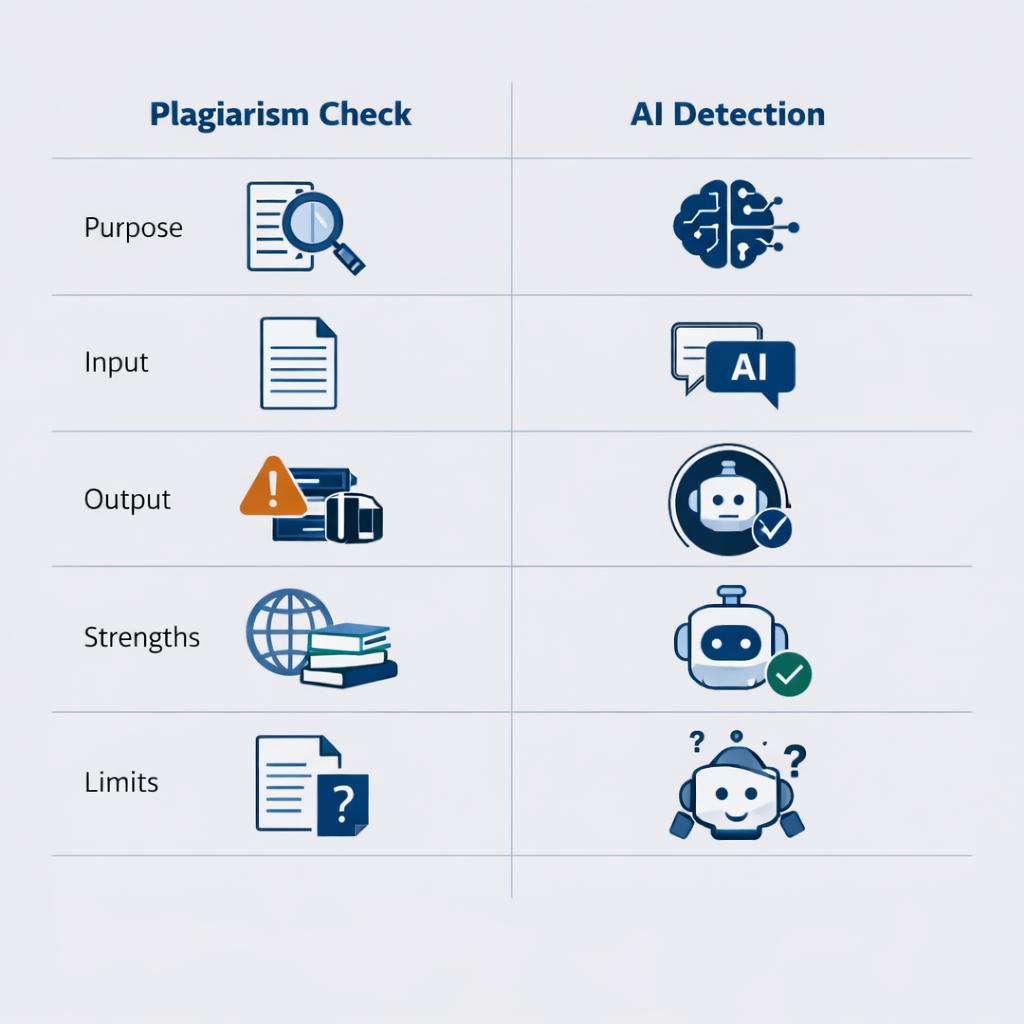
Plagiarism checks look for matched or reused text
A plagiarism checker is built to compare a submission with existing material and highlight overlap. Its job is to answer a source-based question: “Does this wording appear somewhere else?” Reports often include matched passages, source links, and a similarity percentage that helps reviewers see where reuse may have happened. In practice, this makes plagiarism checks useful for identifying copied language, weak paraphrasing, missing quotation marks, or citation problems.
Even so, a match report is not the same as proof of misconduct. Correctly quoted text, bibliographies, assignment templates, common phrases, and subject-specific wording can all raise a similarity score. That is why reviewers still need context. They must decide whether the overlap is properly cited, expected for the assignment, accidental, or truly inappropriate. A plagiarism tool helps locate borrowing, but it does not judge intent on its own.
Detector tools estimate whether text may be machine-written
Detector tools work differently. Instead of searching for matching sources, they review wording patterns, sentence structure, predictability, and stylistic consistency to estimate whether a passage resembles machine-written text. This is a key part of understanding how plagiarism checks differ from writing detectors: one looks for overlap with known sources, while the other looks for style signals.
The result is usually a probability score, label, or confidence range rather than a direct source match. That means a detector can flag writing that is completely original. Short answers, polished edits, formulaic academic prose, or a very even style may trigger a false positive. At the same time, a heavily revised draft may avoid detection even if machine assistance was used earlier. Because of this uncertainty, detector output should be treated as a prompt for closer review, not as a final verdict.
Why the results are not interchangeable in academic integrity cases
Common false assumptions students and instructors make
The most common mistake is assuming both tools answer the same academic integrity question. They do not. A plagiarism report can show where borrowed wording appears and link that wording to specific sources. A detector tool usually cannot identify a source or prove copying. It only estimates whether the writing pattern resembles machine-generated text. Likewise, detector output says nothing about whether citations are correct or whether borrowed material was properly attributed.
This is why academic integrity plagiarism and detection explained should always begin with purpose. If the concern is unattributed reuse, a plagiarism check is the more relevant tool. If the concern is undisclosed machine assistance, a detector result may raise questions, but it does not settle the case. Asking can detector tools prove plagiarism leads to the same answer: no. Plagiarism and authorship estimation are separate issues, and confusing them can lead to weak or unfair conclusions.
Another false assumption is that a high detector score automatically means cheating. It does not. Good review practice should include the assignment context, the student’s drafting history, revision records, source use, and the school’s policy. A thoughtful process also gives the student a chance to explain their work. Schools and faculty are better served by a responsible academic integrity review process that relies on multiple forms of evidence instead of one automated result.
How to use both responsibly in a fair review process
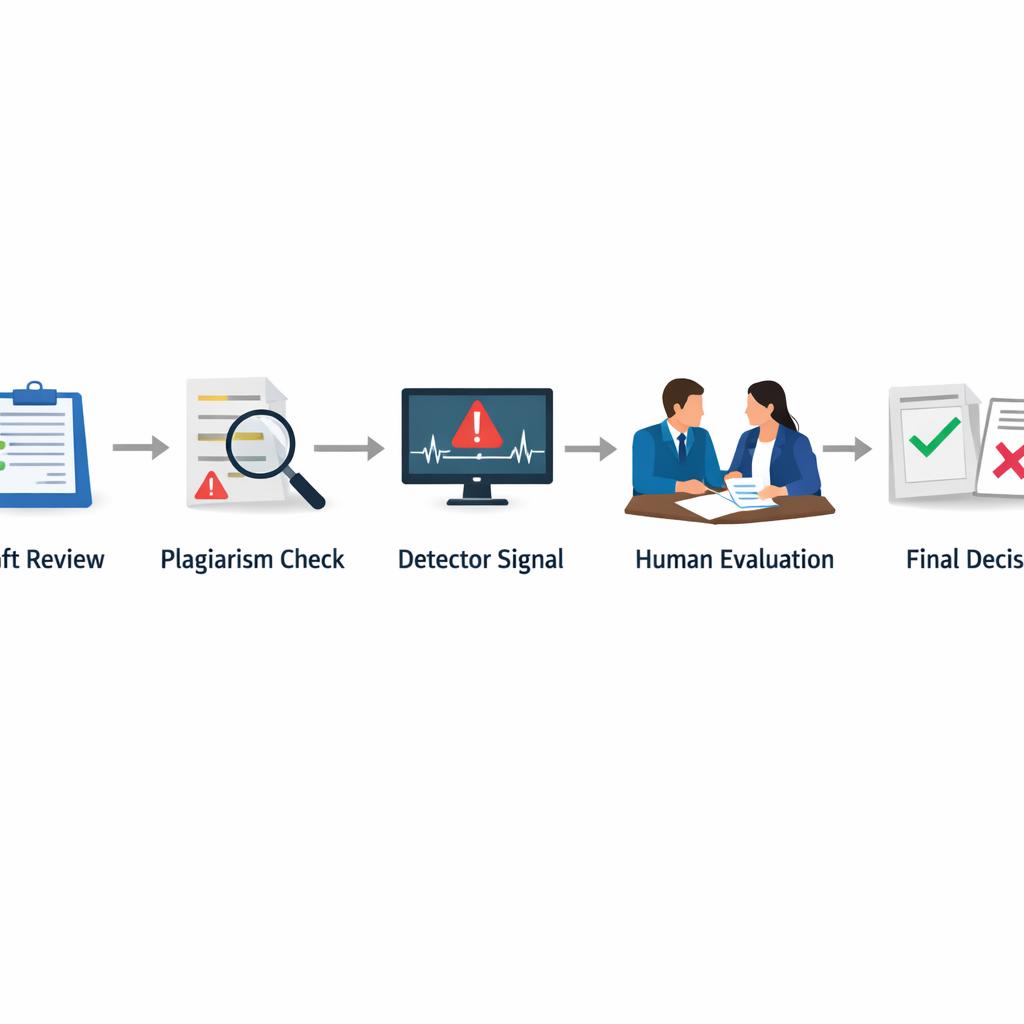
A balanced review starts by identifying the actual concern. If the issue is copied language, close paraphrasing, or missing attribution, a plagiarism check is usually the most useful first step because it can point to specific matched passages and sources. If the issue is possible undisclosed machine-written assistance, a detector signal may justify a closer look, but it should not trigger an accusation on its own. Instructors should compare any report with the assignment type, expected writing level, draft history, revision timeline, and classroom disclosure rules.
Transparency matters as much as the tools themselves. Students should know what checks may be used, what the results can and cannot show, and how concerns are reviewed. Instructors and support staff should document why a case is being examined and what evidence is being considered beyond the score. This kind of process protects both fairness and consistency.
Used carefully, both tools can support better decisions. Plagiarism checks help reviewers find possible reuse and citation issues. Detector tools may point to patterns worth examining more closely. Neither one replaces human judgment, policy review, or due process. In real classrooms, that is the clearest way to understand the difference between smart plagiarism and smart detection: one looks for textual overlap, while the other estimates whether the writing style appears machine-written.

Conclusion
The difference between smart plagiarism and smart detection is more than a technical detail. It affects how educators review work, how students are treated, and how academic integrity policies are applied. Plagiarism checks look for matched or reused text and can offer source-based evidence. Detector tools estimate whether writing may resemble machine-written language, but they do not prove copying, intent, or misconduct. That is why the two results should never be treated as interchangeable.
The strongest review process combines tool output with context, school policy, source analysis, draft history, and documented human judgment. When schools use these tools carefully, they can ask better questions and avoid overreaching conclusions. For students and instructors alike, understanding this distinction leads to more accurate, transparent, and fair decisions.
FAQ
Can a detector tool prove that a student cheated?
No. A detector tool can only suggest that a passage resembles machine-written text. It cannot establish intent, authorship, or misconduct by itself. A fair decision requires human review, course policy, supporting evidence, and a chance for the student to respond.
Can writing be original and still get flagged by a detector tool?
Yes. Original writing can still be flagged because detector tools evaluate style patterns rather than source matches. Short responses, highly structured academic prose, heavy editing, or a very consistent tone can all create misleading results.
Is a high similarity score always plagiarism?
No. Similarity scores may include quotations, references, assignment language, common terminology, and correctly cited material. The score is a starting point for review, not a final judgment. What matters is whether the overlapping text is used appropriately and attributed correctly.
What should instructors review before making a decision?
Instructors should review matched sources, citation quality, assignment instructions, draft history, revision patterns, the student’s explanation, and any relevant institutional policy. Looking at several forms of evidence helps separate genuine concerns from false assumptions and supports a fair process.


