

Using an smart content detector for seo before publishing is less about getting a final yes-or-no answer and more about catching avoidable issues before a page goes live. For publishers, editors, and site owners, a detector can serve as a quick review step that highlights machine-like phrasing, repetition, thin explanations, or weak sourcing that deserves a second look. If you are building a reliable editorial workflow, this article works alongside broader resources on smart detection tools for seo publishers by focusing on the practical pre-publish check.

The best process is simple, repeatable, and grounded in editorial judgment. A detector should not be used to declare a draft safe or unsafe with certainty. Instead, it helps surface sections that may affect trust, readability, originality, and confidence at publication. For teams wondering how to review SEO articles before they go live, a detector works best as one checkpoint alongside fact-checking, source review, and final on-page edits.
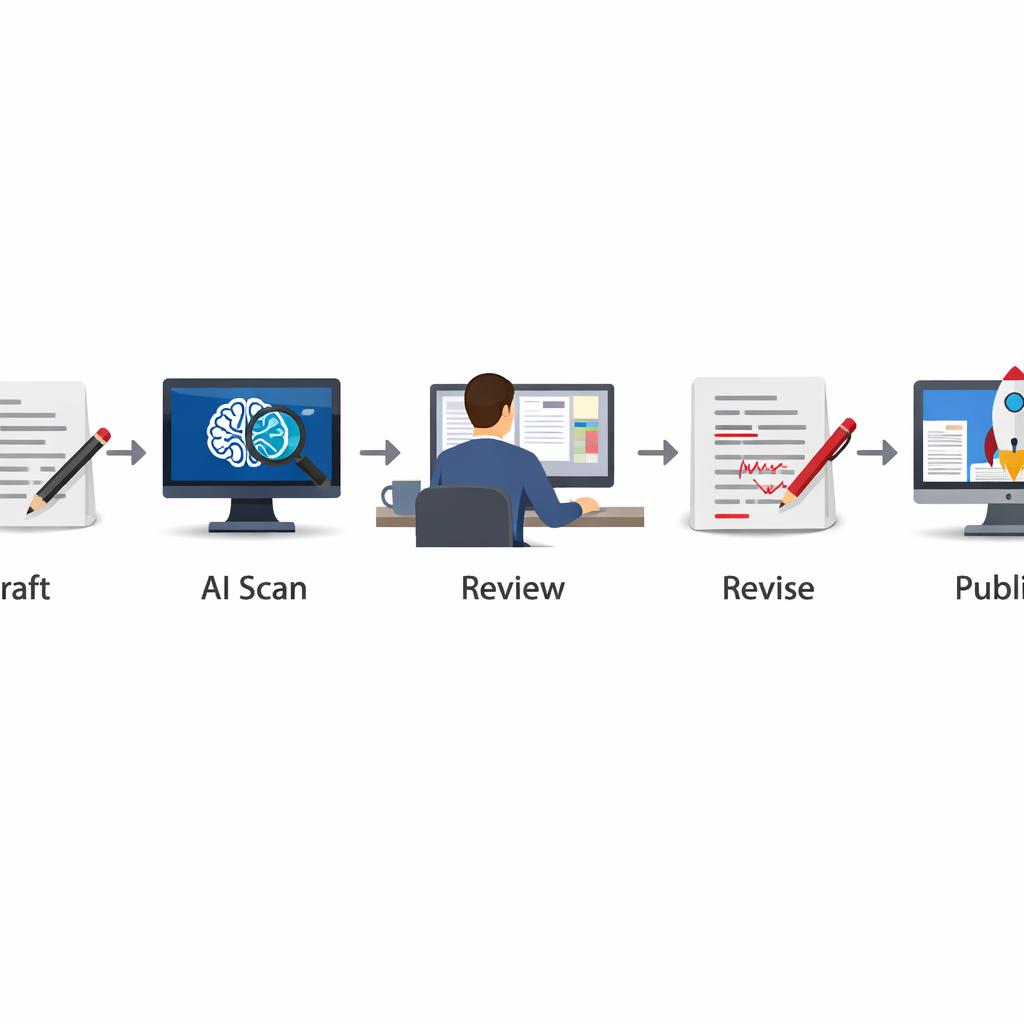
Simple pre-publish workflow graphic showing draft, detector scan, editor review, revision, and publish.
Why publishers run a detector before content goes live
Publishers use a content detector before publishing because a draft can look polished while still reading as generic, repetitive, or lightly supported. A fast scan can reveal passages that rely on predictable transitions, repeat the same idea in slightly different words, or make broad claims without evidence. That gives editors a shorter, more useful list of sections to inspect instead of treating every paragraph as equally risky.
For busy teams, the main benefit is workflow efficiency. Pre-publish detection helps prioritize edits on pages targeting competitive queries, sensitive topics, or high-traffic templates. It can also improve consistency across freelancers, in-house writers, and updated legacy content. Still, the tool is only a signal source. It should never be treated as proof that a page is good, bad, trustworthy, or ready to publish on its own.
What a detector can and cannot confirm before publishing
A detector can suggest where automated writing signals appear strongest, but it cannot confirm authorship, intent, expertise, or quality by itself. It may flag clean and direct copy simply because the language is straightforward, and it may miss weak content that varies its wording enough to avoid obvious patterns. False positives are normal, which is why human review matters.
The better question is not, “Did the tool approve this article?” but “Which sections should an editor review more closely?” Use the results to investigate structure, sourcing, topical depth, and whether the page actually satisfies the search intent promised in the title. If a flagged section is accurate, specific, and well supported, it may not need any changes. If it sounds padded, generic, or unsupported, then the scan has done something useful by pointing to a revision target.
How to review flagged content without slowing your workflow
The fastest approach is to check only the sections with the strongest flags and evaluate them against a short editorial checklist. Ask whether the passage says anything specific, whether claims are backed up, whether examples feel real, and whether the wording sounds overly templated. A practical content review workflow should focus on triage rather than a full rewrite of the article. In many cases, a few targeted edits are enough to improve confidence before publishing.
When a section is flagged, compare it to the query the article is meant to answer and to the value promised in the introduction. If it repeats an earlier point, condense it. If it makes a claim without support, add a credible source or remove the statement. If it offers vague advice with no context, replace it with clear guidance tied to the topic. This keeps the process efficient and prevents the detector from turning into a production bottleneck.
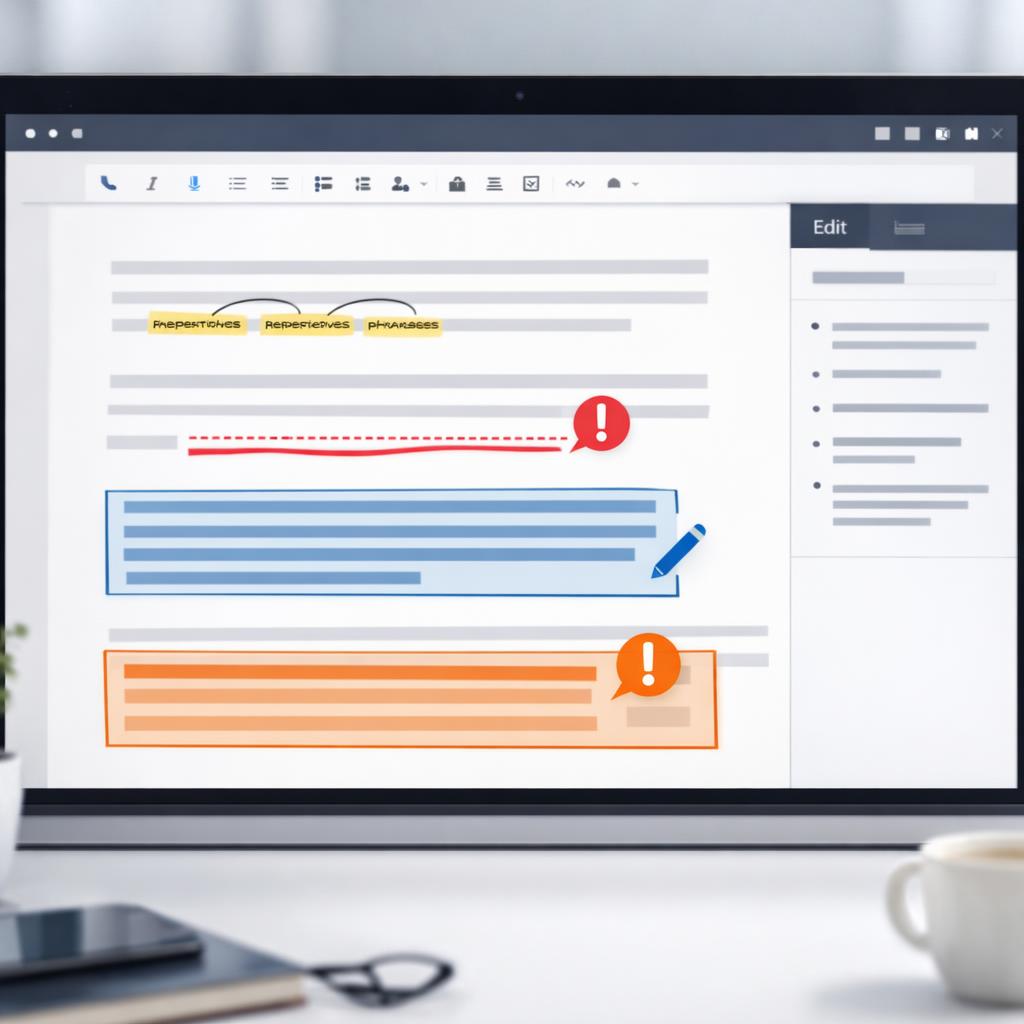
Annotated article review screenshot highlighting repetitive phrases, unsupported claims, and sections to revise.
Quick fixes for repetitive phrasing, thin sections, and weak sourcing
Repetitive phrasing is usually the easiest issue to clean up. Cut duplicate transitions, vary sentence openings, and merge short paragraphs that say almost the same thing. Thin sections need more than cosmetic edits. Add a concrete example, explain the recommendation more clearly, or show when the advice applies and when it does not. The goal is not just to sound different. The goal is to be more useful.
Weak sourcing often creates a bigger publishing risk than wording patterns alone. If a paragraph includes unsupported claims, add a trustworthy reference, attribute the information clearly, or remove the claim. Editors should also watch for content that leans too heavily on broad observations without showing real subject knowledge. A scan may point to suspiciously smooth copy, but only human review can decide whether the article has enough specificity and evidence to earn publication. If your team already uses a pre-publish content quality checklist, this is the right place to connect detection results to the rest of your editorial review.
Conclusion
An smart content detector for seo before publishing is most useful as a final quality check, not as a final judge. It can help you spot repetitive wording, thin sections, and unsupported claims before an article is indexed. The strongest workflow is straightforward: scan the draft, review the highest-risk passages, revise what is clearly generic or weak, and let editors make the last decision.
For publishers, the real value is not the score itself. It is the opportunity to improve clarity, originality, and evidence before the page goes live. Used carefully, a detector supports better editorial decisions and a more consistent publishing process. Used carelessly, it can waste time or create false confidence. Keep the process light, document your thresholds, and treat the tool as one practical checkpoint in a larger SEO workflow.

FAQ
Should publishers run a detector on every article before publishing?
Not necessarily. It is most useful for scaled publishing teams, freelance-heavy workflows, competitive search pages, and topics where thin or repetitive writing creates extra risk. Smaller teams may prefer to use it only for selected article types, major updates, or final spot checks.
Can a detector tell whether content is safe to rank in search?
No. A detector cannot predict rankings, indexing, or overall search performance. It only highlights patterns that may deserve review. Rankings depend on relevance, usefulness, originality, links, technical health, and many other factors beyond detector output.
When should an editor rerun the scan?
Run it again after major revisions, especially when flagged sections were heavily rewritten, new paragraphs were added, or the structure changed in a meaningful way. If the edits were minor, a second scan may not add much, and a quick editorial review is often enough.


