

If you use generated drafts in your workflow, the real value comes from editing them into something people actually want to read. Learning how to humanize smart text for seo blog posts is really about making content clearer, more specific, and more helpful without losing its structure or search relevance. Start with the reader’s problem, then shape the draft so it feels like a knowledgeable person is guiding them through the answer. For broader context, see The Complete Guide to smart Humanizers, which explains what a text humanizer does and where it fits in a modern content process.

The goal is not to add fluff or strip out every keyword. It is to improve trust, readability, and alignment with search intent. That usually means cutting repetition, replacing vague claims with concrete details, smoothing rough transitions, and checking facts before publication. When done well, a humanized post becomes easier to scan, easier to remember, and more likely to satisfy the reader who landed on the page from search.
Why humanized blog content performs better in search
Search visitors do not stay on a page because it repeats the right terms. They stay because the page answers the query in a natural, useful way. Humanized writing works better because it sounds confident, less mechanical, and more aware of what the reader needs next. Strong posts show judgment, practical examples, and clear priorities instead of just summarizing a topic. That creates a better reading experience, which supports engagement and trust.
It also helps editors maintain quality at scale. A polished draft can still target relevant phrases without falling into the flat rhythm that makes machine-written copy easy to dismiss. If your goal is to make generated text sound more human for SEO, focus on whether each section adds real value, not just whether it includes keywords. Stronger flow, cleaner formatting, and sharper examples often do more for performance than adding the same phrase again.
Signals that make text feel generic, repetitive, or thin
Most weak drafts have a familiar set of problems. They lean on broad statements, repeat the same sentence pattern, and use filler transitions that do not move the idea forward. They may explain basic concepts the audience already understands while skipping the practical details the audience actually came for. That is why readers often describe these posts as bland, robotic, or forgettable.
Watch for stacked adjectives, empty claims, and paragraphs that repeat the same point in slightly different words. Thin content also shows up in examples that are too obvious, advice with no tradeoffs, and headings that promise action but only deliver summary. A simple test is to ask whether a paragraph could apply to almost any topic. If the answer is yes, rewrite it with more specifics, audience context, and a sharper takeaway. Those edits are often the best ways to improve machine-written blog posts before they go live.
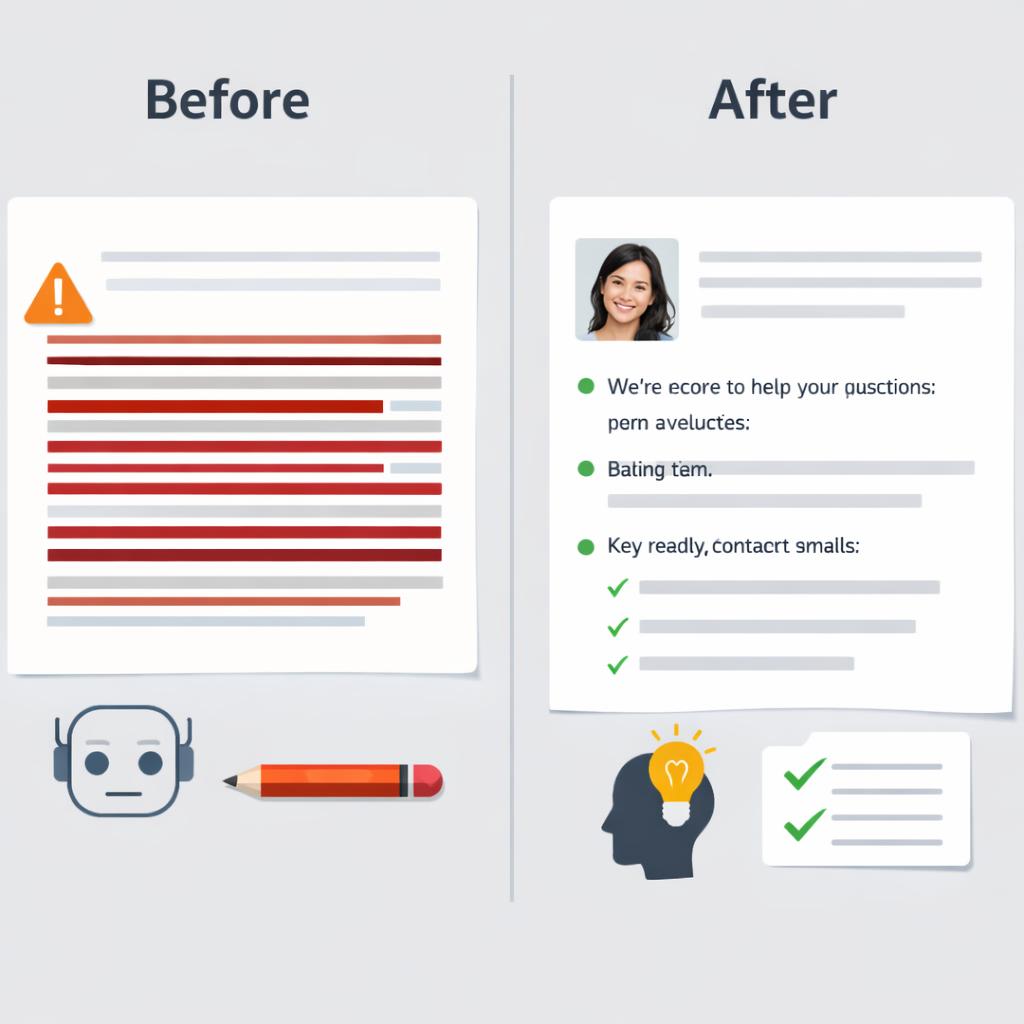
How to humanize text without hurting SEO
The safest approach is to edit in layers. First, confirm the search intent so the post solves the right problem. Next, tighten the voice by replacing stiff phrases with direct language and a more natural sentence rhythm. Then add specificity: examples, limits, audience cues, and brief insights that reflect real editorial judgment. This is how you edit generated drafts for readability and search intent while keeping the original topic map intact.
Do not remove every keyword reference in the name of style. Keep important phrases where they improve comprehension, especially in headings, opening copy, and summary lines. The difference is that they should fit the sentence naturally instead of sounding forced. If you need a deeper process for intent alignment, link to a related guide on how to match content to search intent. When you humanize blog content without hurting rankings, you are improving usefulness rather than stripping out relevance.
Edit for voice, specificity, flow, and search intent
For voice, read the draft aloud and cut anything you would never say to a client or reader. For specificity, replace vague words like “important” or “effective” with details such as who benefits, under what conditions, and why. For flow, vary sentence openings, connect ideas clearly, and move the strongest points closer to the top. These small changes make a post feel written with purpose rather than assembled from patterns.
For search intent, compare each section to the query behind the topic. If someone searched this keyword, do they want definitions, examples, steps, or a checklist? Shape the piece around that answer. The final post should sound natural, meet the reader where they are, and stay focused on the exact problem the searcher came to solve. That is what makes a draft more credible and more useful.

Conclusion
Humanizing a draft for search is really an editing discipline. You keep the structure and topic relevance that make a post discoverable, then improve the parts readers notice most: voice, specificity, flow, and usefulness. The result is content that feels natural without drifting away from the query or the page goal.
If you want a repeatable method for how to humanize smart text for seo blog posts, use a simple sequence: confirm intent, cut generic phrasing, add concrete detail, smooth transitions, and finish with a quality review. That process helps writers and editors publish cleaner posts that serve readers well and support long-term search performance.

FAQ
How do you make generated blog text sound more human?
Start by removing filler, repeated phrasing, and generic claims. Then add specifics, clearer transitions, and a more natural voice. Reading the draft aloud is one of the fastest ways to catch stiff wording and awkward rhythm.
Can humanizing text help SEO performance?
Yes. Clearer, more useful content is easier for readers to trust and engage with. Humanizing also improves alignment with search intent, which can strengthen overall page quality and make the content more satisfying to visitors.
What should you edit first in a machine-written draft?
Check whether the draft matches the query and the audience. After that, focus on paragraph clarity, sentence rhythm, and examples that make the advice more concrete and practical.


