
Many applicants wonder what AI detector do college admissions use when they fear an essay could be labeled machine-written. The honest answer is that most colleges do not publicly identify one standard tool. In many cases, admissions offices rely much more on human review, writing context, and academic integrity policies than on any single software score. If AI detection tools are used, they are usually only one small part of a larger evaluation.
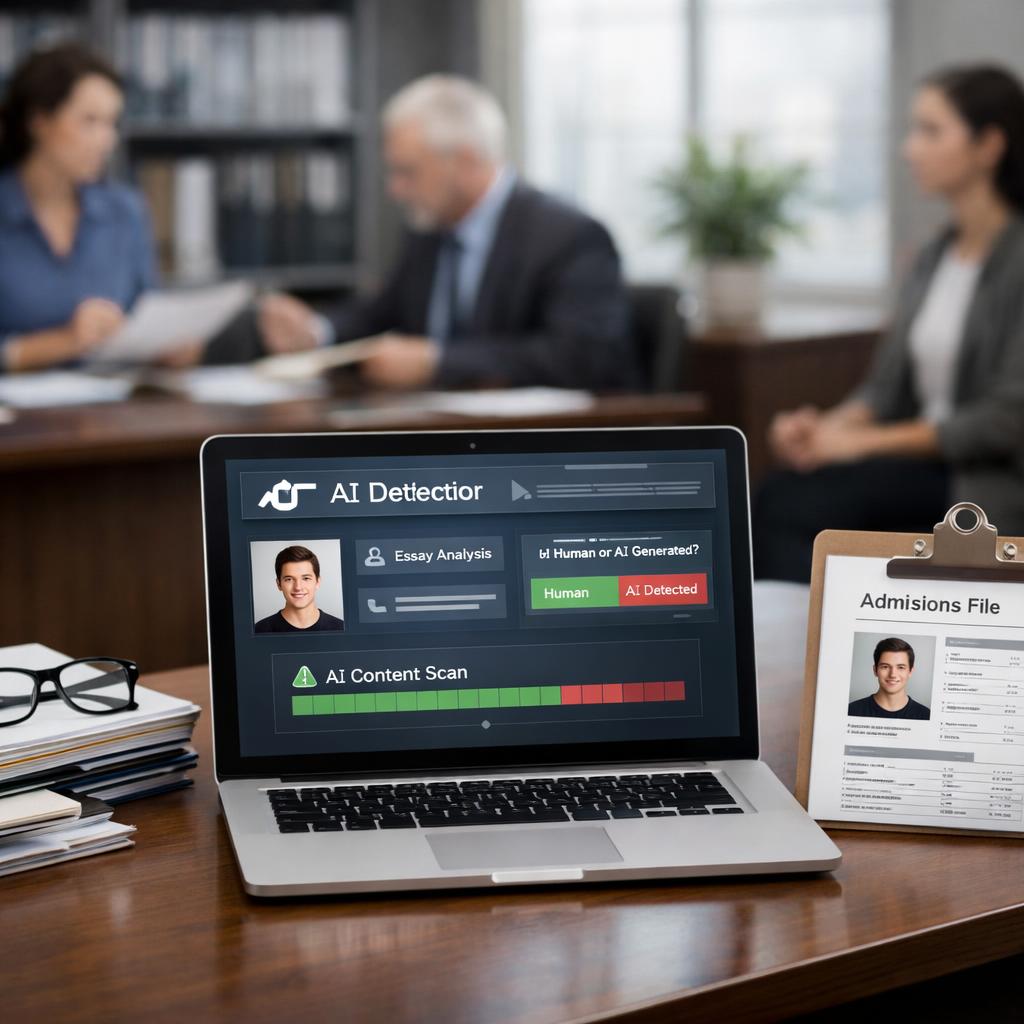
What AI detector do college admissions use in practice?
In real admissions work, there is no universal answer. Every college sets its own process, and some may not use AI detectors at all. When students ask whether do college admissions use AI detectors, the reality is often hard to verify because schools rarely publish the exact tools or screening methods used for essays.
Why most admissions offices avoid naming a single detection tool
Admissions teams are careful about naming one product because AI detection is still imperfect. Results can shift from tool to tool, and false positives remain a serious concern. A polished but fully original essay may still be flagged. Publicly announcing a detector can also push students to game the system instead of writing honestly.
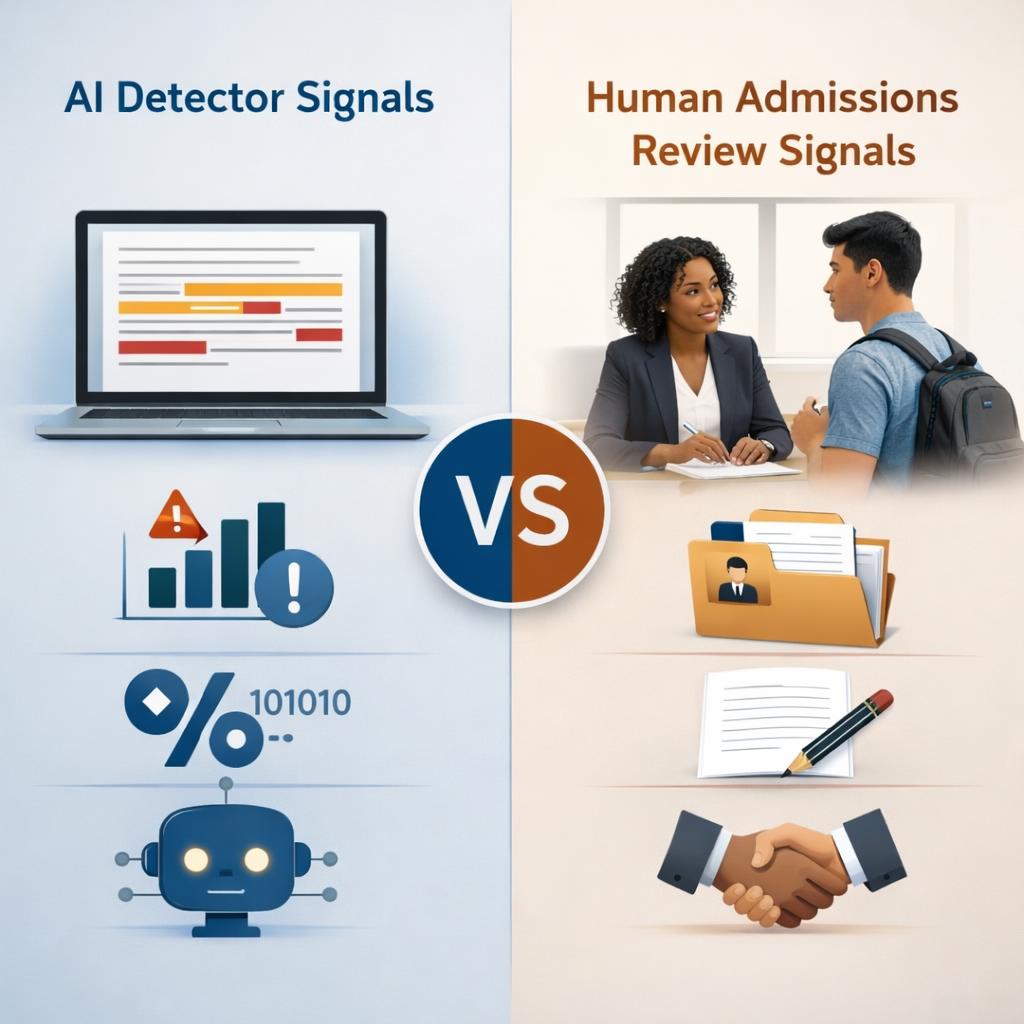
How AI detection is often combined with human essay review
Even when software is available, admissions readers usually compare the essay with the rest of the application. They look at short responses, grades, recommendation letters, activities, and the student’s overall voice. That is why what AI tools do universities use for essay review matters less than how people interpret the full application file.
Can colleges reliably tell if an admissions essay used AI?
Not with complete certainty. Claims that colleges can always detect AI in essays overstate the technology. Most experts agree that detectors may offer hints, but they are not definitive, especially if a student revised heavily or only used AI for limited support.
False positives, inconsistent scores, and policy limitations
One of the biggest problems is false positives. Clear, formal, or highly structured writing can sometimes look suspicious to a detector even when it is entirely human. Scores may also change after small edits or differ across platforms. Because of that, many schools are cautious about making high-stakes admissions decisions from detector output alone.
What admissions readers actually look for beyond detector results
When asking can colleges detect AI in admissions essays, it helps to understand what human readers notice first: personal voice, vivid details, emotional honesty, and consistency with the student’s background. They may also notice essays that feel overly generic, strangely detached, or disconnected from lived experience.
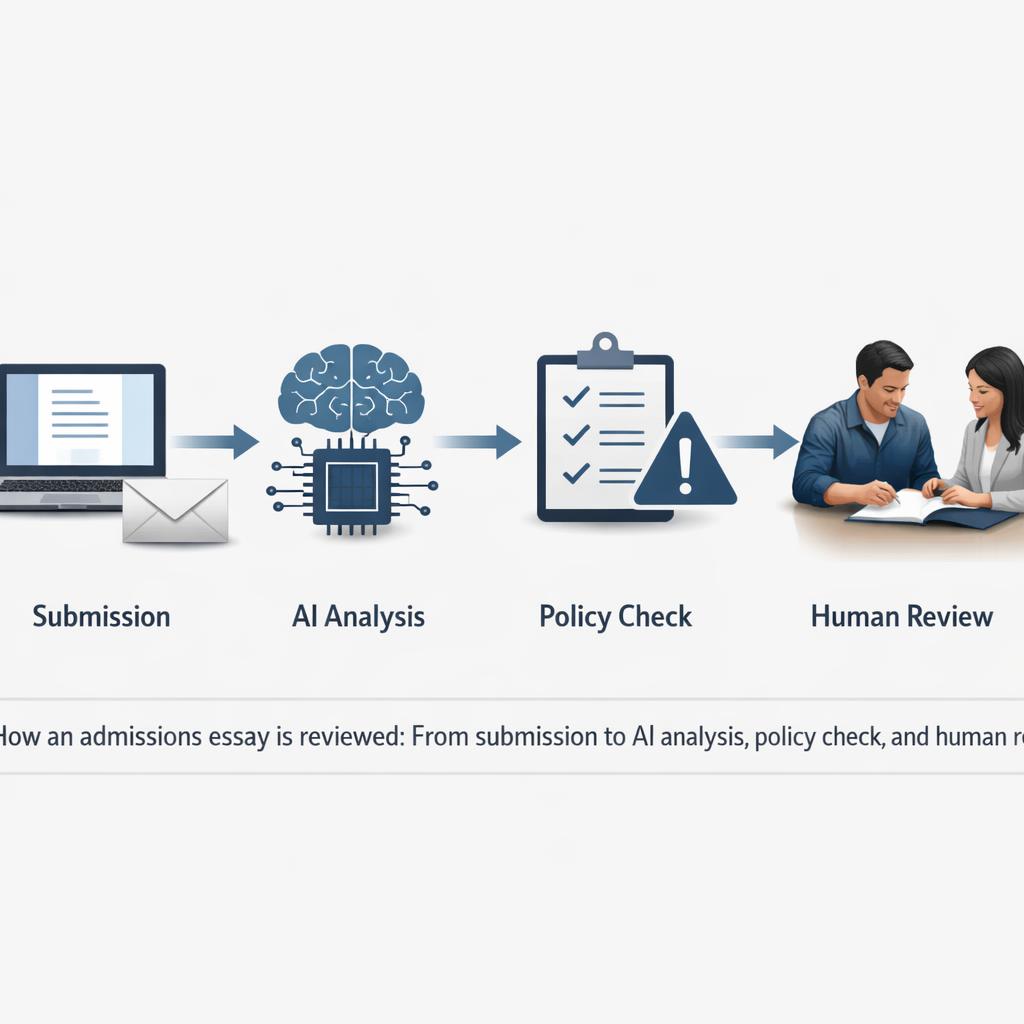
How colleges may review essays for AI-assisted writing
Rather than searching for one technical clue, colleges often review essays for authenticity. If something feels off, the application may receive a second review under broader integrity standards.
Signals like voice mismatch, generic storytelling, and polished sameness
Possible concerns include a voice that does not match the rest of the application, stories that feel broad instead of personal, and language that sounds smooth but empty. These are not proof of misconduct, but they can lead to closer review.
When applications may be flagged for secondary review
An essay may draw extra attention if it sharply differs from school records, counselor expectations, or other writing samples. In those situations, admissions teams may review the file more carefully, consult internal policy, or look for more context before deciding how much weight to give the essay.

How applicants can use AI ethically without risking their application
The safest strategy is to use AI as a helper, not a ghostwriter. Students searching for how to avoid AI flags on college application essays should focus less on beating detectors and more on protecting their own voice.
Acceptable help for brainstorming, outlining, and grammar support
Limited support is often easier to justify: brainstorming ideas, testing an outline, or catching grammar mistakes. That is very different from asking a chatbot to draft a full personal statement and submitting a lightly edited version.
Best practices for keeping the final essay personal and original
- Start with your own memories and experiences.
- Include specific details only you could provide.
- Revise until the wording sounds natural to you.
- Save drafts or notes that show your writing process.
- Review each sentence for honesty, clarity, and personal meaning.
Conclusion: focus on authenticity over trying to beat AI detectors
If you are still asking what AI detector do college admissions use, the most accurate answer is that there is no single industry-wide tool applicants can prepare around. Some colleges may test detectors, but human judgment, institutional policy, and authenticity matter much more. A specific, sincere, student-written essay remains the best protection against both false flags and real admissions concerns.
FAQ
Do college admissions offices actually use AI detectors?
Some may, but many do not publicly confirm it. Even when detectors are used, they are usually only one part of a broader review process.
Can a college reject an essay based only on an AI detector score?
That would be risky because detector scores are not fully reliable. Most schools would be more likely to consider context, consistency, and policy before making a decision.
Is it okay to use AI to brainstorm a college application essay?
Often yes, if the tool helps with idea generation, structure, or light editing rather than writing the essay for you. The final version should still be personal, original, and clearly in your own voice.


