

If you want a free smart detector with percentage score and highlights, the best option is one that helps you review text quickly without pushing you toward snap judgments. A useful tool should give you an overall likelihood score, mark passages that deserve a closer look, and remind you that the result is a signal, not proof. If you are new to these tools, it helps to learn how percentage scores are interpreted so you do not treat one report as a final answer. That matters for students, teachers, editors, content teams, and site owners who need a fast first-pass review before submitting or publishing work.

Within the Free smart Detector With Percentage Score And Highlights cluster, this topic answers a practical question: what should you expect from a free text-checking tool, and how should you use the result responsibly? In most cases, the answer is straightforward. Use the score to decide where to look first, use highlights to narrow your review, and rely on careful reading before you change anything important.
What a percentage score and text highlights help you see
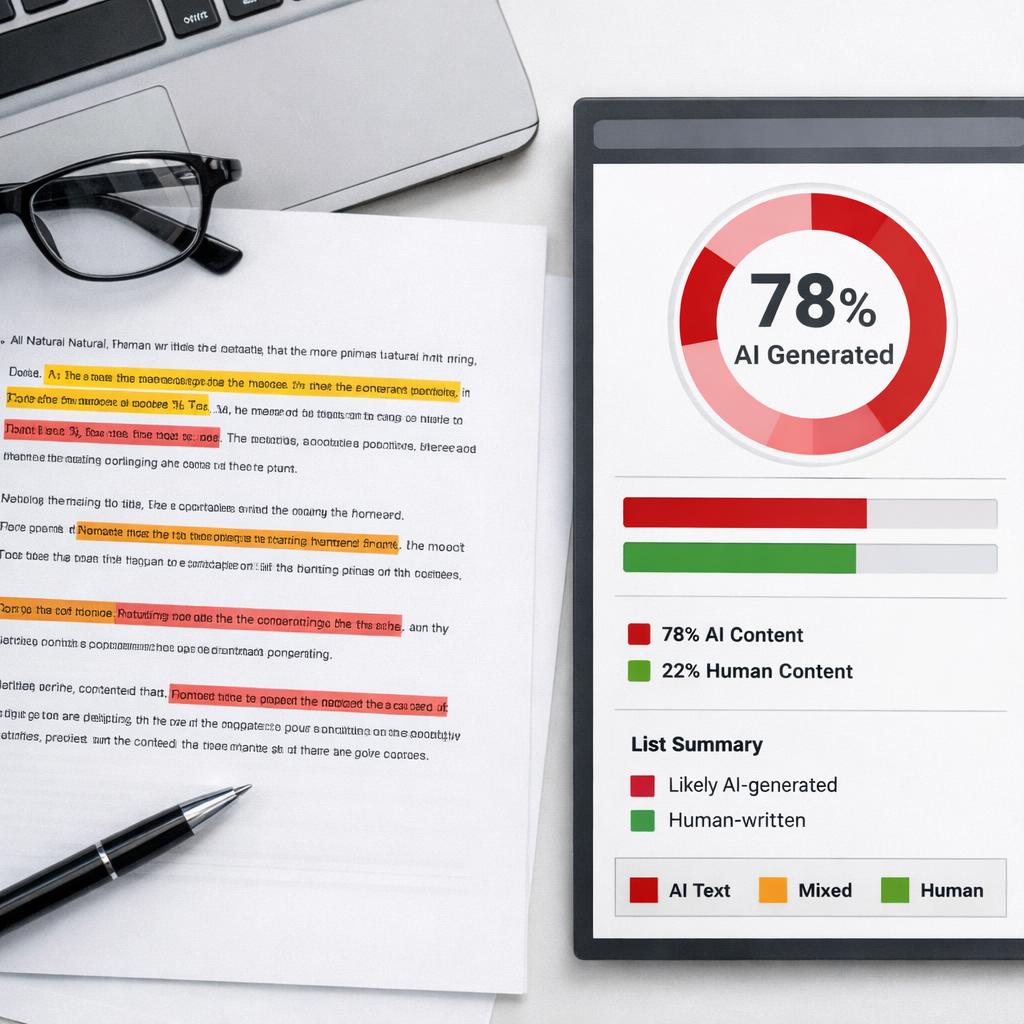
A percentage score paired with highlighted sentences can make a long draft much easier to assess. The score gives you a broad signal about how much of the writing may need attention, while the highlights show which lines triggered the report. That combination matters because a score on its own can feel vague, and highlights on their own can feel scattered. Together, they help you focus your time where it is most useful.
Even so, a free detector with highlights should be treated as a screening tool, not a final judge. Repetitive sentence patterns, generic wording, highly formal structure, or heavy use of familiar transitions can all affect the result. A low score does not guarantee every sentence is fine, and a high score does not prove anything by itself. The most reliable tools make that limitation clear and encourage manual review before you revise, reject, or question a piece of writing.
How to read highlighted passages without overreacting
When a passage is highlighted, avoid rewriting it immediately. Start by reading the full paragraph instead of isolating the marked sentence. Many flagged lines seem more suspicious when pulled out of context than they do when read as part of the whole draft. In essays, this often happens in thesis statements, transitions, and summaries. In web copy, it tends to appear in product descriptions, intros, and closing paragraphs that follow familiar patterns.
Next, ask a few simple questions. Does the passage sound too broad? Too predictable? Too detached from the writer’s actual point? If the answer is yes, revise for specificity, clearer examples, and more natural sentence variety. If the answer is no, it may be better to leave the text as it is. Highlights are attention markers, not automatic mistakes. That is why people often ask how accurate a free detector with highlights really is. The honest answer depends on the draft, the subject, and the quality of the human review that follows.

How to use a free detector to review drafts step by step
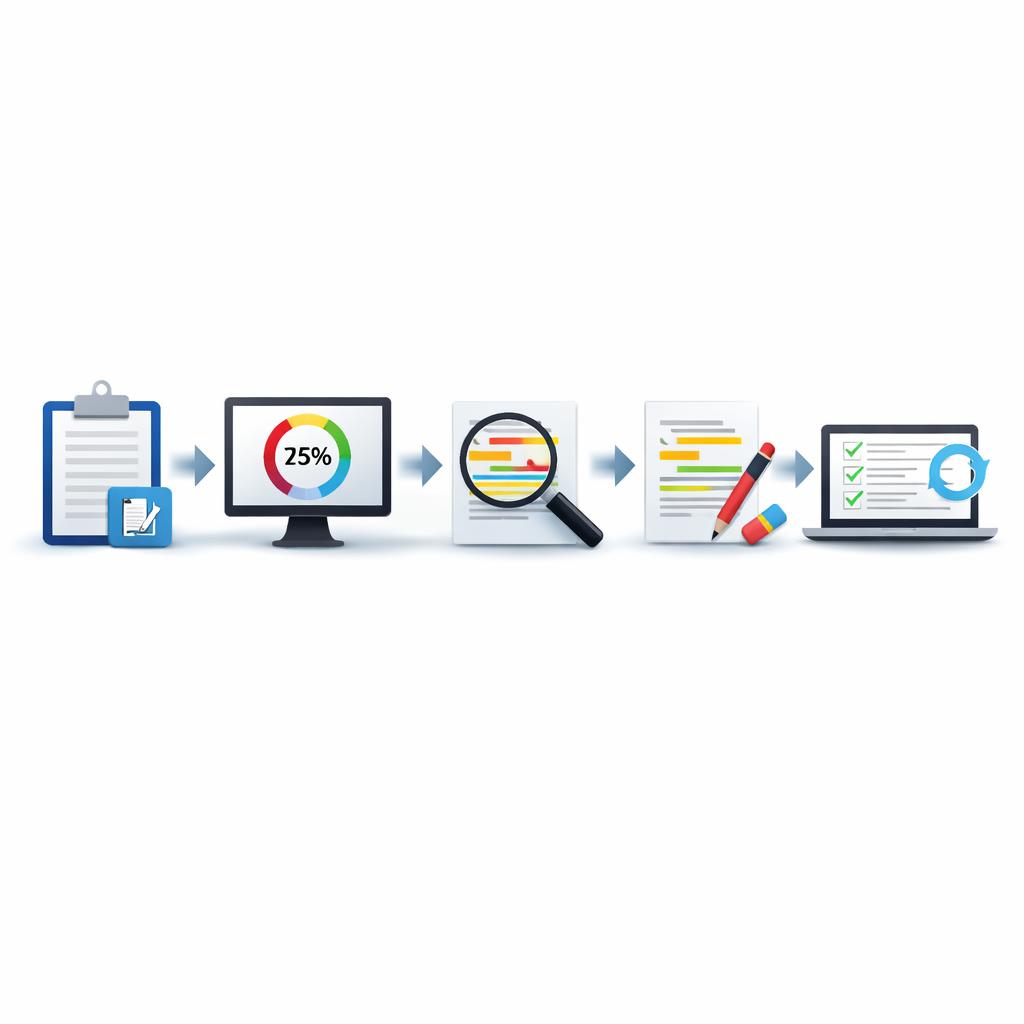
Start by pasting in clean text with as little formatting clutter as possible. Read the overall score first, then inspect the highlighted passages one at a time. Do not rewrite the entire document because of a single number. A better method is to sort flagged sections into three groups: clearly fine, worth revising, and uncertain. That simple workflow keeps you focused and cuts down on unnecessary edits. A free detector with percentage score is most helpful when it supports a structured review rather than a search for a perfect result.
For essays, articles, and landing pages, compare the flagged areas with your goals for clarity, evidence, tone, and voice. Revise only where the writing truly feels flat, repetitive, or overly formulaic, then run one final check if needed. If you want a second layer of review, use a manual review checklist for flagged text to decide whether the issue is style, originality, or simple phrasing. This process works well for students, teachers, editors, and site owners who want a careful review without turning a free tool into the final authority.
Best practices for checking essays, articles, and web copy
Review complete sections whenever possible instead of single lines. Full context makes it easier to tell whether a flag comes from repeated structure or from writing that genuinely needs improvement. For essays, pay close attention to introductions, topic sentences, and conclusions. For articles, review headings, repeated explanatory phrases, and summary sections. For web copy, inspect hero text, service descriptions, and FAQ answers, where predictable wording is common.
It also helps to compare the report with the audience and purpose of the piece. Academic writing is often more formal, so it may trigger more predictable patterns. Marketing copy often reuses short persuasive structures. Editorial content may include standard definitions that sound similar across many pages. A free smart detector with percentage score and highlights becomes much more useful when you consider genre, tone, and intent before making edits. That keeps the review practical, consistent, and fair.
Conclusion
A free smart detector with percentage score and highlights can be a practical review aid when you use it the right way. The score helps you decide where to look first, and the highlights help you inspect exact passages without guessing. The key point, though, is simple: these reports are indicators, not proof. Whether you are reviewing an essay, article, or web page, combine the result with careful reading, context, and a few targeted edits instead of treating the output as final. If you choose a free detector with percentage score that is easy to scan and honest about its limits, you will get more value from each check and make better decisions before publishing or submitting your work.
FAQ
What does the percentage score actually mean?
The percentage score is a likelihood signal based on patterns found in the text. It is not a confirmed finding. Use it to decide what to review first, then read the highlighted sections in context before making any changes.
Are highlighted sections always a problem?
No. Highlights show passages that deserve attention, not automatic errors. A sentence may be flagged because it is generic, repetitive, or highly structured, even when it still works for the genre and purpose.
What is the difference between a free detector with percentage score and a tool with only highlights?
A score gives you a quick summary of the overall report, while highlights show where the concerns appear. Having both makes the review faster, easier to prioritize, and more useful than relying on either one alone.
Should I revise every section that gets flagged?
No. Revise only when the passage would clearly improve with better specificity, flow, or voice. If a flagged section is accurate, appropriate, and clear in context, it may not need any change.


