
Sometimes. If you are wondering whether colleges check for smart in personal statements, the most accurate answer is that practices vary by school. Some admissions offices may test screening tools, while others rely mostly on experienced readers and the broader application. If you want more context on school-by-school screening, see what smart detector do colleges use.

For most applicants, the bigger issue is not whether every essay gets scanned. It is whether the personal statement feels real. Admissions readers are trained to notice writing that sounds generic, oddly polished, or disconnected from the rest of the file. So when students ask whether colleges scan personal statements for smart or whether admissions officers can tell if an essay is smart written, the better focus is authenticity, consistency, and honest revision.
Do colleges actually check personal statements for machine-written text?
Some colleges may check personal statements for machine-written text, but there is no single national standard. In many US admissions offices, essays are still judged mainly by human readers rather than by a detector score alone. Schools often keep their review methods broad or private, and they may look more closely only when something feels off. That is especially true at selective colleges, where the essay can play a meaningful role.
What admissions teams may flag during essay review
Readers may pause when an essay feels vague, emotionally flat, overly polished, or unlike the student presented elsewhere in the application. They often compare the tone of the personal statement with supplemental responses, grades, recommendations, and activities. If one section sounds unusually sophisticated while everything else is much simpler, that contrast can raise questions. This is often what people mean when they ask what do colleges look for in personal statements. In practice, they are looking for voice, specificity, reflection, and believable detail.
- Stories that feel interchangeable instead of personal
- Formal wording that lacks warmth or individuality
- Big claims without clear examples or reflection
- A style that clashes with the rest of the application
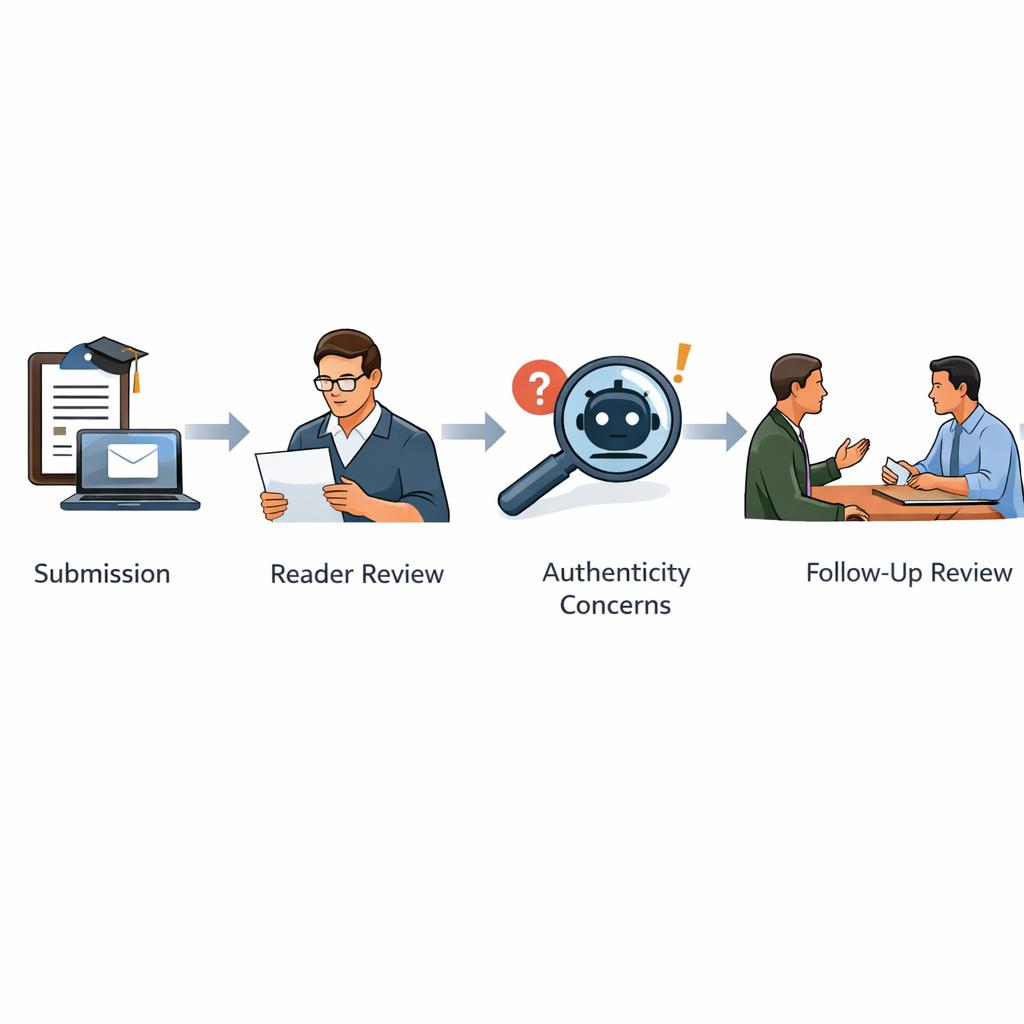
How colleges judge authenticity beyond detection tools
Admissions offices rarely make major decisions from one tool alone because detector results are imperfect. A stronger review process combines reader judgment with context. Essays are read alongside transcripts, extracurriculars, recommendation letters, and short-answer responses. If concerns come up, a college may simply give the essay less weight, look for consistency elsewhere, or ask for clarification instead of assuming misconduct from a score.
Why false positives make detector scores risky
False positives are a major reason schools tend to be careful. A sincere student can be flagged because polished writing, common phrasing, tutoring support, or multilingual writing patterns may confuse detectors. That is why questions such as are smart detectors used in college admissions do not have a clean yes-or-no answer. Some offices may use them as one signal, but human review usually matters more than any single result. In reality, can admissions officers tell if an essay is smart written is often less about proving authorship with certainty and more about deciding whether the essay feels credible, personal, and consistent with the student’s full file.
- Different detectors can give different results
- Strong grammar is not proof of outside writing
- Human readers can catch context that tools miss
- Policies may shift from one admission cycle to the next
How to use writing help without risking your application
Students can still get help while protecting their application by treating automated writing tools as limited support, not as a replacement for lived experience and personal reflection. Start with your own outline, memories, and values. Write your first draft in your own words. If you use a tool at all, keep it to narrow tasks such as spotting repetition, checking grammar, or generating prompts that help you think more clearly about your story.
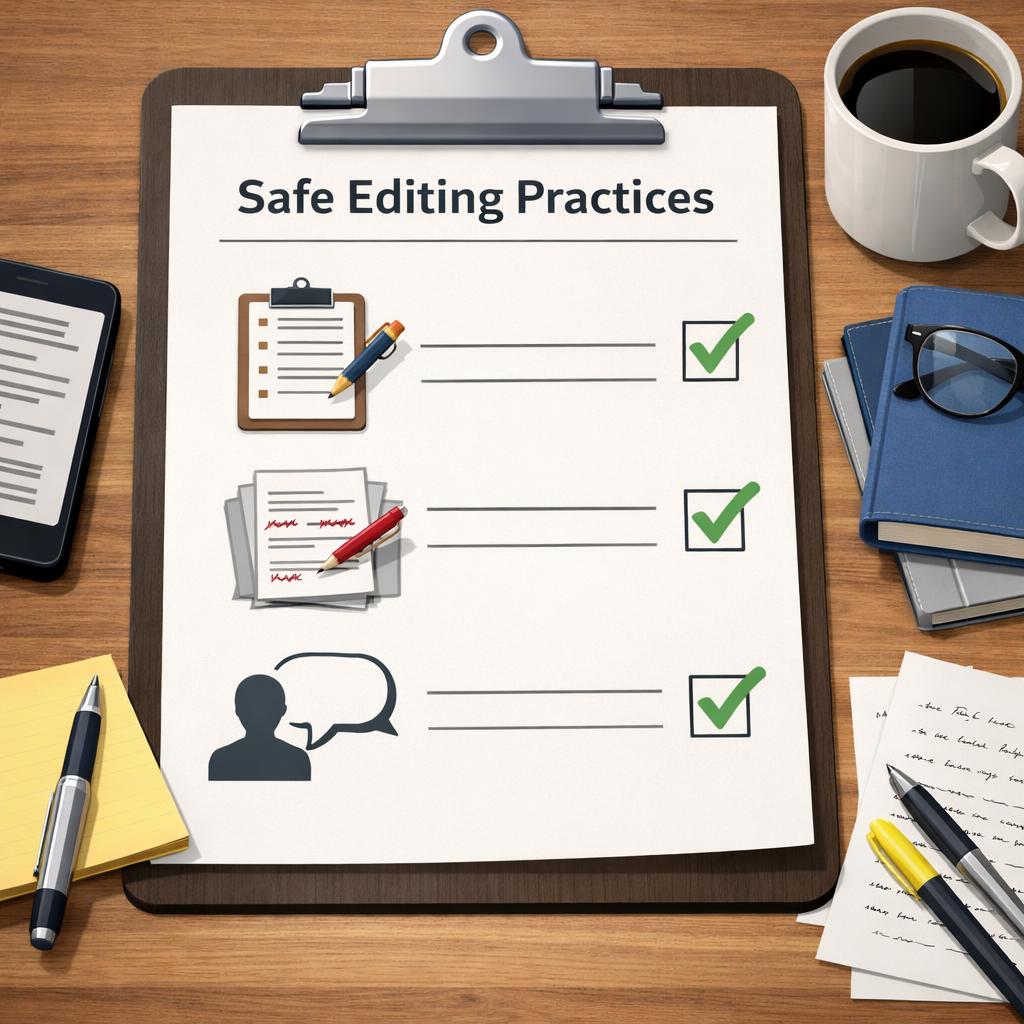
Safe ways to edit while keeping your voice
Keep records of your drafts, notes, and revisions so you can show how the essay developed. Read the essay out loud and ask whether it sounds like you in a thoughtful conversation. Replace broad statements with specific moments, concrete details, and honest reflection. A counselor, teacher, or family member can absolutely help you revise, but they should help you sharpen the essay, not rewrite it for you. For more practical guidance, review authentic college essay tips and learn how to keep your personal statement in your own voice.
- Write the first complete draft yourself
- Use feedback to clarify your ideas, not replace them
- Save draft history and brainstorming notes
- Make sure every example comes from your real life
Conclusion
So, do colleges check for smart in personal statements? Sometimes, but not always, and usually not as the only measure. Most admissions teams care more about whether the essay feels honest, specific, and aligned with the rest of the application. Even when detectors are involved, their results are imperfect, which is why human judgment remains central.
If you are worried about whether colleges scan personal statements for smart, do not focus on trying to beat a tool. Focus on writing a believable essay grounded in your own experience. A strong personal statement does not need inflated language or generic inspiration. It needs clear reflection, concrete detail, and a voice that matches the student behind the application.
FAQ
Do colleges use detectors on every personal statement?
No. Practices vary by college. Some may test detectors or use them in limited situations, while others depend mainly on admissions readers. There is no universal rule requiring every personal statement to be screened.
Can a personal statement be rejected for sounding machine-written?
A college may become concerned if an essay feels inauthentic, but decisions are usually based on the full application, not one impression alone. A questionable essay may receive extra scrutiny or carry less weight rather than leading to an automatic rejection.
What should I do if I used automated writing tools while drafting?
Make sure the final essay is fully yours. Rewrite any borrowed phrasing, confirm that every example is real, and keep your draft history. If the final version reflects your own thinking and voice, you lower the risk of problems.
Can strong grammar and polished writing make my essay look suspicious?
Not by themselves. Good writing is not the issue. Concerns usually come from a mismatch between style and substance, generic storytelling, or language that does not fit the rest of your application.


