
College and university instructors need a practical way to review student writing without adding unnecessary admin work or unfairly questioning legitimate submissions. In most cases, the best smart detector for teachers in higher education is the one that delivers clear reports, keeps false positives low, protects student privacy, and fits smoothly into existing teaching workflows. If you want a broader comparison first, see the best detectors guide for a wider framework.

For college faculty and university instructors, the goal should never be instant judgment. It should be steady, defensible review support. In higher education, instructors, writing centers, and academic integrity teams often need a tool that helps surface unusual patterns, supports documentation, and works inside LMS-based teaching. That means judging options less by promotional claims and more by how well they help with real classroom decisions, faculty workload, and campus policy.
What higher education teachers should look for first
When reviewing a detector for academic use, start with whether it gives useful evidence instead of a vague score. Faculty need reports that are easy to read, reasonably consistent, and simple to interpret during assignment review. A strong option should show why a submission was flagged, what patterns may have triggered concern, and how confident the result appears to be. That matters in higher education because concerns sometimes move beyond a classroom conversation and require documentation.
It also helps to test the detector in your own institutional context. A tool that looks good on generic sample text may behave very differently with multilingual writing, discipline-specific assignments, or draft-heavy coursework. For instructors wondering how to review student writing fairly, the better question is whether the detector can handle first-year essays, lab reports, discussion posts, and capstone projects without producing confusing or inconsistent outputs.
Accuracy, false positives, and explainable reporting
Accuracy matters, but in higher education, false positives may matter even more. A detector that regularly flags genuine student work can damage trust, create appeals, and increase review time for already busy instructors. That is why faculty should test any tool with a range of campus writing samples before wider adoption. Include polished essays, multilingual writing, reflective assignments, and structured technical work so you can see where the system performs well and where it struggles.
Explainable reporting is just as important. Instructors should be able to tell what prompted the flag, whether the signal is weak or strong, and how to record that finding in a fair review process. Helpful features for academic integrity teams include transparent summaries, exportable documentation, and language that encourages human review instead of automatic conclusions. If a report cannot be explained clearly to a student, chair, or review panel, it is probably not strong enough for serious academic use.

How to evaluate classroom fit and responsible use
Even a well-designed detector can become a burden if it adds too many steps to grading. Teachers should review how the tool fits with assignment intake, feedback timing, and course volume. The best setup usually works within normal review habits, whether that means checking selected submissions, triaging only flagged work, or coordinating with a writing center. A detector should reduce uncertainty, not create another inbox for instructors to manage.
Usability also matters at the department level. If multiple instructors share standards, the tool should make it easy to apply common thresholds and documentation practices across sections. That is especially useful in large general education courses, graduate seminars with research writing, and teams that handle integrity referrals. In many cases, the best choice for faculty is not the tool with the longest feature list, but the one instructors can use consistently under time pressure.
LMS compatibility, privacy standards, and workflow checks
Before adopting any detector, confirm that it works with your LMS and common submission routines. Faculty usually need access from the course space, not a separate manual upload step. If the workflow feels clunky, instructors are less likely to use it consistently. Check whether the tool supports common file types, preserves formatting, and works across drafts, revisions, and resubmissions.
Privacy deserves the same attention as functionality. Student writing may contain personal details, unpublished research, or sensitive course content, so institutions should understand data retention, access controls, and whether submissions are stored or reused. For many campuses, privacy standards and administrative oversight are core requirements, not optional extras. A practical review should ask who can access reports, how long records are kept, and whether the product aligns with institutional expectations for student data handling.
Use results as a review signal, not final proof
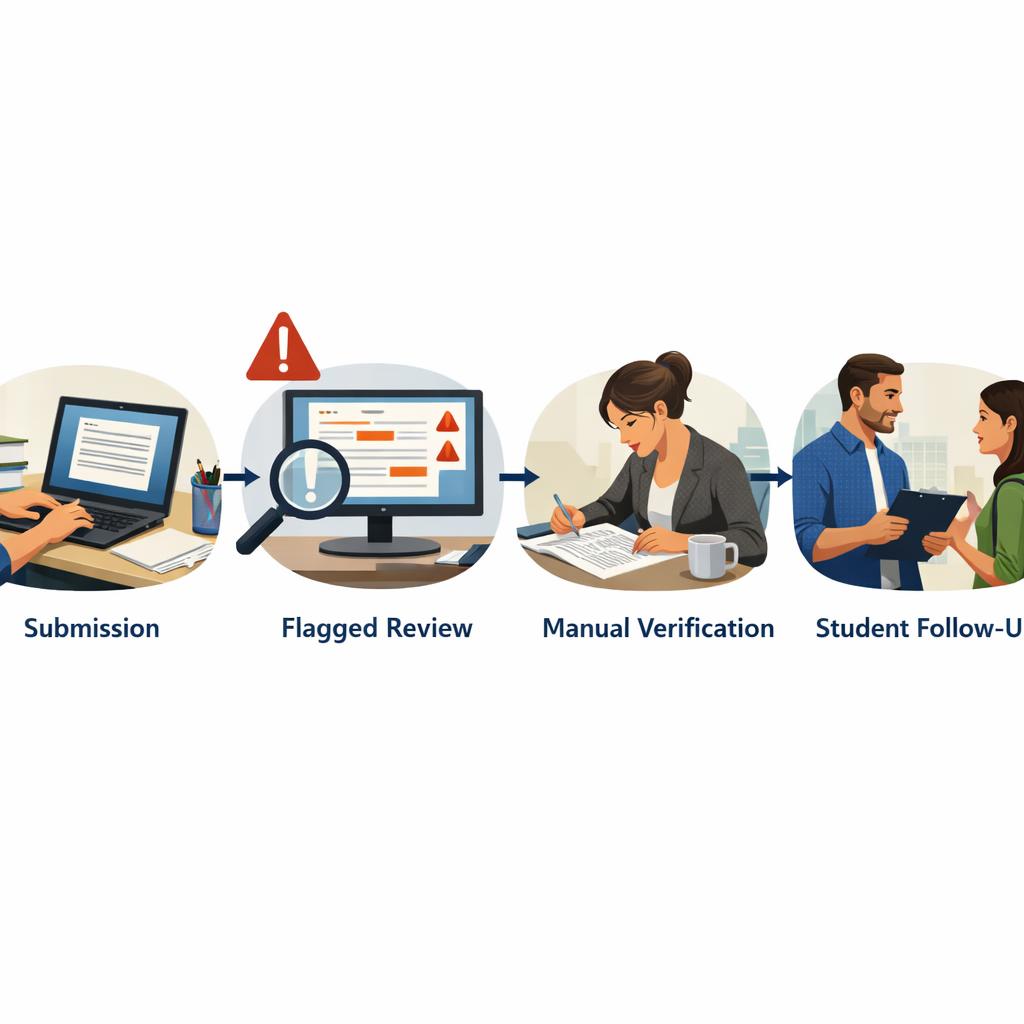
Detector output should be treated as a review signal, not conclusive evidence. A flagged submission may simply mean the instructor should read more closely, compare the work with prior submissions, or talk with the student about drafting and source use. Responsible practice combines the report with faculty judgment, assignment context, and course records. That approach lowers the risk of overreach while preserving the detector’s value as an early warning tool.
Colleges and universities should also define a consistent academic integrity review process before relying on detector results in serious cases. Strong practice usually includes manual verification, review of the student’s writing history, communication with the student, and escalation only when several indicators support concern. That is the safest way to use results in academic settings where fairness, evidence, and due process matter as much as efficiency.
Conclusion
The best smart detector for teachers in higher education is one that supports careful review, respects student privacy, and fits naturally into existing academic workflows. For most institutions, the right choice is not the one making the biggest accuracy claims. It is the one with understandable reporting, low false-positive risk, strong LMS fit, and a process that helps faculty make fair decisions without creating extra workload.
Whether you are selecting a detector for one course or evaluating options across a campus, focus on transparency, workflow fit, and responsible use. The best smart detector for teachers in higher education should help instructors review writing more consistently while leaving final judgment to human expertise, policy, and context.

FAQ
What should teachers in higher education prioritize when choosing a detector?
Start with reporting clarity, false-positive risk, privacy protections, and LMS compatibility. A useful detector should help faculty review writing efficiently and document concerns without pushing them toward automatic conclusions.
Are detector results reliable enough for grading decisions?
No. A detector result should not be used as stand-alone proof for a grading penalty or misconduct finding. It works best as one review signal alongside instructor judgment, assignment context, and institutional procedure.
How can departments test a detector before wider adoption?
Run a pilot with varied campus writing samples across disciplines, course levels, and student backgrounds. Review whether reports are consistent, understandable, and manageable for faculty during real grading periods.
Who benefits most from a shared detector review process on campus?
Large course teams, writing centers, department leads, and academic integrity staff often benefit most. A shared process improves fairness, strengthens documentation, and creates more consistent review across sections.


