

If you are searching for the best claude smart detector for academic writing, the most helpful answer is not a single product name. In academic settings, the right choice depends on how well a tool handles formal prose, how often it mislabels genuine student work, how clear its reports are, and whether the results fit a fair review process for essays, research drafts, and admissions materials. A detector should help reviewers spot patterns worth checking, not replace human judgment.

For most schools, publishers, and editorial teams, the best path is to compare options using the same rubric before adopting one. That means testing known human samples, known machine-written samples, and mixed drafts that include revision. This article offers a practical framework and points readers to how detection works in academic writing review so claims can be assessed more carefully.
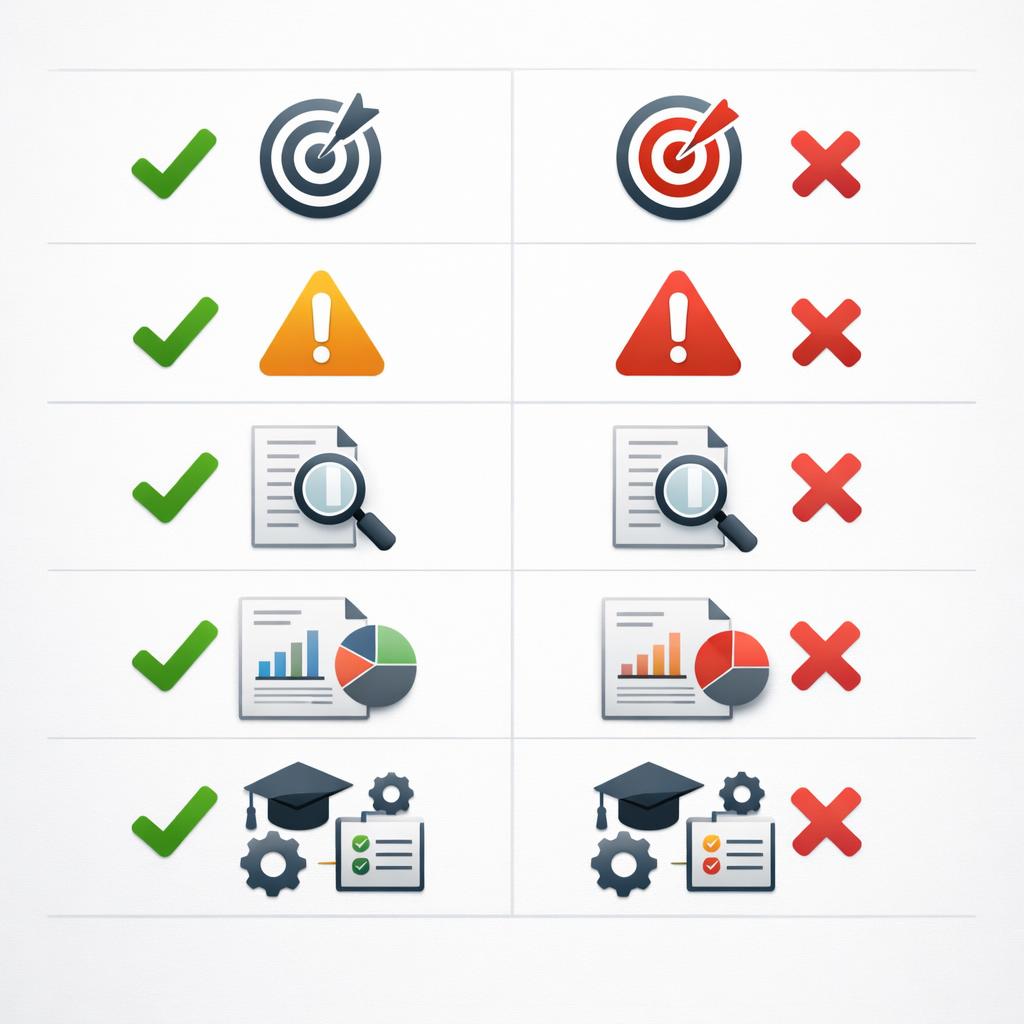
Image brief: Create a simple comparison checklist graphic showing criteria such as accuracy, false positives, source transparency, reporting detail, and academic workflow fit; place after the introduction.
What makes a Claude detector reliable for academic writing
A reliable detector for academic use should perform well across several writing types: polished essays, citation-heavy passages, reflective assignments, literature reviews, and edited drafts. That matters because academic writing often sounds formal and structured even when it is completely human. The best option should show steady performance across assignment types instead of assigning broad, confident risk labels to every clean paragraph.
Reliability also depends on explainability. A useful report should show why a passage was flagged, how much text was reviewed, and whether the score carries uncertainty. If a tool returns only a high-risk label with no context, instructors and editors have little to work with. In practice, the strongest choices in the best claude smart detector for academic writing category support review with visible evidence rather than dramatic certainty.
Key signals to review before trusting a result
Before trusting any score, look for a few basic signals. First, check whether the detector separates whole-document risk from isolated passages. Second, see how it handles quotations, references, and formulaic academic phrasing without over-flagging. Third, test revised drafts, since many students combine their own writing with outside assistance or heavy editing, and weak systems often struggle with mixed text.
You should also examine calibration. A detector that flags too many human essays can create serious academic integrity problems. This is central to the question of how accurate are Claude detectors for academic content. Accuracy is not just about catching machine-written text; it is also about protecting legitimate student work from incorrect suspicion. In education, a lower false-positive rate often matters more than an aggressive detection claim.
How to compare tools without risking false accusations
The safest way to compare tools is through a controlled evaluation. Build a small test set that includes authentic student essays, faculty-written samples, machine-written drafts, and hybrid documents revised by humans. Then score each option on consistency, false positives, passage-level reporting, and ease of review. This is the most practical approach for teams asking how to detect Claude writing in academic essays without relying on vendor language.
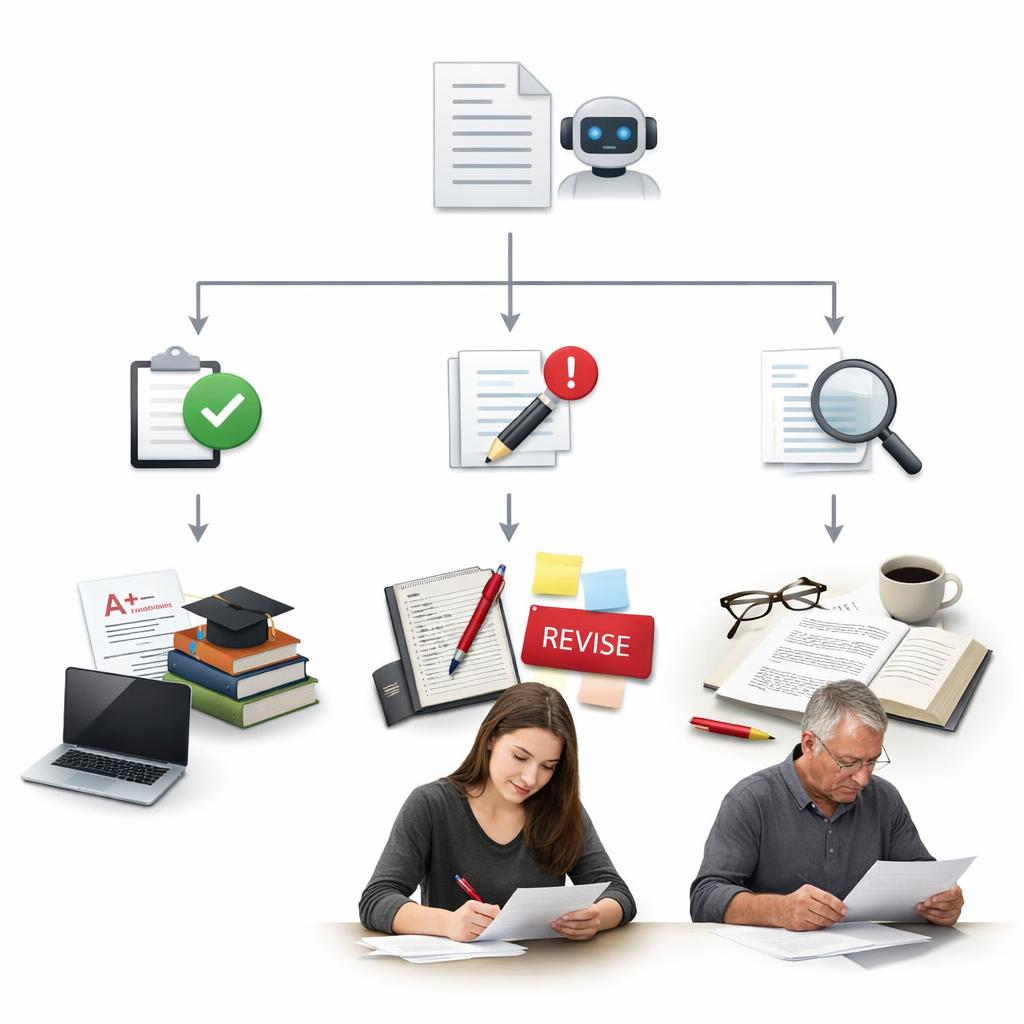
Comparison should also include workflow questions. Can the report be shared with a writing center, department chair, or editor? Does it support follow-up review, or does it push users toward quick conclusions? Academic teams should pair product testing with clear policy guidance, including responsible use of detector results in schools and editorial workflows. That combination lowers the chance that one score will be treated as final proof.
Evaluation criteria for essays, research drafts, and admissions writing
Essays need strong false-positive protection because polished student prose can resemble automated text. Research drafts require careful treatment of citation patterns, technical repetition, and literature review language. Admissions writing adds another complication: applicants may use coaching, templates, or extensive editing support, so reviewers need nuanced interpretation rather than rigid thresholds.
A practical scorecard should include detection accuracy, confidence clarity, passage highlighting, treatment of references, tolerance for revision, exportable reporting, and privacy standards. For universities considering Claude writing detection for universities, it also matters whether the tool fits existing case-review procedures. A detector is more useful when it supports documentation, second-reader review, and student response opportunities instead of turning concern into a one-click accusation.
Conclusion
The best claude smart detector for academic writing is the one that balances strong detection with low false positives, transparent reporting, and a workflow that supports fair review. For students, educators, editors, and researchers, the goal is not to find a magic verdict button. It is to choose a text detector that works well on real academic documents and fits institutional standards.
If you are evaluating options, start with a small benchmark set, compare reporting quality, and define how results will be used before rollout. That process usually reveals more than a feature list. For day-to-day use, pair detector findings with human review and a documented process, then connect teams to a student writing review checklist so concerns can be handled consistently and fairly.

FAQ
Can a detector reliably identify Claude-written academic work?
A detector can sometimes identify likely machine-written patterns, but no result should be treated as certain proof. Reliability improves when schools test the tool on real academic samples and combine findings with manual review.
What should schools look for in a detector for academic writing?
Schools should look for low false positives, clear passage-level reporting, tolerance for citations and revision, privacy protections, and compatibility with existing academic integrity procedures.
Is one detector enough for admissions or journal review?
Usually no. High-stakes review works better when a detector is one input among several, including authorship checks, draft history, and editorial judgment.
How should students and support teams respond to a flagged result?
They should treat it as a prompt for clarification, not a final verdict. Drafts, notes, revision history, and conversation about the writing process often provide the most useful context.


