

No detector is consistently reliable once a person substantially revises machine-written text. In real use, scores often swing after edits because these tools judge language patterns rather than proving authorship. That makes every result probabilistic, not conclusive. A low or high score should never be treated as proof. For teams comparing signals, it helps to understand how originality checks differ from detector scores, since copied material and machine-like phrasing are separate issues.

For students, marketers, publishers, and editors, the better question is not whether detectors work in theory, but whether are smart detectors accurate after human editing is even the right standard. Once a draft has been rewritten, expanded, sourced, and polished by a person, accuracy becomes uneven. The short answer is this: detector results can be directionally useful, but they are often inconsistent and especially prone to false positives and false negatives after meaningful revision.
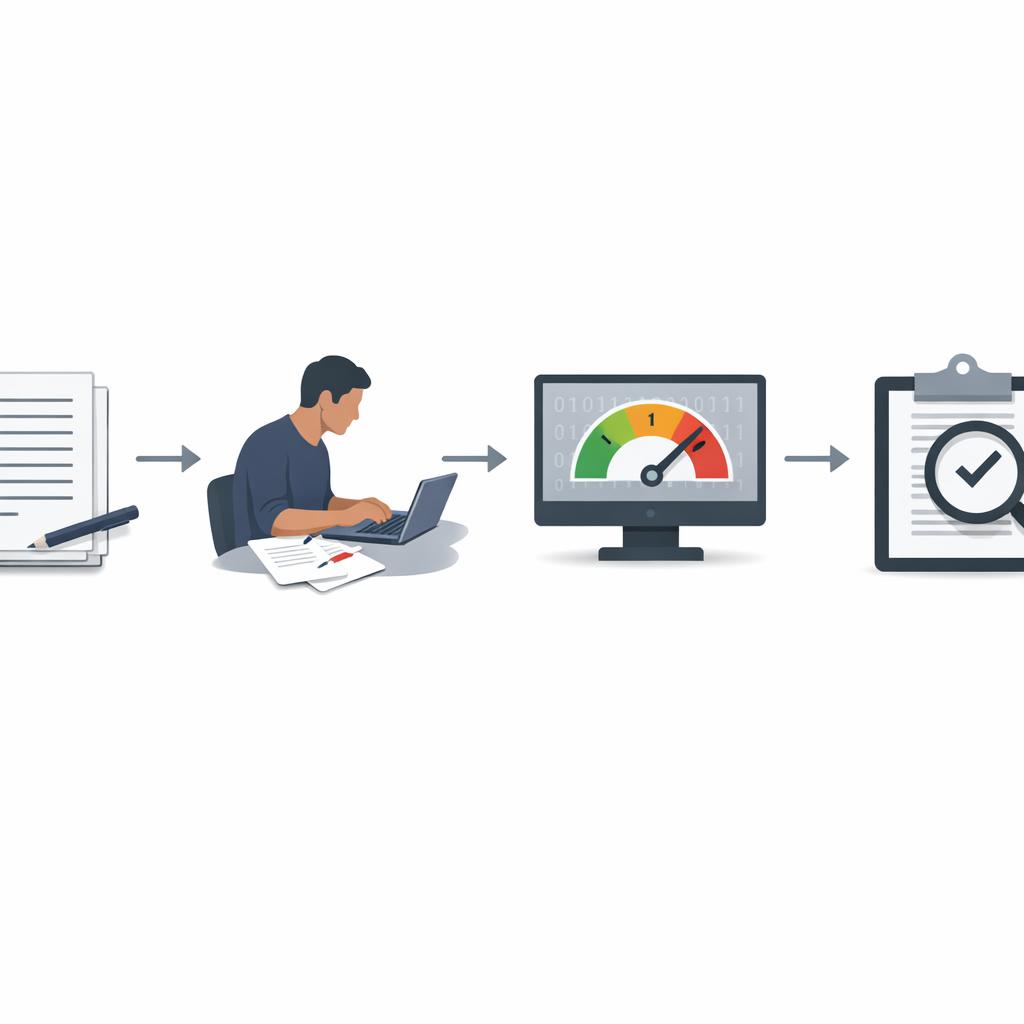
Image brief: Simple flowchart showing original draft to human edits to detector score changes to final manual review.
Why detector results often change after human editing
Human revision changes many of the signals detectors seem to rely on, including sentence rhythm, predictability, vocabulary range, transitions, and paragraph structure. When a writer adds concrete examples, topic knowledge, citations, or a stronger point of view, the text usually becomes less uniform and less statistically predictable. That is why people ask whether detectors can identify human-edited text. Sometimes they still flag it, but the confidence level often drops or becomes unstable across tools.
Scores also shift because detectors are developed on limited datasets and then used on real-world writing across classrooms, marketing teams, newsrooms, and websites. A formal tone, simple syntax, or highly templated topic can resemble machine-produced text even when the work is original. This is one reason false positives happen so often. A detector score is best treated as a weak signal that may justify a closer look, not as a final judgment.
What kinds of edits most affect detection scores
The biggest score changes usually come from edits that add real human judgment rather than superficial rewriting. Original reporting, lived experience, niche terminology used correctly, stronger source integration, and a clear audience-focused angle can all reduce repetitive patterns. Reordering ideas, varying sentence length naturally, and cutting filler also tends to influence outcomes more than swapping a few words.
By contrast, light paraphrasing often leaves the same logic and structure underneath. That is why people wonder whether rewriting content avoids detection. Sometimes it changes a score, but not always, and shallow edits may still be flagged. More importantly, editing should improve clarity, accuracy, and usefulness rather than chase a number. Content that is well sourced and genuinely revised is much easier to defend in a manual review than content changed only to lower a score.
When edited content can still be flagged
Edited text can still trigger a flag when the underlying draft remains highly standardized. If the piece keeps predictable openings, balanced sentence lengths, generic transitions, and broad claims with little evidence, a detector may continue to see a familiar pattern. This often happens in product roundups, basic explainers, school essays with formulaic structure, and pages on crowded topics where many writers use similar phrasing. In those cases, even thoughtful polishing may not move the score much.
Another common issue is uneven editing. A person may rewrite the introduction and conclusion but leave the middle sections mostly intact, creating a mixed document where some passages read very differently from others. Detectors may react strongly to those untouched sections. Topic matters too. Highly technical, procedural, or neutral writing often uses constrained language, which can make authentic work appear suspicious. That is one reason detector accuracy varies by use case and why one tool may disagree sharply with another on the same edited article.
Limits of detectors across tone, structure, and topic
Detectors struggle because style is not authorship. A concise business tone, a standard essay format, or a step-by-step help article can all produce regular patterns that look machine-written. Writers who are non-native English speakers, early-career students, or working under strict brand rules may also be misclassified because their writing follows narrower conventions. In other words, a score may reflect genre, audience, or constraints rather than who actually wrote the piece.
This becomes even clearer when several tools review the same page and return conflicting results. One may call a passage likely human, another may label it mixed, and another may rate it likely machine-generated. Those disagreements do not prove deception; they reveal how uncertain the method can be after revision. Any workflow that treats detector output as final evidence risks unfair decisions, especially when the writing is brief, formal, heavily edited, or built around a common topic.
Conclusion
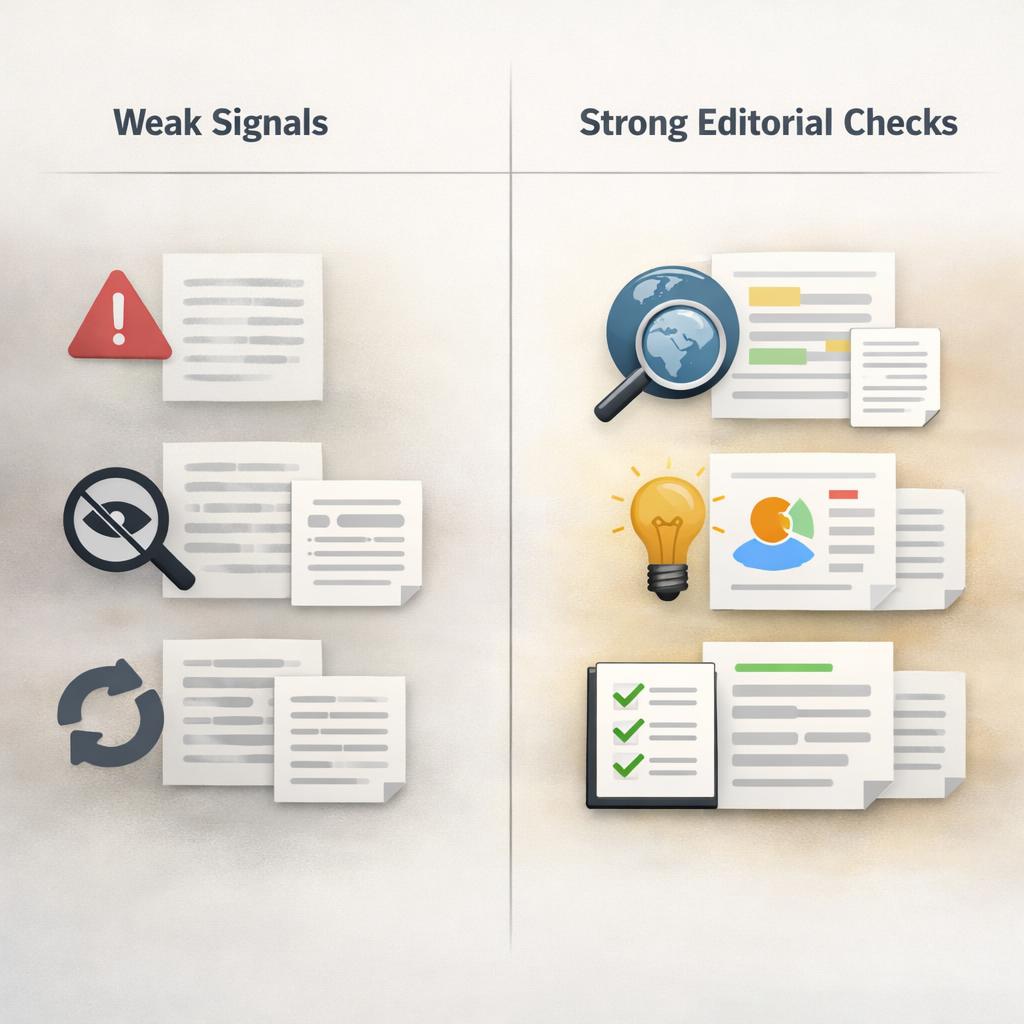
So, are smart detectors accurate after human editing? Only to a limited extent. Once a person meaningfully revises a draft, detector outputs often become less stable and less trustworthy as evidence of authorship. They may still surface patterns worth reviewing, but they can also miss heavily revised text or flag fully original work. The most dependable approach is not trying to game a score. It is producing accurate, well-sourced, audience-focused writing and reviewing it through manual evaluation, documentation, and clear editorial standards. If you need a repeatable process, combine human review with sourcing checks and a documented content review checklist for accuracy, sourcing, and readability so decisions rest on evidence instead of a single score.

FAQ
Can human editing make detector results less reliable?
Yes. Substantial revision can change structure, wording, specificity, and tone enough to alter results, sometimes dramatically. That does not make the text deceptive; it shows the score is highly sensitive to stylistic changes and should be interpreted with caution.
Why do detectors flag fully original writing?
False positives happen because some authentic writing is simple, formal, repetitive, or constrained by genre. A standard essay structure, technical instructions, or tightly branded copy can resemble patterns detectors associate with machine-written text even when the work is original.
Does rewriting content avoid smart detection?
Not reliably. Light rewriting may leave the same underlying structure, while deeper editing can lower or shift scores without guaranteeing any result. The better goal is improving quality, specificity, and accuracy rather than trying to satisfy a detector.
What should editors or instructors do when a score looks suspicious?
Use the score as a starting point for review, not the end of it. Compare drafts if available, verify sources, look for reasoning and subject knowledge, and ask follow-up questions about how the piece was developed. Fair decisions should rely on evidence, not one number.


