

Academic integrity in college writing means doing your own thinking, being honest about where ideas come from, and following your instructor’s rules for research, citation, and collaboration. In day-to-day writing, that often comes down to small choices: using quotation marks when wording is copied, citing a source after a paraphrase, keeping clear research notes, and asking questions when an assignment guideline is vague. If you want a stronger foundation first, review how to cite sources correctly before you start drafting.

This guide walks through practical academic integrity examples in college writing so you can spot what ethical writing looks like in essays, research papers, and discussion posts. It also explains common problems, including plagiarism, patchwriting, and improper collaboration, along with realistic ways to avoid them. The point is not only to avoid penalties. It is to build writing habits that make your work more credible, original, and trustworthy to readers.
What academic integrity looks like in everyday college writing
In most assignments, academic honesty is not complicated. You read a source, take notes, and write a response that clearly separates the author’s ideas from your own analysis. If you copy a sentence because the exact wording matters, you put it in quotation marks and cite it. If you restate the point in your own words, you still cite the source because the idea did not begin with you. These are simple but important examples of academic integrity in essays, and they apply just as much to short discussion posts as they do to formal papers.
Integrity also means being truthful about your process. You should not invent page numbers, list articles you never read, or imply you completed research you did not actually do. If an instructor asks for a personal reflection, the response should be your own, not borrowed from a classmate, a sample paper, or a website. Strong college writing is not about pretending to know everything. It is about showing readers what comes from research, what comes from your experience, and where your own interpretation begins.
Simple examples of honest quoting, paraphrasing, and citation
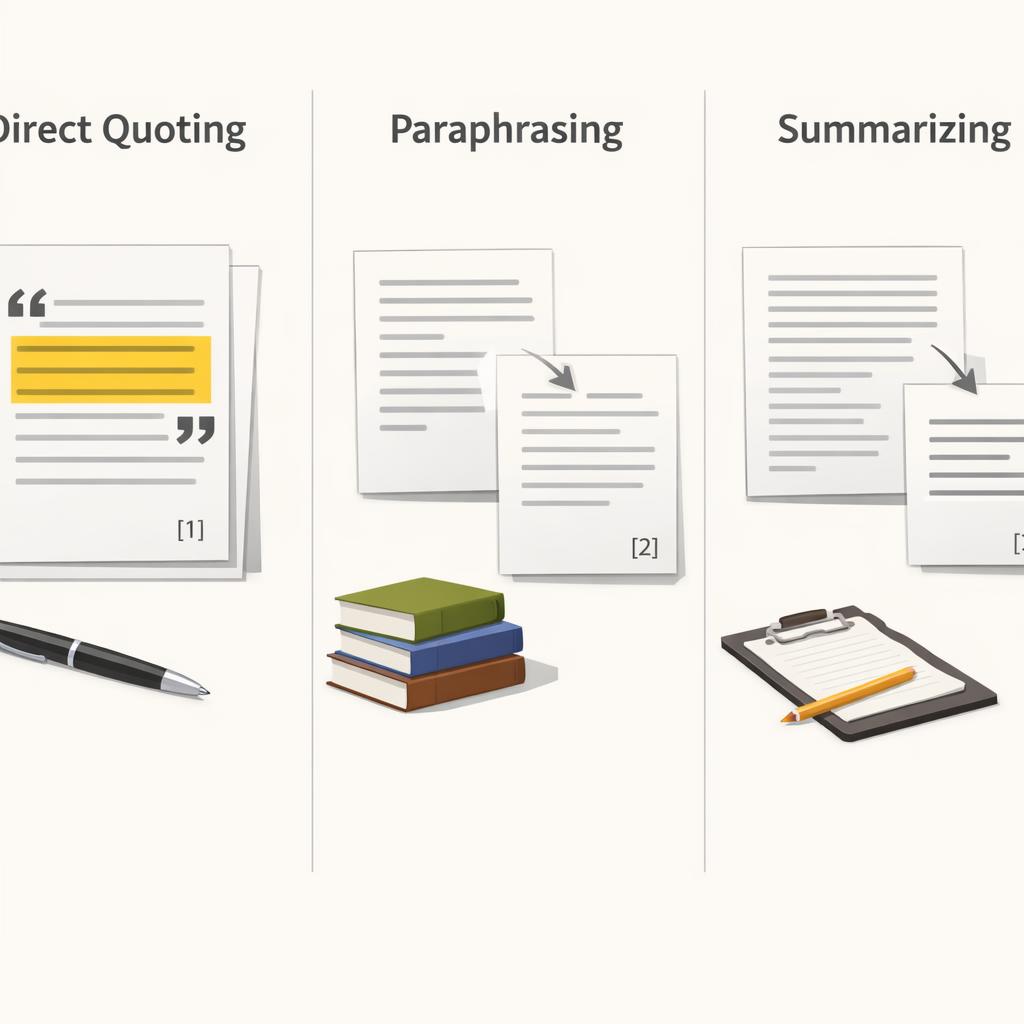
An honest quotation keeps the source wording exactly the same, uses quotation marks, and gives credit to the source. An honest paraphrase fully rewrites the original passage in a new sentence structure and style while preserving the meaning, then includes a citation. A summary does the same thing more briefly by condensing the main point. One of the most common mistakes students make is assuming that if the wording changes, no citation is needed. That is incorrect. If the idea came from a source, the source still needs to be named.
For example, if a textbook explains that consistent study routines improve long-term retention, you can quote the sentence directly with citation, or you can rewrite the idea in your own words and cite it. What you should not do is replace a few words while keeping the original sentence pattern. That is patchwriting, and instructors often see it as a sign that the writer relied too closely on the source. If you want more support while revising, see paraphrasing best practices for clearer examples.
Common writing situations where students make integrity mistakes
Many integrity problems happen because students are rushed, stressed, or unclear about the rules. A common example is pasting source material into notes and later forgetting that the language came from somewhere else, which can lead to uncited copying in the final draft. Another is turning in work from an earlier class without permission, often called self-plagiarism. Students also run into trouble when they lean too heavily on one source, mirror its structure too closely, or use a friend’s paper as a model and end up borrowing more than they intended.
Discussion boards create the same risks, even when the assignment seems informal. If you paste material from a website into a discussion response or summarize an article without credit, the standards have not changed. Group work can also be confusing. Some instructors welcome idea-sharing but require each student to write independently. Others allow peer review but do not allow shared drafting. Learning to avoid plagiarism in essays often starts with reading the assignment sheet carefully and treating every borrowed idea, statistic, image, or phrase as something that may need acknowledgment.
Examples of plagiarism, patchwriting, and improper collaboration
Plagiarism can include submitting a downloaded paper, copying sentences without quotation marks, or paraphrasing a source without citation. Patchwriting is slightly different but still serious. It happens when a student keeps the original source’s wording patterns, sentence structure, or distinctive phrases and changes only a few words. It may look less obvious than direct copying, but it still presents source-based writing as original work. Many academic honesty examples for students emphasize that intent does not erase the issue. A careless mistake can still become an integrity violation.
Improper collaboration happens when classmates divide up an individual assignment, co-write sections, or revise each other’s drafts so heavily that the final work is no longer truly independent. For example, general feedback on clarity or organization is often acceptable, but asking a friend to rewrite your paragraph is usually not. Sharing complete drafts in a course that requires independent writing is another warning sign. If the rules are unclear, ask before submitting, and keep track of the notes, comments, and sources you used while revising.

Conclusion
Understanding academic integrity examples in college writing helps you make better choices in everyday assignments, not just major research papers. Honest quoting, accurate paraphrasing, clear citation, and careful limits around collaboration all show respect for your readers, your sources, and your own work. These habits also make revision easier because you know where your information came from and how you used it.
If you remember one rule, make it this: when words or ideas come from somewhere else, show that clearly. When your instructor sets limits on outside help, follow them closely. Small habits such as labeling notes, checking citations, and reviewing paraphrases before submission prevent many common mistakes. Over time, those habits make academic integrity less of a rule to fear and more of a dependable part of strong college writing.

FAQ
What is a simple example of academic integrity in college writing?
A simple example is using a direct quotation from an article, placing it in quotation marks, and adding the correct citation. Another is paraphrasing a source fully in your own words and still citing it because the idea came from someone else.
Is paraphrasing without a citation still plagiarism?
Yes. Even if you change the wording, the original idea still belongs to the source. If you leave out the citation, readers may assume the idea is yours, which makes it plagiarism.
Can I reuse my own paper for a different class?
Not unless your instructor allows it. Many colleges treat reusing past work without permission as self-plagiarism. If you want to build on an earlier paper, ask first and follow any instructions about disclosure or citation.


