
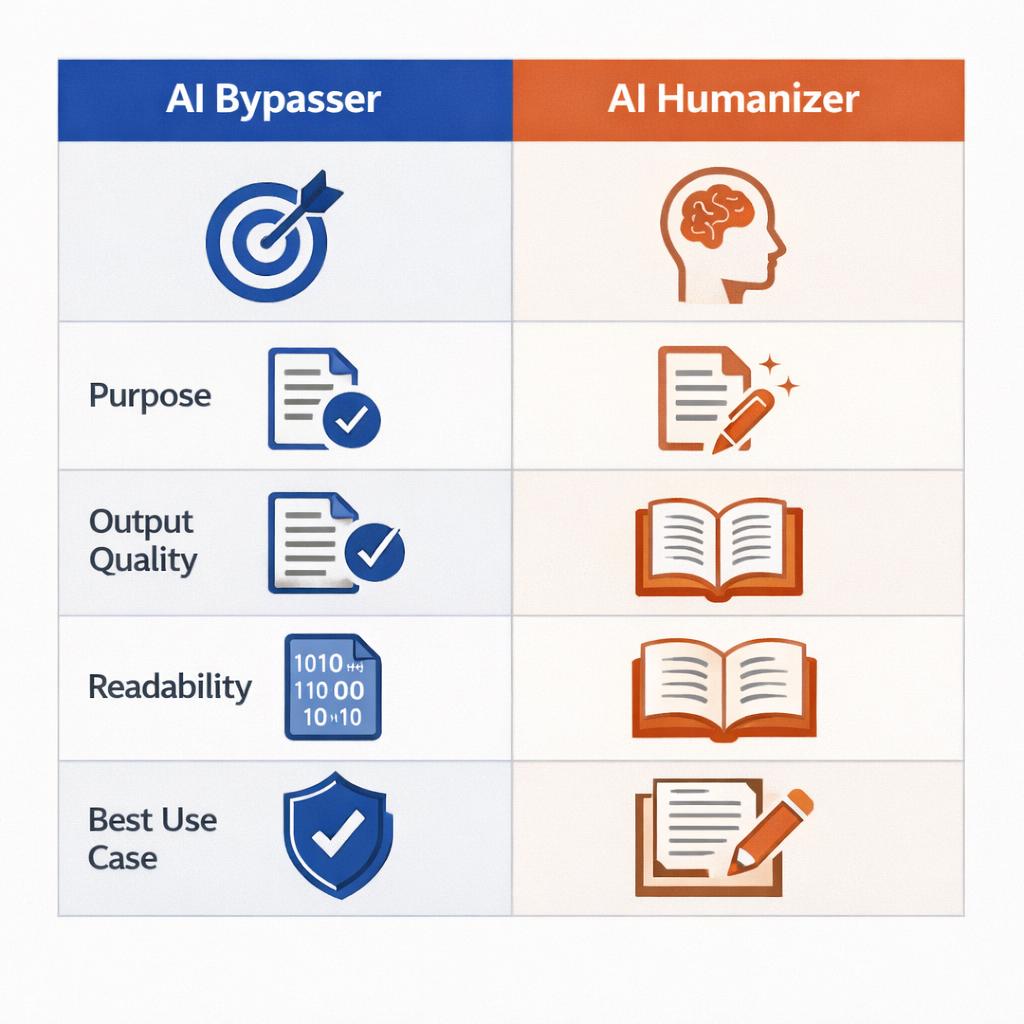
If you are comparing editing tools for school writing, it helps to understand what is an smart bypasser and how is it different from a humanizer before choosing a workflow. In plain terms, a bypasser is usually built to change wording so a draft appears less machine-written, while a humanizer is meant to make the writing sound more natural, clear, and believable to real readers. That difference matters in essays and reflection papers, where voice, flow, and context often matter more than simple word swaps.

For readers exploring the best smart humanizer for essays, this comparison is worth getting right because the two categories are often treated as if they do the same job. They can overlap, but their priorities are different. A bypasser often focuses on detection concerns first. A humanizer usually focuses on readability, tone, and meaning retention. Knowing that split makes it easier for students, editors, and educators to choose a revision path based on the quality of the final paper, not just on marketing claims.
What an smart bypasser does and why people use one
When people ask what an smart bypasser does, the short answer is simple: it rewrites text so it looks less predictable on the surface. It may change sentence length, swap vocabulary, rearrange clauses, and break up repeated phrasing patterns. The main reason people use one is speed. If someone has a rough draft and wants a fast rewrite, a bypasser can produce a noticeably different version in less time than manual editing.
The difference between an smart bypasser and a humanizer starts here. A bypasser is often judged by how much it changes patterns, not by how much it improves the writing itself. That can create tradeoffs. A rewrite may look different enough at first glance, but still lose nuance, flatten the original point, or sound uneven from one paragraph to the next. For school assignments, especially essays and reflection papers, that matters because academic writing needs more than altered wording. It needs coherence, clear reasoning, and a voice that fits the prompt.
Common goals: quick rewrites, wording changes, and less formulaic text
Most users turn to a bypasser for a few practical reasons. First, they want different phrasing without rewriting the whole draft by hand. Second, they want a faster revision process under deadline pressure. Third, they hope the text will feel less formulaic. Those goals are understandable, but they are mostly mechanical goals rather than quality goals.
That is why an smart bypasser vs humanizer comparison should not end with whether the output looks different. A bypasser may change enough words to create variety, yet still leave awkward transitions, vague claims, or a flat tone. In reflective writing, those weaknesses stand out quickly because readers expect sincerity, specific detail, and a personal perspective. If the draft only looks altered instead of genuinely improved, the student will still need to spend time fixing clarity, flow, and consistency.
How a humanizer improves tone, clarity, and readability
A humanizer is generally used for a different reason: improving how the writing feels to a reader. Instead of focusing mainly on disguise or pattern disruption, it aims for smoother phrasing, more natural sentence flow, better clarity, and stronger meaning retention. That makes it easier to keep the original point while reducing stiffness, repetition, or generic wording. In academic settings, this often makes a humanizer the better choice when the real goal is polished writing rather than a surface-level rewrite.
This is especially true when humanizing essays and reflection papers is the goal. Essays need logical progression, and reflection papers need an authentic voice. A humanizer can support both by making transitions sound less forced, claims feel more grounded, and phrasing read more like something a thoughtful student would actually write. For readers comparing options within the Best smart Humanizer For Essays Cluster, the key point is simple: the stronger option for school writing is often the one that improves readability and preserves meaning, not just the one that changes wording the fastest.
Where humanizers fit better for essays and reflection papers
Humanizers tend to work better when a paper needs to sound personal, thoughtful, or academically credible. A reflection paper often depends on experience, interpretation, and self-awareness, so awkward rewrites can weaken the message almost immediately. Essays also rely on precise reasoning and clear structure. If a tool changes phrases without protecting the logic, the paper can become harder to trust and harder to grade fairly.
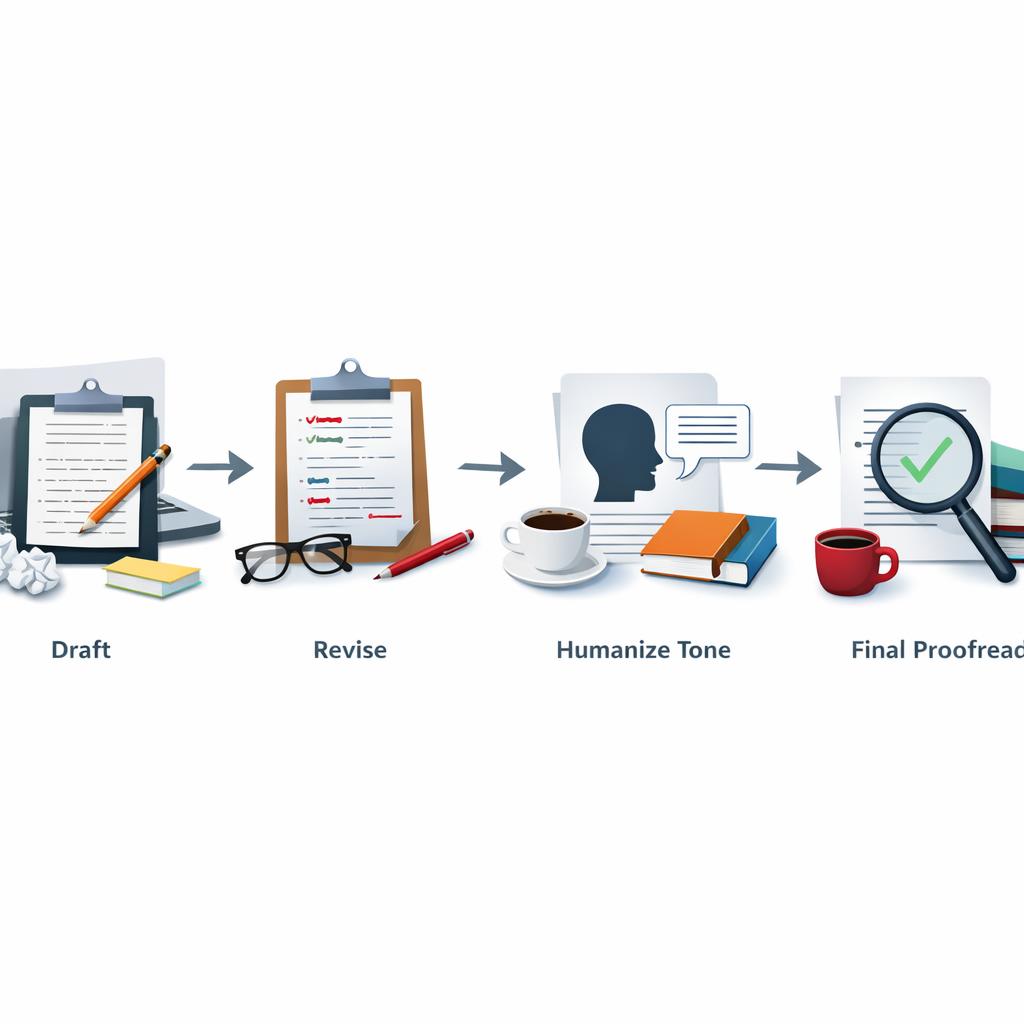
That is why many writers looking for the best humanizer for reflection papers care more about voice quality than pure rewrite speed. A useful humanizer supports revision by smoothing the draft while keeping the writer’s meaning easy to recognize. It may still need proofreading, but the result is often much closer to final-quality writing. By contrast, bypass-focused output may require another full round of cleanup to restore tone, examples, and paragraph coherence.
Conclusion
Understanding what is an smart bypasser and how is it different from a humanizer can save time and lead to better writing decisions. A bypasser is mainly about changing wording patterns quickly. A humanizer is more about making text sound natural, readable, and consistent with the writer’s intent. That distinction matters for essays and reflection papers, where tone, context, and credibility carry real weight.
For students, educators, and editors, the best way to compare these tools is to focus on the finished draft. Ask whether the result keeps the original idea, reads smoothly, and sounds appropriate for the assignment. In many academic situations, a humanizer is the better fit because it supports revision quality instead of only surface change. If your goal is stronger writing rather than simply different wording, that difference should guide your choice.

FAQ
Is an smart bypasser the same as a humanizer?
No. They can share some rewriting features, but they usually serve different main purposes. A bypasser is often used to alter wording patterns quickly, while a humanizer focuses more on natural tone, clarity, and readability. That is the core difference in most writing workflows.
Which is better for essays: a bypasser or a humanizer?
For most essays, a humanizer is usually the better choice because essays need coherence, context retention, and a believable voice. A bypasser may change the text, but it may not improve the overall quality enough for academic writing.
Can a humanizer still require manual editing?
Yes. Even strong output may need proofreading for citations, factual accuracy, assignment fit, and personal voice. A humanizer can reduce editing time, but it should not replace careful review by the writer.


