
If you are trying to find the best smart humanizer for chatgpt essays, the main goal is usually straightforward: turn a stiff draft into writing that sounds natural, clear, and closer to your own voice. The better options do more than replace words with synonyms. They improve sentence rhythm, keep your meaning intact, and preserve the structure that essays need to stay convincing and easy to follow. If you are also comparing tools in the broader best smart humanizer for essays and reflection papers category, it helps to judge them by editing quality, not by big promises.

Students, freelance writers, and editors often want help with the same problems: repetitive phrasing, flat tone, and awkward transitions. A useful humanizer should make a draft easier to read while still leaving space for your own judgment. That matters even more in essays and reflection papers, where nuance, clarity, and personal voice matter more than dramatic rewriting.
What makes a humanizer a strong fit for ChatGPT essays
The best humanizer for ChatGPT essays usually performs well in four areas: tone, flow, grammar retention, and restraint. Tone matters because essays should sound credible and composed, not exaggerated or overly casual. Flow matters because many drafts lose coherence when edits happen one sentence at a time without preserving transitions. Grammar retention is just as important, since some tools introduce errors while trying to sound more natural. Restraint may be the biggest factor of all, because over-editing can make an essay feel less believable instead of more readable.
If you are searching for the best humanizer for essay writing, test a short sample before trusting it with a full paper. Check whether the revised version keeps your thesis, examples, and paragraph logic in place. Strong tools refine wording without flattening your ideas. They should also preserve enough of the original meaning that your final review feels manageable instead of turning into a complete rewrite.
Key features that improve tone, flow, and readability
Useful features include adjustable rewrite strength, tone settings that still fit school writing, and output that keeps sentence variety without sounding forced. A dependable humanizer should smooth stiff phrases while avoiding major shifts in meaning. It also helps when the tool keeps citations, quotation formatting, and paragraph breaks intact, since those are easy to disturb in essay drafts.
- Readability: smoother rhythm and fewer repeated sentence patterns
- Tone control: revisions that suit formal, reflective, or neutral writing
- Grammar retention: cleaner phrasing without adding new mistakes
- Edit quality: natural changes that keep your ideas and structure clear

How to compare tools without relying on hype
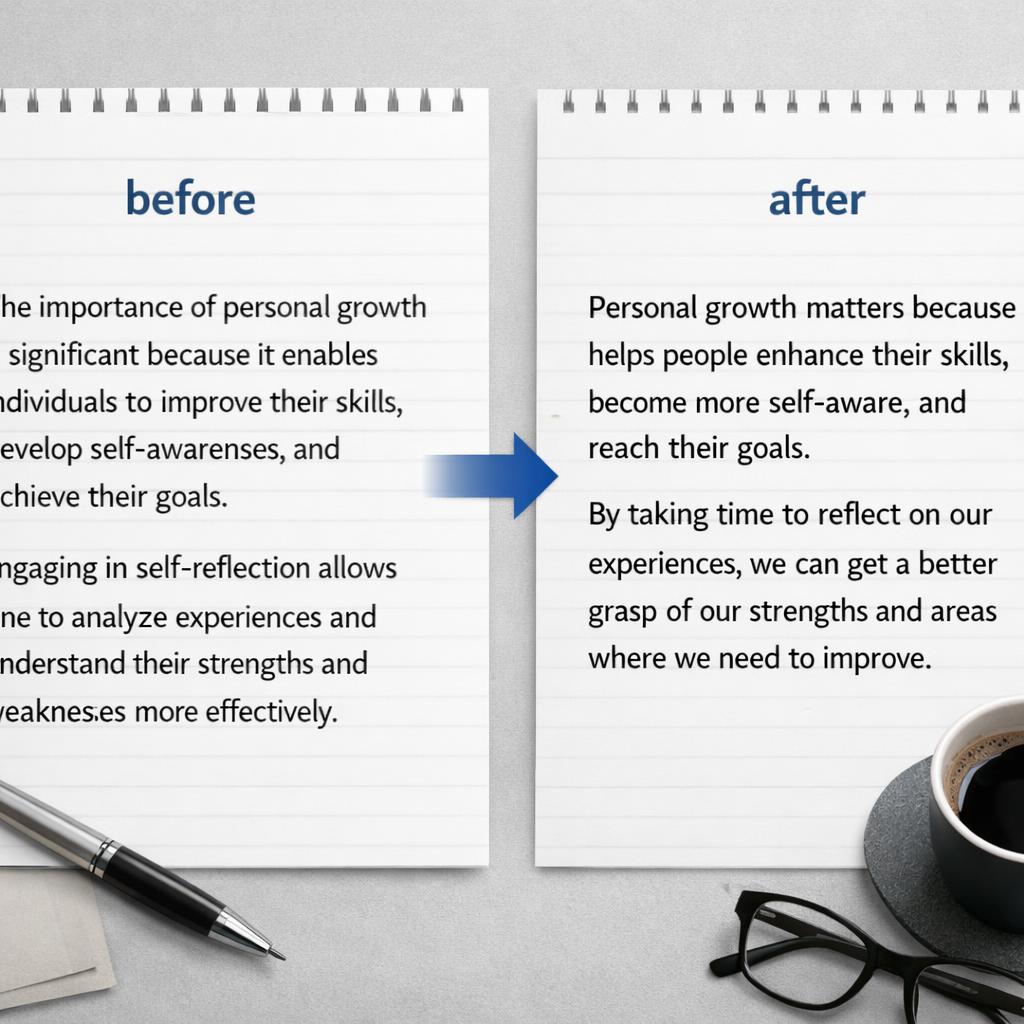
Marketing copy can make every option sound like the best humanizer for ChatGPT essays, but the better method is simple: compare outputs side by side. Use the same paragraph from a class-style draft and study what changed. Did the tool remove obvious repetition? Did it keep the point of view consistent? Did it make clear writing vague? Practical comparison tells you more than any feature list because essay quality depends on how the revised text actually reads.
It also helps to compare tools by use case. A humanizer for reflection papers often needs a lighter touch than one used for a general expository essay. Reflection writing depends on personal tone, subtle transitions, and specific emotional language. In that setting, the right tool should support your voice rather than flatten it into something generic. Careful testing is the safest way to find the right fit, especially when your priority is readability and clean editing instead of aggressive rewriting. If you want more context, see how to make essay writing sound more natural.
Red flags that lead to robotic or over-edited writing
Some tools create text that looks polished at first glance but weakens the draft on a closer read. Watch for strange synonyms, repetitive sentence openings, sudden shifts in formality, and paragraphs that lose their logical connection. Another warning sign is filler added just to sound conversational. That usually makes a paper longer, not better.
- Forced vocabulary: unusual word swaps that do not fit normal student writing
- Flattened voice: reflection pieces that lose personality and nuance
- Broken structure: transitions, examples, or claims moved out of order
- Extra cleanup: edits that create more manual correction than they save
Conclusion
Even the best humanizer works better when your draft is already organized. Before pasting in a full essay, tighten your thesis, remove duplicate points, and make sure each paragraph has one clear purpose. Clean inputs usually lead to cleaner outputs. After that, review every change carefully. This is the step many people skip, but it is what separates a merely altered draft from a polished final version. A line like “This experience taught me many important lessons” is usually stronger when revised into something more specific, such as “This experience changed how I think about responsibility and communication.” The second version sounds more human because it says something concrete.
The best smart humanizer for chatgpt essays is not the one that changes the most text. It is the one that improves tone, readability, and flow while respecting your ideas and intended voice. If you compare tools with short samples, watch for red flags, and finish with your own final edit, you will be in a much better position to choose the right option for your needs.

FAQ
What should I look for in the best humanizer for ChatGPT essays?
Focus on tone control, readability, grammar retention, and meaning preservation. The best option should improve flow without making the essay sound unnatural, inflated, or over-edited.
Can a humanizer improve the tone of a reflection paper?
Yes, a good humanizer can smooth awkward phrasing and make personal writing feel more natural. The key is choosing one that keeps nuance and does not erase your individual voice.
How can I tell if a revised essay sounds too robotic?
Look for repeated sentence patterns, odd word choices, weak transitions, or a sudden shift in tone. Reading the text aloud is one of the fastest ways to catch robotic rhythm and unnatural edits.
Should I submit a humanized draft without reviewing it?
No. You should always review the final version for accuracy, clarity, and voice. These tools work best as revision aids, not as a substitute for your own editing judgment.


